
Summary
Seawater strainers play a critical role in protecting boat engines, generators, and air-conditioning systems by filtering out debris before it can clog the raw-water cooling system. This article explains how floating sargassum, eel grass, coral fragments, and other debris can restrict water flow and lead to overheating, then explores the differences between traditional and self-cleaning strainers from GROCO and compact designs from VETUS. It also offers maintenance tips, inspection recommendations, and best practices for cruising in debris-prone waters to help boaters avoid costly engine damage.
A seawater strainer is your engine’s first defense against sargassum and debris. See how clear-cover and self-cleaning models keep raw water flowing.
By Doug Thompson

Seawater Strainers: Your Engine’s First Defense
Floating sargassum has become a fact of life across the tropical Atlantic, and every cruiser who runs raw-water cooling feels its effects. Those drifting mats — along with eel grass, coral chips, shell fragments, and everyday marina trash — can choke an engine’s cooling water fast. The consequences run from reduced cooling to complete overheating and a costly breakdown. A seawater strainer, mounted between the through-hull valve and the engine, air conditioner, generator, or other equipment, stands as your first line of defense.
The strainer’s job is straightforward and essential: it traps solids before raw water reaches the pump, heat exchanger, and everything downstream. Keep the basket clear and the cooling system breathes freely. Let it clog and the whole system suffers.
Subscribe Here For More Boating Content
Why Floating Debris Threatens Your Cooling System
Raw-water cooling depends on an uninterrupted flow of seawater. Anything that restricts that flow starves the heat exchanger and drives engine-room temperatures up. Two kinds of fouling cause trouble, and they behave very differently.
The first is gradual: microscopic particulate and organisms accumulate slowly over weeks, the way scale builds in a pipe. The second is sudden. A boat runs into a sargassum mat, a jellyfish bloom, or a ribbon of eel grass, and the intake loads up in a single afternoon.
“There’s nothing worse than having to clean a strainer basket in the middle of the night because the air conditioner shut down due to reduced water flow — the culprit usually being eel grass or jellyfish,” says Don Gross, president of GROCO, a leading strainer manufacturer in Stevensville, Maryland. “I’ve been there and done that; the experience is what drove the development of our Hydromatic self-cleaning strainers and SSA series flow monitor.”
Also Read
The Boats That Built America: The Story Behind America’s Greatest Boat Builders
From mahogany runabouts to deep-V sportfishermen, these American boat builders shaped life on the water for 250 years. By Jesse...
What a Seawater Strainer Actually Does
A conventional strainer is a passive collector. Seawater passes through a basket that captures debris on its way to the boat’s plumbing, preventing marine growth, and the owner clears the basket on a schedule. GROCO’s line alone runs to 14 models, with pipe sizes from a half-inch to six inches and a choice of basket materials and filtration levels.
Filtration is a balance. “Fine filtration options are available in all models and sizes,” Gross says, “but owners should understand that finer filtration usually means the basket catches more debris and will require more frequent service.” The owner picks the mesh — measured in mesh counts or microns — that suits the water they cruise and the maintenance they are willing to do.
For liveaboards, that maintenance math matters. Life aboard runs smoother with fewer systems demanding attention, so a properly sized strainer earns its keep.
Also Read:
Tilt and Trim Troubleshooting
When your outboard’s tilt and trim system fails, you feel it immediately. You can’t optimize your running angle...
Self-Cleaning Protection: The GROCO Hydromatic
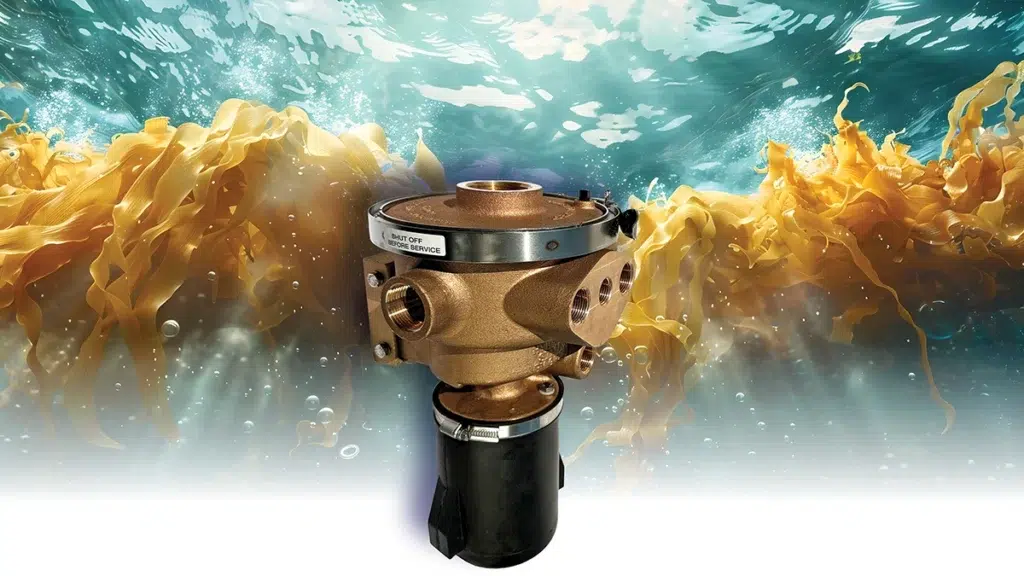
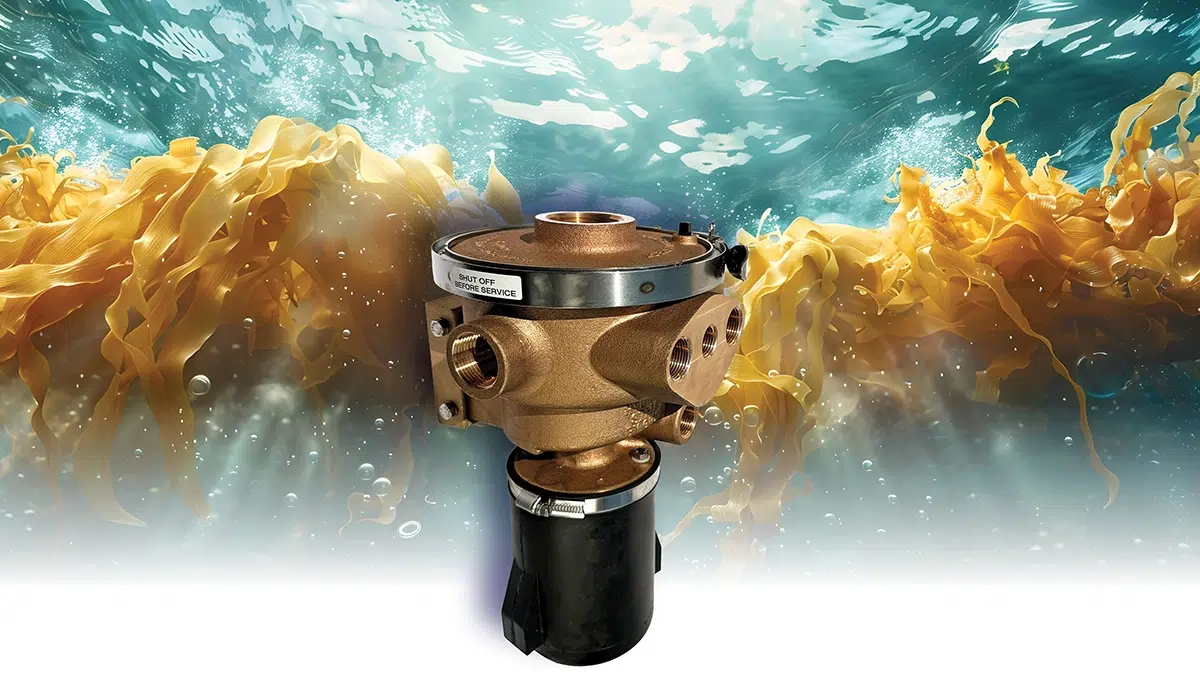
GROCO’s Hydromatic answers the sudden-fouling problem with automation. One large inlet feeds up to five filtered outlets, so the unit works as a sea chest for several systems at once. A built-in macerator runs brief cleaning cycles at intervals the user sets, and macerated debris discharges overboard below the waterline without interrupting flow to the air conditioning or other connected equipment.
Pair it with GROCO‘s SSA flow monitor and the system becomes responsive rather than scheduled. “A properly sized strainer combined with our SSA flow monitor or Hydromatic’s self-cleaning feature is as close to maintenance-free as you can get,” Gross says. When flow falls below a normal setting, the monitor commands a cleaning cycle on its own — a real advantage the moment a boat crosses into a debris field.
Compact and Clear: The VETUS FTR330
VETUS, headquartered in the Netherlands, takes a different tack. Its strainers earn their place on sailboats and power yachts alike for a compact footprint and efficient design — a genuine advantage on the 50- to 60-foot yachts where engine-room space runs tight. The FTR330 mounts in close quarters without choking flow.
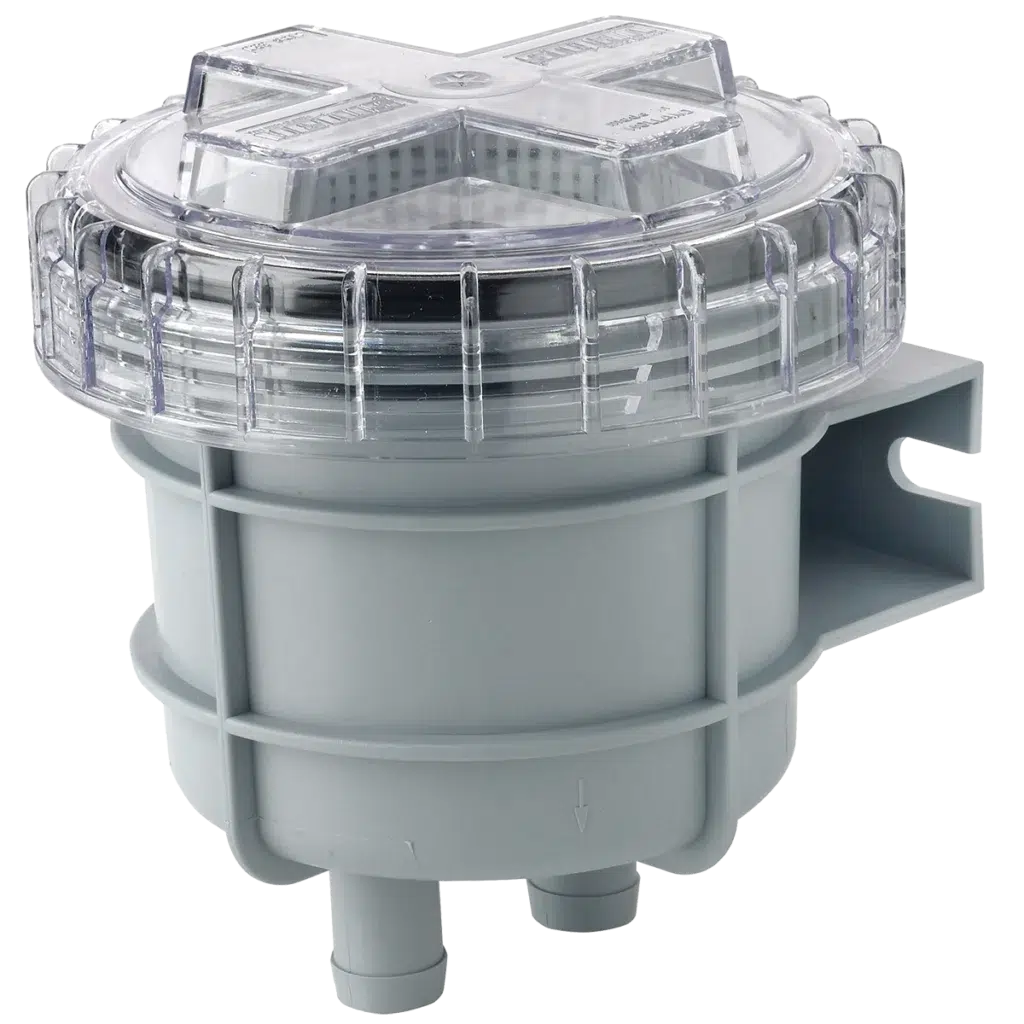
“The VETUS FTR330 design’s large filtering area and transparent cover mean that even when there’s a relatively high load of debris, the strainer will catch it while hardly restricting flow,” says Sander Gesink, VETUS marketing director. “The clear cover lets you easily see when the element needs cleaning without dismantling the unit. Regular quick inspections help ensure performance in heavy-debris environments.”
The FTR330 handles hose sizes from small craft to larger systems and flow rates up to 200 liters per minute. Gesink recommends installing it above the waterline with a properly sized seacock and through-hull upstream to prevent water ingress and ease servicing. For the worst macro-debris — heavy seaweed mats — he suggests pairing it with a through-hull scoop or a larger upstream strainer for extra protection.
What Changes in the Gulf, Bahamas, and Caribbean
Cruising grounds shape the debris you’ll meet. The Gulf and the East Coast, the Bahamas, and the Caribbean each present their own challenge. The Bahamas, built largely of limestone and coral, put small coral chips and shell pieces into suspension even near pristine shores. The sargassum that has spread across the tropical Atlantic fouls intake screens quickly when nothing intercepts it.
Marinas hold their own hazards. Lines of algae, sea grass, and discarded trash gather around basins and channels exactly where boats anchor or tie up — the last place you want an intake drawing hard.
How Often Should You Clean a Seawater Strainer?
Maintaining a strainer is routine work, not a project. Flush the unit regularly with fresh water to dislodge trapped sand and sea grass, and keep spare baskets and seals aboard so a fouled strainer never becomes extended downtime. Owners cruising heavy-debris waters should inspect more often — and a clear-cover design like the FTR330 turns that into a quick glance rather than a teardown. Get the full guide on sea strainer maintenance.
Standing a Strainer Watch on Long Passages
On a long passage through debris-heavy water, build the strainer into the watch schedule. Captains covering long distances can establish a “strainer watch” during heavy-debris stretches, assigning crew to monitor and clear strainers on a set rotation. Folding the check into cooling-system routine catches buildup before it ever reaches the engine — which is the entire point of the strainer in the first place.
Whether you run a self-cleaning sea chest or a clear-cover compact, the principle holds: the strainer is the cheapest insurance in the engine room, and a little attention keeps the raw water flowing.