Spin Control: Propeller Tuning for Peak Performance
By Doug Thompson
Let’s face it: Our boats keep getting heavier. Every weekend the tubes, towels, and tech gadgets come aboard, but not all of it comes off, and those pounds add up fast.
That extra weight hits performance hardest. It means more drag, lower fuel efficiency, and a boat that simply doesn’t run the way it once did. To make up the difference, an owner can shed the weight, swap propellers, or tune the ones already on the shaft. That last option is where propeller tuning and digital scanning come in.
Subscribe Here For More Boating Content
Propellers rank among the most overlooked performance components on a vessel, even though everything depends on how the hull and the propeller work together. Modern digital measurement technology lets propeller tuning shops quantify blade geometry with a precision that wasn’t possible decades ago. Customers get objective documentation before and after repairs, along with confidence that the shop restored their propellers to recognized industry standards.
How Does Digital Propeller Scanning Work?
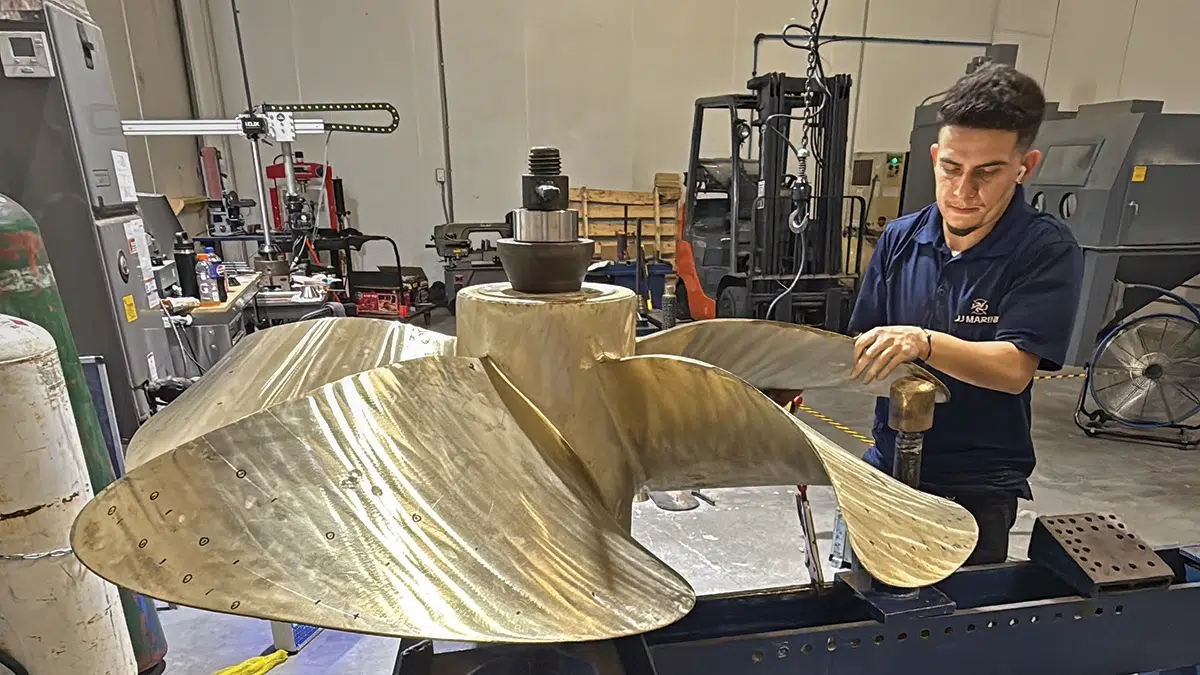
“Our primary inspection system is the Helix TrueProp 3D Propeller Measurement System, which digitally scans the entire propeller geometry,” says Miguel Cabezas, sales manager at JJ Marine & Propeller Services in Fort Lauderdale, Florida. “Rather than relying solely on manual pitch gauges, the system creates a complete digital model of the propeller, measuring blade geometry, pitch distribution, rake, track, cup, skew, thickness, and blade symmetry.”
The software compares the scanned propeller against the original propeller design or the desired specifications and identifies even very small deviations that may affect vessel performance. After the repairs and tuning, the shop scans the propeller again to verify that it meets the required tolerances, and the customer receives a detailed inspection report.
Also Read
Beneteau Flyer 30 Review: A New Generation of Day Boat
Beneteau Flyer 30: Day Boating's Next Generation By Marilyn DeMartini Boating lifestyles evolve with time and the market, much like...
What Does Dynamic Propeller Balancing Do?
“For balancing, we utilize a ProBal Dynamic Balancing System, allowing us to dynamically balance propellers to ISO 1940/1 standards,” Cabezas says. “Dynamic balancing helps reduce vibration, minimizes wear on shafts, bearings, transmissions and engines, and contributes to smoother vessel operation.”
Together, the two systems measure and compare propeller geometry precisely, using mathematical algorithms and high-resolution digital scanning.
Technology Meets Craftsmanship
The machines gather the data, but people still make the calls.
“The interpretation of those measurements, repair strategy and final tuning decisions remain the responsibility of our experienced technicians,” Cabezas adds. “We believe technology should complement—not replace—the experience of skilled craftsmen. Digital scanning, computerized analysis, and dynamic balancing provide the data, while experienced technicians apply the knowledge necessary to produce a propeller that performs as intended on the water.”
Propeller tuning shops operate across the globe, and the very best attract a dedicated clientele. Fort Lauderdale is also home to Frank and Jimmie’s Propeller, which launched in 1947 and services propellers from around the world. In Grand Rapids, Michigan, Michigan Wheel designs and manufactures high-performance props for recreational, commercial, and government vessels.
Also Read:
44 Boat Debuts to See at the Fort Lauderdale International Boat Show 2026
FLIBS First Look: Get a sneak peek at 44 boats making their first appearance at the Fort Lauderdale...
How Do You Get Propellers to the Shop?
The service itself doesn’t take long. The first step is getting the propeller to the shop.
“Customers may either remove and deliver the propellers to our Fort Lauderdale facility, or we can coordinate pickup through local divers, boatyards, or transportation services,” Cabezas says. “Once received, each propeller undergoes an initial visual inspection and 3D digital scan.”
Once technicians assess the damage, the shop puts together a repair plan for the customer’s approval. Technicians then repair the prop and carry out the geometry correction and dynamic balancing. After a final digital scan and quality inspection, the shop returns the propeller to the customer.
How Much Does Propeller Tuning Cost?
“For most recreational propeller reconditioning projects, our average turnaround time is three to five business days, depending on the extent of repairs required,” Cabezas notes. “Costs vary depending on diameter, material, number of blades, and the amount of damage. For a typical recreational vessel between 40 and 80 feet, propeller tuning and reconditioning generally ranges from approximately $1,200 to $3,500 per propeller. More extensive welding or reconstruction can increase that cost.”
What Are the Benefits of a Tuned Propeller?
Boat owners don’t always realize that even minor blade damage or small pitch inconsistencies can noticeably affect a vessel’s performance and raise operating costs. Properly tuned propellers deliver reduced vibration, better fuel efficiency, quicker acceleration, smoother operation, and less strain on engines and driveline components.
“Regular inspection and reconditioning can often restore performance without the expense of purchasing new propellers,” Cabezas says. “That will improve vessel handling and even bring the boat back to its original operating condition after damage or years of wear.”
In other words, before shopping for the right propeller, it pays to find out what the one already on the shaft can still deliver.