
The Modern Yacht Buyer: Who's Buying Today's Boats and Why
Younger, digitally driven consumers are entering boating, established owners are moving into larger vessels, and buyers across the market expect technology, flexibility, and easier access to the water.
By Jesse Scott
For decades, the conventional yacht buyer followed a predictable course: build a business or climb the corporate ladder, buy progressively larger boats, and finally graduate to a yacht near retirement. Today’s market follows no single route.
Young entrepreneurs arrive with newly created or inherited wealth. Families seek floating gathering spaces. Established owners want more room, comfort, and range. Some newcomers skip entry-level boats entirely and hire captains from day one. Others test boating through rentals, clubs, and charters before deciding whether ownership fits their lives.

Who Is Buying Boats Today?
The numbers show change and continuity at once. According to Info-Link’s year-end 2024 data, 75 percent of powerboat buyers are over 40, and the average buyer is 51. Yet consumer research conducted by Ipsos for Discover Boating found that recent buyers, those who purchased their primary boat after 2020, averaged approximately 36 years old. Owners who bought before 2020 averaged 45.
Subscribe Here For More Boating Content
The Ipsos research also found that recent buyers are more diverse, affluent, and digitally driven. Even so, dealers remain central to credibility, education, transparent pricing, and continuing support.
The result is a broader market whose customers vary in age, wealth, experience, and intended use. Their common demand is straightforward: A boat must make their time on the water easier, richer, and highly connected.
New Routes Into Boat Ownership
Boating gained an enormous infusion of newcomers during the pandemic. Frank Hugelmeyer, president and CEO of the National Marine Manufacturers Association, says more than one million first-time buyers entered the market through 2022.
The conditions were extraordinary. Families sought outdoor recreation away from crowds, and remote work gave many professionals greater freedom over where they spent their time. Boats became transportation, family rooms, dining spaces, and escapes rolled into one.

Chuck Cashman, senior vice president of global yacht sales at MarineMax, remembers the period as “a historically good time in the boat business” that restored attention to boating’s basic appeal. “It brought back to the bare essence of what boating is,” Cashman says. “It’s a day on the water with your family.”
The boom also brought complications. Inventory tightened, and demand pushed transaction prices higher. Owners who paid pandemic-era premiums can now face difficult valuation questions when selling or upgrading. Some newcomers discovered that maintenance, upkeep, and operating costs exceeded their expectations. “There is a segment of people that got in, realized boating wasn’t for them,” Cashman says. “Maybe it was them in COVID, but there’s a lot to owning a yacht.”
Others stayed and moved through the market quickly. Their progression has helped sustain demand for larger boats, brokerage inventory, and higher levels of dealer service. The pre-owned market continues to provide the broadest access: NMMA figures supplied by Hugelmeyer show 220,397 new powerboat sales in 2025, compared with 867,059 pre-owned sales. Used boats accounted for nearly four of every five transactions across those figures.
Also Read
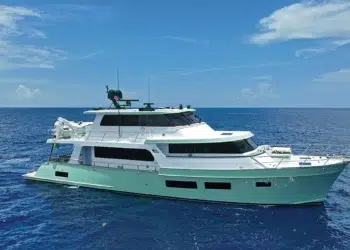
Marlow 70E Review: A Family Yacht With a Story
Purpose Perfected: Aboard a Marlow 70E Built Around Family Built around family, refined through experience, and finished in a color...
The experience economy supplies new entry points too. Among buyers Ipsos surveyed, engagement with charters and rentals rose from 17 percent in 2020 to 27 percent in 2024. That path lets prospective owners learn which layouts, destinations, and operating arrangements suit them before they take on the financial and logistical demands of a purchase.
Cashman sees the same preference at the upper end of the market, where charter activity remains strong. Some affluent consumers want a week aboard a large yacht, a clear expense, and the ability to walk away afterward. “People, I think, enjoy the experience, but they don’t want to own the experience,” he says. “They want to go boating, they want to write a check, and they want to know, here’s the guardrails on my check.”
That creates parallel lanes into boating. One customer may start with a rental, buy a trailerable boat, and move up. Another may charter crewed yachts indefinitely. A third may purchase a large vessel immediately, employ a captain, and treat ownership as a turnkey service.
Bigger Boats and Shorter Trips
The under-50 yacht buyer is often sophisticated professionally but relatively new to running a vessel. Cashman says younger customers commonly come from affluent backgrounds and expect the technology and convenience already present in their homes and cars. They also use boats differently from retirees planning months-long voyages.
Professionals still running companies or careers favor day trips, long weekends, and weeklong cruises. Their boats serve as social settings, family retreats, and bases for swimming and water sports. “I think their cruising is shorter-term,” Cashman says. “Maybe because they’re still working, they still have other things. They [prefer] more of a day boat or a weekend boat than a retired couple that’s going to do the Great Loop.”

Center consoles, pontoons, aluminum fishing boats, personal watercraft, and smaller trailerable models continue to generate the overwhelming majority of retail unit activity. Hugelmeyer says these entry-level and volume-leading categories account for approximately 90 percent of retail units.
Above that foundation, 30- to 50-foot express cruisers, sport yachts, and larger center consoles appeal to professionals and families who want overnight capability without superyacht staffing. Catamarans offer volume, stability, and shallow draft, while long-range cruisers and explorer yachts serve owners with extended itineraries. At the top, custom and semi-custom yachts deliver crew accommodations, beach clubs, wellness spaces, tenders, and extensive toy storage.
Performance varies sharply by size band. Cashman describes the market at 40 feet and below as generally holding steady, although the least expensive model in a brand’s range can struggle because entry buyers feel financing costs and household-price pressures most. Demand above 80 feet remains relatively healthy, since those buyers are more insulated from interest rates, fuel costs, and economic uncertainty.
Also Read:

Rideau Canal Boat Trip: A Week Aboard Le Boat
Eight Days Under Eight Knots on the Rideau Canal Cruising Canada's UNESCO World Heritage waterway aboard a Le...
The difficult zone runs roughly 50 to 80 feet, where higher interest rates, currency swings, tariffs on foreign-built boats, price increases, and softer consumer confidence overlap. “There’s just a lot of headwinds, and they’re not super strong headwinds, but you layer them on top of each other,” Cashman says.
No reliable industry data establishes a standard first-time yacht budget; Hugelmeyer says NMMA does not track purchase prices by whether the buyer is new to boating. Cashman likewise cautions against tying budget to age. Earned wealth, inherited wealth, and prior boating experience can send two buyers of the same age toward radically different vessels.
A generational transfer of wealth already shows up in some MarineMax transactions. Cashman increasingly sees parents and adult children shopping together, or the next generation independently pursuing a yacht after growing up around family boats. In one recent case, MarineMax was working with a client on a 36-meter yacht when the client’s father offered him use of his 40-meter vessel. “That next generation is coming in with a level of affluence that is enhanced,” Cashman says.
One Owner's Path: From Sea Ray to Cruisers 57 Fly
Many owners still progress by testing their needs on the water. Bill Marlin, a Tampa Bay-area business owner nearing 60, illustrates that path. An Army veteran who served as a biomedical equipment repair technician, he later built a Florida business servicing X-ray machines, MRIs, and CT scanners.
A lifelong boater, Marlin moved from small boats, personal watercraft, and lake boats into saltwater boating about four years ago. He and his wife first bought a Sea Ray from MarineMax for island hopping. They added a brokerage 37-foot Sea Ray for overnights, moved to a Cruisers Yachts 50 Cantius, and after eight months purchased a Cruisers Yachts 57 Fly. “Some of it is trial and error,” Marlin says. “You don’t really know until you get out on the water.”
Each purchase answered a need the previous boat uncovered. Island hopping led to overnight travel, overnights created demand for privacy and longer stays, and entertaining required still more room. The 57 Fly gives Marlin flybridge space and capacity to host 15 to 20 people comfortably. With three adult children and a growing group of grandchildren, he plans two or three major trips a year. “This one’s really adequate for what we do and it’s pretty comfortable, but you never know,” he says. “In two or three years we might decide we just want something different or bigger.”
What Do Modern Yacht Buyers Expect Aboard?
Modern buyers bring consumer technology expectations aboard. Wi-Fi has moved from amenity to requirement, and satellite systems make reliable offshore connectivity possible for owners who work remotely, stream entertainment, or stay in touch with business and family. “Your boat better have Wi-Fi,” Cashman says. “Today it better have Starlink. Customers are expecting that boat to be connected.”
Buyers also expect integrated navigation, user-friendly multifunction displays, autopilot, joystick controls, cameras, and digital monitoring. On larger yachts, automation extends to lighting scenes, blinds, climate, audio, and video. An owner who checks a car or home from a phone expects the same visibility into a multimillion-dollar yacht.
The marine environment makes that integration expensive and technically demanding. Equipment must withstand vibration, salt water, humidity, and limited access, so connectivity and automation that cost relatively little ashore can require far greater investment aboard. Marlin has watched the controls improve with each newer, larger boat. “The controls on the newer systems are a lot more advanced, and I think it’s more user-friendly,” he says. “They’ve really got them integrated a lot better.”
Why Water Access and Support Close the Sale
Support matters as much as hardware. Buyers without decades of experience need instruction after delivery, not only at closing. Marlin says MarineMax technicians walk him through the screens whenever a question comes up, and that continuing education has become a crucial part of the ownership proposition.
Ipsos estimates that approximately 35 million U.S. consumers have high purchase potential, reporting at least a 50 percent likelihood of buying a boat in the future. Affordability is their leading obstacle, followed by limited knowledge and concerns about ownership complexity and logistics. Transparent pricing, financing, onboarding, and dealer assistance could determine how many of them enter the market.

For larger-yacht newcomers, a captain may be essential from the start. Cashman says captains now appear on smaller yachts than they did historically, driven by both customer preference and insurance requirements. “They’re like, ‘I don’t want to really run it. I don’t want to maintain it,'” he says. “They’re going to get a captain.” That shift puts pressure on the supply of qualified captains and raises the importance of crew quarters and service networks in purchase decisions.
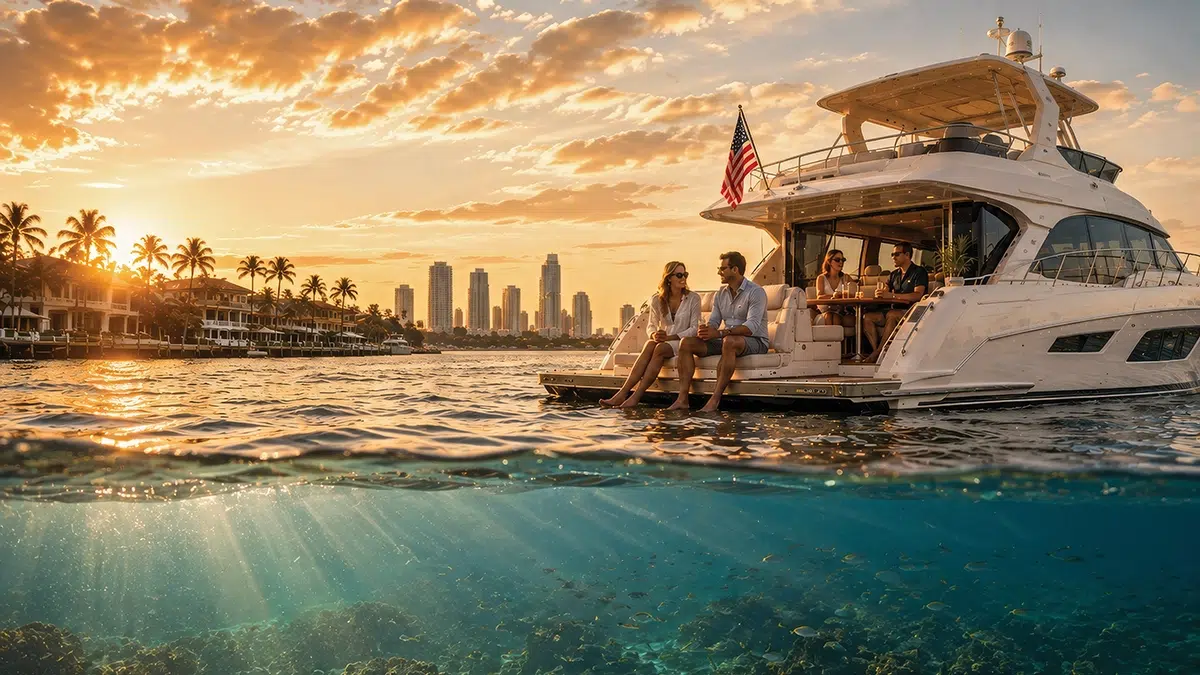
Technology alone does not close the sale. Across age groups, buyers want physical access to the water they came to enjoy. Fold-down balconies, submersible swim platforms, broad beach clubs, and open transoms bring guests closer to the water, and storage for paddleboards, tenders, SeaBobs, and inflatable slides has become a design priority. “They love sitting on the swim platform with their feet in the water,” Cashman says.
Also Read
Marlow 70E Review: A Family Yacht With a Story
Purpose Perfected: Aboard a Marlow 70E Built Around Family Built around family, refined through experience, and finished in a color...
Families prioritize flexible cabins, guest privacy, safer movement between decks, and multiple social zones. Younger professionals value remote-work capability and simple operation. Early retirees seek range, storage, and liveaboard comfort. Ultrahigh-net-worth customers expect crew efficiency, customization, and abundant space for wellness, dining, and recreation.
The modern market resists reduction to a single age, profession, budget, or vessel type. Established buyers still command substantial purchasing power, while the post-2020 customer is younger, more digital, and more likely to have sampled boating first. At every tier, builders and dealers must sell a workable ownership experience alongside the vessel. “At the end of the day, nobody needs a boat, but you want a day on the water with your family,” Cashman says. “Once you sell boating, then you sell the boat.”