
...
Southern Boating & Yachting
  • Boats
    • Center Consoles
    • Day Boats
    • Downeast
    • Dual Consoles
    • Hybrid Electric Boats
    • Long-range cruisers
    • Motoryachts
    • Power Cats
    • Sailing
    • Sport Cruisers
    • Sport Fishing Boats
    • Superyacht
    • Tenders & Ribs
    • Trawlers & Tugs
  • Destinations
    • Bahamas
    • Caribbean
    • Central/South America
    • Charter
    • Europe
    • Great Loop
    • Pacific
    • U.S. Atlantic
    • U.S. Gulf
    • U.S. Inland
    • U.S. Mid-Atlantic
    • U.S. Midwest
    • U.S. Northeast
    • Travel
  • Engine Room
    • Electrical Systems
    • Engines
      • Electric & Hybrid
      • Inboards
      • Outboards
    • Generators
    • Stabilizers
    • Systems & Pumps
  • Maintenance
    • DIY
    • Haul-Out Guides
    • Refit
  • Electronics
    • Audio
    • Gadgets
    • Helm Electronics
    • Lighting
    • Radios & Communication
    • Other Technology
  • Lifestyle
    • Fishing
    • Finance & Insurance
    • Food
      • Appetizers
      • Dessert
      • Drinks
      • Entrées
      • Holiday
      • Menus
    • Gear
    • News
    • People
    • Safety & Regulations
    • Shop
  • Digital Edition
  • Subscribe
No Result
View All Result
  • Boats
    • Center Consoles
    • Day Boats
    • Downeast
    • Dual Consoles
    • Hybrid Electric Boats
    • Long-range cruisers
    • Motoryachts
    • Power Cats
    • Sailing
    • Sport Cruisers
    • Sport Fishing Boats
    • Superyacht
    • Tenders & Ribs
    • Trawlers & Tugs
  • Destinations
    • Bahamas
    • Caribbean
    • Central/South America
    • Charter
    • Europe
    • Great Loop
    • Pacific
    • U.S. Atlantic
    • U.S. Gulf
    • U.S. Inland
    • U.S. Mid-Atlantic
    • U.S. Midwest
    • U.S. Northeast
    • Travel
  • Engine Room
    • Electrical Systems
    • Engines
      • Electric & Hybrid
      • Inboards
      • Outboards
    • Generators
    • Stabilizers
    • Systems & Pumps
  • Maintenance
    • DIY
    • Haul-Out Guides
    • Refit
  • Electronics
    • Audio
    • Gadgets
    • Helm Electronics
    • Lighting
    • Radios & Communication
    • Other Technology
  • Lifestyle
    • Fishing
    • Finance & Insurance
    • Food
      • Appetizers
      • Dessert
      • Drinks
      • Entrées
      • Holiday
      • Menus
    • Gear
    • News
    • People
    • Safety & Regulations
    • Shop
  • Digital Edition
  • Subscribe
No Result
View All Result
Southern Boating & Yachting
No Result
View All Result
Home Engines Boat Systems & Pumps
Boat holding tank maintenance

Boat Holding Tank Maintenance: What Owners Should Check

August 5, 2026
in Boat Systems & Pumps, Maintenance
0
585
SHARES
3.2k
VIEWS
Share on FacebookShare on LinkedInShare via Email
Subscribe to the print magazine | $29.95 for 12 issues

Holding Tank Maintenance: The Job You Shouldn't Skip

By Doug Thompson 

Boat holding tank maintenance sits near the bottom of everyone’s list of favorite jobs and near the top of the list that quietly protects a cruising season. Skip it, and the system answers with odors, clogs, and a repair bill that arrives at the least convenient anchorage. Stay ahead of it, and the whole arrangement disappears into the background, which is exactly where it belongs. 

Everyone knows how a toilet works, but a marine sanitation system does not behave like the plumbing at home. Limited space and constant motion account for most of the difference, and they shape every part of the routine that follows. 

Subscribe Here For More Boating Content

Why a Marine Head Isn't a Household Toilet

On a 50-foot cruising boat, the head pushes waste into a holding tank through manual or electric pumps. From there the waste leaves the boat one of two ways: a marina pump-out station draws it off, or the system discharges it offshore where the law allows. 

Residential plumbing runs far simpler. A house toilet uses gravity and water pressure to move waste straight into a municipal sewer or a septic field, and nothing stays behind. 

That single difference — onboard storage — puts the monitoring and cleaning burden on the owner. It sounds worse than it is. A short routine, repeated consistently, covers nearly all of it. 

How Do You Know When the Holding Tank Is Full?

Guesswork fails here, and the failure is memorable. Level monitoring solves it, and manufacturers now build sensing and alarms directly into their systems. 

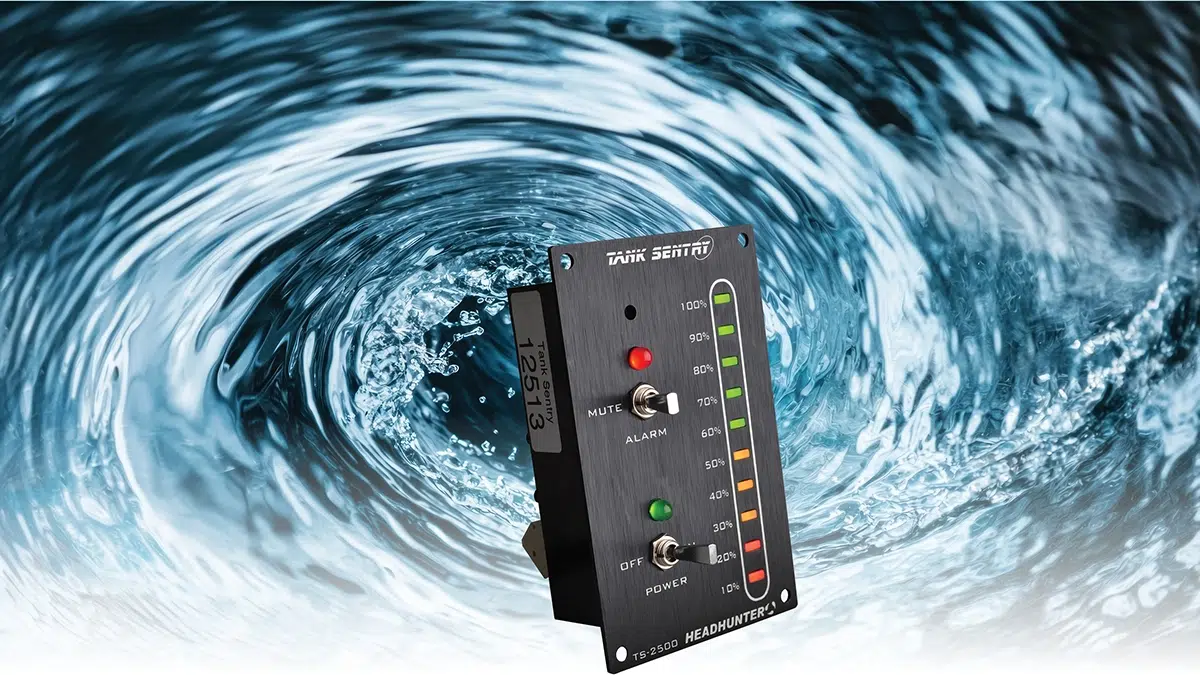
“Tank Sentry continuously monitors holding tank level and will fire an audio and visual alarm when the level exceeds the programmed alarm point,” says Andre Kramer, service manager at Headhunter, a leading holding tank manufacturer based in Fort Lauderdale. “This can be integrated to the ship’s remote alarm system if available. In addition, holding tanks should be flushed and pumped yearly and professionally cleaned every three to five years.” 

An alarm still depends on someone hearing it. Michael Hashem, product manager for Dometic‘s facility in Sparta, Tennessee, where the SeaLand rotomolded tanks are made, points out where that assumption breaks down. 

Also Read

Hinckley Picnic Boat 39 on the water

Downeast Picnic Boats: 10 Builders Worth a Look in 2026

August 5, 2026
3.3k

Downeast Picnic Boats With Classic Coastal Character The Maine lobster boat earned its reputation the hard way — hauling traps...

“Monitoring the holding tank to ensure you can plan a pump-out at a convenient time is helpful,” Hashem says. “However, it will not keep you from overfilling the tank if you ignore or forget to monitor the levels. Adding a full tank system shutdown device, like a Dometic System Shutdown Relay accessory (for Dometic sanitation systems only), will cut power to the system once the tank-full indicator is activated, preventing damage and a potential sewage spill from an overfilled holding tank.” 

A shutdown relay turns a warning into a hard stop. For an owner who charters the boat, hosts guests who do not know the system, or simply runs a busy weekend, that backstop earns its keep. 

What Should Never Go Down a Marine Head

A marine sanitation system handles two things well, and only two. Everything else creates work. 

“Marine sanitation systems should work well when processing quick-dissolving tissue and human waste,” Hashem says. “Flushing other items that may be common in residential space (wrappers, feminine hygiene products, cotton swabs, and other materials) will often cause a partial or full blockage at the toilet pump. If those materials make it to the tank, they can cause further issues with blocking the discharge dip tube and fouling other parts of the system. Basically, do not use the toilet as a convenient garbage can.” 

Tissue choice matters more than most owners expect. Manufacturers make quick-dissolving toilet tissue with far less adhesive than standard household paper, so it breaks apart instead of mounding and clumping together in the holding tank. That single swap prevents a large share of pump and dip-tube trouble before it starts. 

Post the rules where guests can read them. A crew that understands the head costs nothing; a blocked discharge dip tube costs a weekend. 

Also Read:

Boat capsizes in waves at Boynton Inlet

When Seconds Count at Boynton Inlet

July 31, 2026
3.7k

Every boater along Florida's Atlantic coast knows Boynton Inlet demands respect. On calm mornings it's a straightforward gateway...

How Should You Pump Out a Holding Tank?

Two habits separate a tank that stays clean from one that builds sludge: dump it full, and rinse it empty. 

Avoid dumping tanks that sit below two-thirds full. If the schedule forces a pump-out anyway, add water to reach that level first. The added volume suspends solids in fluid and promotes a far more thorough discharge, which leaves less behind to harden on the bottom. 

Rinsing and flushing the tank once it runs empty ranks as the most overlooked task in the routine. A clean holding tank extends the life of the wastewater system, prevents the costly repairs that clogged drains cause, and — most valuable to anyone living aboard — keeps marine toilet smells under control. 

“Rinsing the full system and tank during pump-outs reduces buildup and unplanned maintenance,” Hashem says. “When ready to pump out at a dock, flush each toilet a couple of times. This rinses the lines and pumps. After the tank is pumped out, use the garden hose provided at the pump-out station to add a few gallons of water to the holding tank through the hull pump-out fitting on your boat. This dilutes what is left at the bottom of the tank. Pumpout again to complete the process. This is a good time to add fresh holding tank treatment by simply flushing it through each toilet.” 

The second pump-out costs a few extra minutes at the dock and pays for itself over a season. Flushing the treatment through each toilet rather than pouring it down the deck fitting also doses the hoses, which is where bilge odors usually start. 

Choosing a Tank Treatment That Won't Cause Damage

Harsh cleaning chemicals create their own problems in a holding tank. Reach instead for biodegradable treatment products, and favor formulations that will not harm septic fields or the other waste treatment systems the pump-out station eventually feeds. 

One useful economy: blackwater tank chemicals also work in the gray-water tank, delivering the same odor-control and tank-discharge benefits. Owners running both tanks can standardize on a single product rather than stocking two. Also check the plumbing fixtures as instructed in our sanitation system sniff test. 

Gray Water, Blackwater, and the Rules That Govern Both

Gray-water holding tanks collect wastewater from sinks, showers, and laundry. These systems run simpler, and they often drain to a gray-water tank or a sump box fitted with an automatic pump. 

Blackwater tanks hold waste from the toilets, and regulators treat them very differently. The Clean Water Act governs them heavily: no discharge within three nautical miles of shore, and never in no-discharge zones or inland waters. 

Know which zone the boat sits in before the tank approaches full, not after. Cruising grounds along the Florida coast, the Keys, and much of the Chesapeake carry no-discharge designations, and the penalty for guessing wrong runs well past inconvenient. 

None of this work is difficult. Monitor the level, dump the tank full, rinse it empty, treat it with something biodegradable, and keep everything but tissue and waste out of the bowl. Do that consistently and the sanitation system becomes the part of the boat nobody thinks about — which, for a holding tank, counts as a complete success. 

For more engine-room know-how from cruisers who have done the work, subscribe to the Southern Boating & Yachting newsletter — then explore the digital magazine for the full run of maintenance features. 

Subscribe Here For More Boating Content

Related Posts

DIY

DIY – Dec 2023

August 5, 2026
3.2k
DIY

DIY – Sept 2024

August 5, 2026
3.3k
GROCO Hydromatic self-cleaning seawater strainer amid floating sargassum
Boat Systems & Pumps

How Do Seawater Strainers Protect Your Engine?

July 20, 2026
3.5k
Protect boat electronics from the harsh marine environment
Electronics

How to Protect Marine Electronics from Salt, Lightning, and Moisture

June 25, 2026
3.3k
Haul Out Without the Headache: A Boat Owner’s Inspection Checklist
Haul-Out Guides

Haul Out Without the Headache: A Boat Owner’s Inspection Checklist

June 15, 2026
3.3k
10 Tips for Marine Generator Maintenance When Cruising Remotes Locales
Engine Room

10 Tips for Marine Generator Maintenance When Cruising Remotes Locales

May 11, 2026
3.4k
Previous Post

DIY – Dec 2023

Leave a Reply Cancel reply

Your email address will not be published. Required fields are marked *

Recommended

Midnight Express 34 Sportfish Tender

Don’t Miss: Midnight Express 34 Sportfish/Tender

October 30, 2016
3.3k
Legacy 36

Legacy 36

October 11, 2016
3.4k

Don't miss it

Boat holding tank maintenance
Boat Systems & Pumps

Boat Holding Tank Maintenance: What Owners Should Check

August 5, 2026
3.2k
DIY

DIY – Dec 2023

August 5, 2026
3.2k
Entrées

At Ease – Dec 2023

August 5, 2026
3.2k
Fishing

Fish Tales – Dec 2023

August 5, 2026
3.2k
Fishing

Fish Tales – Jan 2024

August 5, 2026
3.2k
Engines

Engine Room – May 2024

August 5, 2026
3.3k
Facebook Instagram TikTok Youtube LinkedIn

Navigation

  • About Us
  • Advertise
  • Subscribe
  • Careers
  • Contact Us
  • Terms Of Service
  • Privacy Policy
  • Manage My Subscription
logo

1591 E. Atlantic Blvd, 2nd Floor
Pompano Beach, FL 33060
Office: +1 (954) 522-5515
Contact us: info@southernboating.com


Newsletter

* indicates required

© 2026 Southern Boating & Yachting, Inc.

No Result
View All Result
  • Boats
    • Center Consoles
    • Day Boats
    • Downeast
    • Dual Consoles
    • Hybrid Electric Boats
    • Long-range cruisers
    • Motoryachts
    • Power Cats
    • Sailing
    • Sport Cruisers
    • Sport Fishing Boats
    • Superyacht
    • Tenders & Ribs
    • Trawlers & Tugs
  • Destinations
    • Bahamas
    • Caribbean
    • Central/South America
    • Charter
    • Europe
    • Great Loop
    • Pacific
    • U.S. Atlantic
    • U.S. Gulf
    • U.S. Inland
    • U.S. Mid-Atlantic
    • U.S. Midwest
    • U.S. Northeast
    • Travel
  • Engine Room
    • Electrical Systems
    • Engines
      • Electric / Hybrid Engines
      • Inboards
      • Outboards
    • Generators
    • Stabilizers
    • Systems & Pumps
  • Maintenance
    • DIY
    • Haul-Out Guides
    • Refit
  • Electronics
    • Audio
    • Gadgets
    • Helm Electronics
    • Lighting
    • Radios & Communication
    • Other Technology
  • Lifestyle
    • Fishing
    • Finance & Insurance
    • Food
      • Appetizers
      • Dessert
      • Drinks
      • Entrées
      • Holiday
      • Menus
    • Gear
    • News
    • People
    • Safety & Regulations
    • Shop
  • Digital Edition
  • Subscribe
  • Advertise

© 2026 Southern Boating & Yachting, Inc.

  • About Us
  • Advertise
  • Subscribe
  • Careers
  • Contact Us
  • Terms Of Service
  • Privacy Policy
  • Manage My Subscription
  • About Us
  • Advertise
  • Subscribe
  • Careers
  • Contact Us
  • Terms Of Service
  • Privacy Policy
  • Manage My Subscription