
Change Your Boat's Fuel Filter Fast
If you don’t keep your fuel filters clean, your boat’s going to get mean.
By Capt. Chris Caldwell
It’s the weekend. With the wind in our faces and spray flying, the adventure begins. We load the boat with snacks and the latest toys, stow the lines, and away we go. Turning into the channel, we accelerate to climb on plane.
But something doesn’t feel right. Instead of planing, we’re digging a hole. The engines won’t reach our usual rpm, and they’re struggling. What’s happening?
Signs of a Clogged Diesel Fuel Filter
Start by thinking dirty. When did you last take the boat out? Barnacles or seaweed on the hull create drag, restrict water flow under the boat, and can make engines struggle or even overheat. If a diver cleans your bottom on a regular schedule, though, the hull should be clean. Keep thinking dirty.
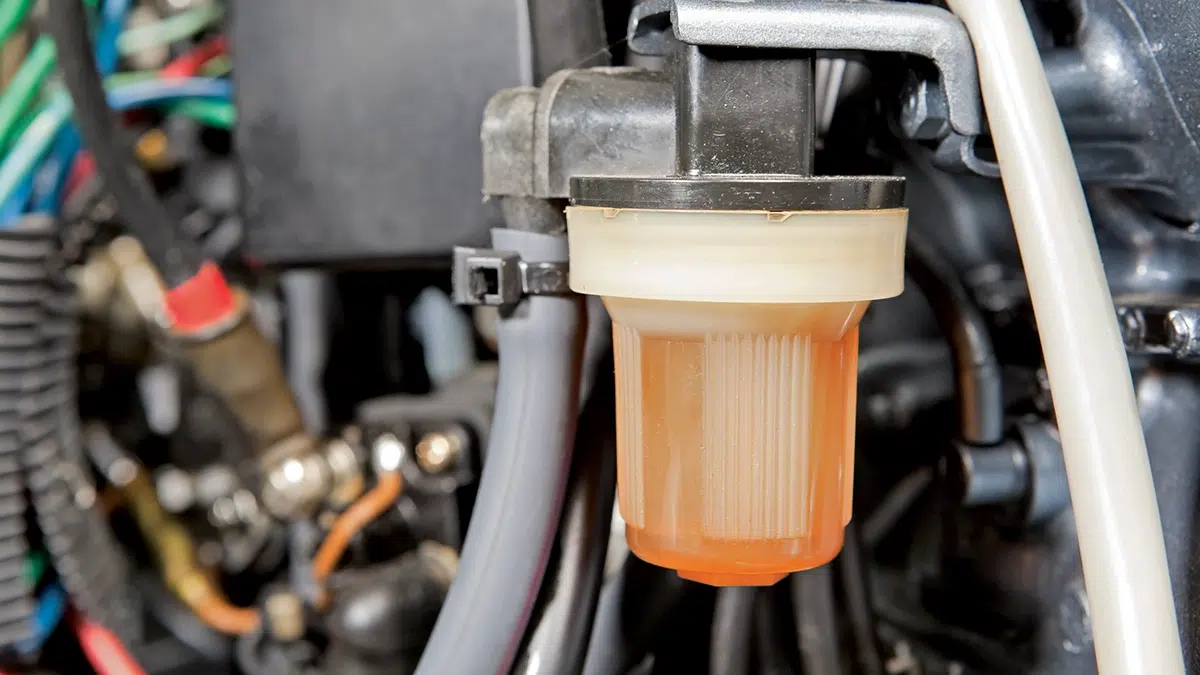
The problem may be dirty fuel filters. Diesel engines pull a lot of fuel through the filter, creating a vacuum to maintain steady flow. When the filter captures excessive debris, a vacuum gauge on the filter housing shows the restriction. Gauges carry numerical markings, but the best designs keep it simple with color coding: white is acceptable, yellow means caution, and red means danger.
Subscribe Here For More Boating Content
What Tools Do You Need to Change a Fuel Filter?
If the fuel filter is the culprit, first idle to a safe spot where you can change the element. Whether you hire a tech or do it yourself, your spare-parts kit, aboard and not in your garage, should hold a few spare filter elements so you can get the job done without delay. If you DIY, the process is easier than you think.
Collect your tools before you start:
- A spare fuel filter element
- Plastic zip-top bags
- A dental pick
- A rectangular plastic dishpan or drip tray
- A garden kneeling pad
- A 1-gallon jug of diesel to prime the new, dry filter
- Gloves (unless you want to smell like diesel all day)
- A small fan to keep yourself cool
Run the engine-room blowers to clear any fumes before you begin.
How to Change a Diesel Fuel Filter, Step by Step
- Shut off the fuel supply valve. It may sit near the filter or on the tank itself. This step keeps fuel from flowing out over the top of the open filter or backflowing toward the tank.
- Place the drip tray under the filter and unscrew the top. Most tops seal with O-rings, so the effort should be minimal.
- Pull the element out of the filter body slowly and let it drain, then lift it out and set it in the drip tray.
- Inspect the old element. Look at the pleated filter to see how dirty it is, and check the fuel in the bottom of the bowl for debris or water.
Also Read
Where Are Horizon Yachts Built? Inside the Kaohsiung Yard
Horizon Yachts Open House 2026: Four Debuts in Taiwan A visit to Horizon Yachts’ Taiwan facilities offered an exclusive first...

5. Insert the new element slowly and push down gently. Giving the dry element time to absorb fuel prevents splashing.
6. Prime the filter. Either open the fuel valve and let fuel backflow into the filter (if the tank level sits higher than the filter top), or top off the filter with diesel from your jug. This can take a few minutes because the fuel must soak into the paper element. Eventually, fuel will rise to the top of the filter body.
7. Replace the rubber O-ring gaskets in the top before you screw it back on. The dental pick helps remove a stubborn old O-ring. You don’t need brute force to secure the top, just a gentle oomph.
8. Open the fuel supply valve and start the engine.
DIY or Hire a Pro?
Changing your fuel filter sounds simple and easy, because it is. If you aren’t comfortable doing it, hire a mechanic to show you, and do it yourself next time. Monitor the vacuum gauge on the filter and plan filter changes ahead of time. Preventive maintenance keeps the fun flowing.
Captains Chris and Alyse Caldwell are USCG 100-ton Masters and Cruising Coaches who offer personal boat training online or aboard your boat. Questions? Email chris@captainchrisyachtservices.com.