
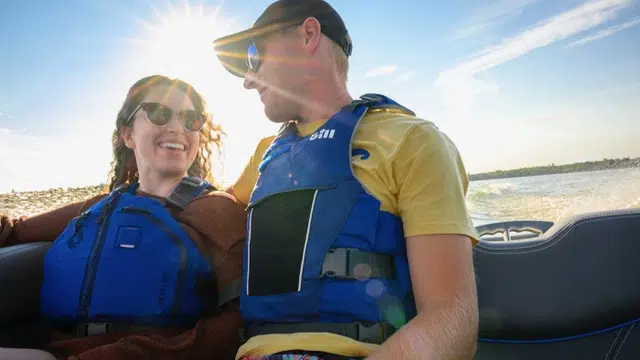
The new Level 50 buoyancy aids promise more comfort and freedom of movement, but just like the pills spoofed in this cheeky new video they come with important instructions.
The joke practically writes itself: A sleek new product promises better performance, greater freedom and renewed confidence.
We’ve all seen the ads, but this performance enhancer isn’t a pill. It’s a new class of U.S. Coast Guard-approved personal flotation devices designed to be lighter, slimmer and less restrictive than conventional life jackets.
Before deciding whether one is right for you, consult the Water Sports Foundation’s complete guide to Level 50 life jackets. Then consider your swimming ability, boating activity and distance from help. No doctor’s appointment required.
Less Bulk, More Mobility
A Level 50 buoyancy aid provides at least 50 newtons, or about 11 pounds, of flotation. That is less than the approximately 16 pounds supplied by the most-common recreational life jackets, which are rated Level 70, or Type III in the old nomenclature.
The reduced flotation allows manufacturers to build lower-profile devices for active boating and watersports. Expect purpose-built models for fishing, kayaking, stand-up paddleboarding, sailing, personal watercraft, wakeboarding, wakesurfing and general boating.
The Coast Guard approved the Level 50 standard in late 2025 to give boaters the option of more comfortable PFDs they are more likely to wear.
Scott Szczepaniak, a recreational boating safety specialist with the Coast Guard’s 7th District, sums up the agencies thinking. Any PFD you are wearing is better than one stuffed in a hatch somewhere.
A bulky vest quickly loses its appeal for Southern boaters during those humid afternoons on Biscayne Bay or sweltering runs across Lake Okeechobee. A lighter PFD that stays on your body can provide a genuine safety advantage.
Listen to the Fast-Talker
Level 50 devices are technically buoyancy aids rather than full-featured life jackets. The distinction means they help a person float but are not designed to turn an unconscious wearer face-up.
The difference affects where and by whom they should be used. Level 50 PFDs are intended for competent swimmers operating in calm, protected water where assistance is close. They are not the best choice for non-swimmers, poor swimmers, rough conditions or offshore trips where rescue may take time.
They also carry an important legal caveat. Coast Guard-approved Level 50 devices count toward federal carriage requirements only when worn. Tossing one beneath the console does not satisfy the rule.
Children may legally wear Level 50 buoyancy aids, but the same cautions apply. A child using one should be a capable swimmer in protected water under attentive adult supervision.
Level 50 models will reach American stores in 2027.
So, is Level 50 right for you? If you are a strong swimmer who values mobility and stays close to help, the answer may be yes. Just remember that improved performance comes with added responsibility.