Inside the Plant Where Pursuit Boats Are Built
By Lori Capullo • Photos by Xavier Marañón
In the light of morning, before the heat settles over the water and the wind begins to ripple the inlet, the factory floor already hums. Inside the Pursuit Boats plant in Fort Pierce, Florida, hulls sit in various stages of becoming: sleek, white promises of days offshore, lines cast into deep water. Workers move deliberately and rhythmically, each with a distinct purpose and role in creating the next Pursuit vessel.
Watch that floor for an hour and you learn how Pursuit boats are built — in layers, by hand, under checklists, by people who intend to still be standing at the same bench in ten years. Nearly 50 years after Leon Slikkers put the Pursuit name on a line of fishing boats, the method still explains the brand better than any brochure.
Subscribe Here For More Boating Content
Where Pursuit Boats Take Shape
Fort Pierce holds all of it. The company completed the 182,000-square-foot plant there in 2020, and the added room let production scale while the standards held. Today 555 employees work the site, and many of them count their time with the company in decades rather than years.
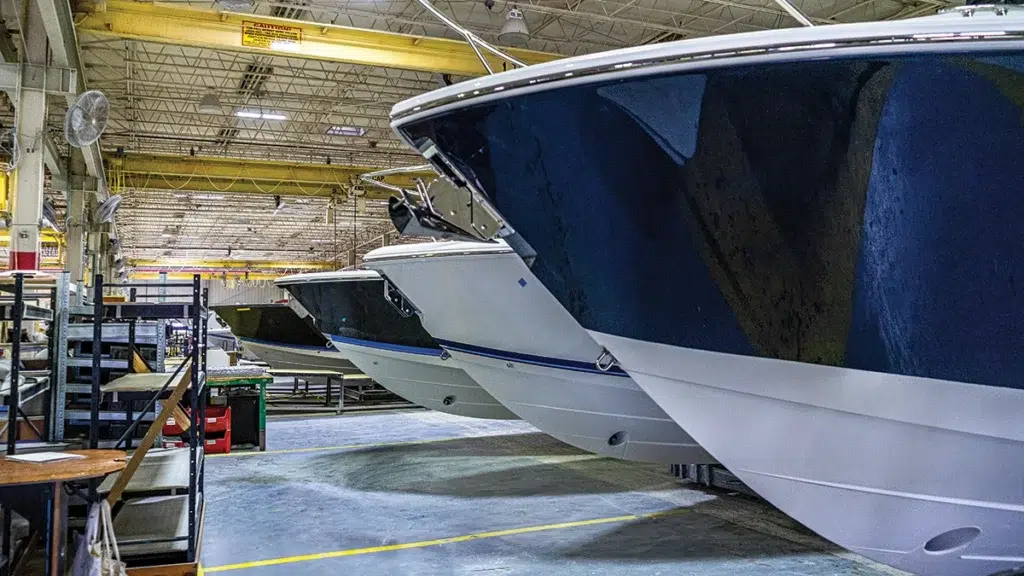
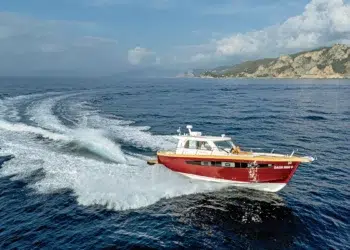
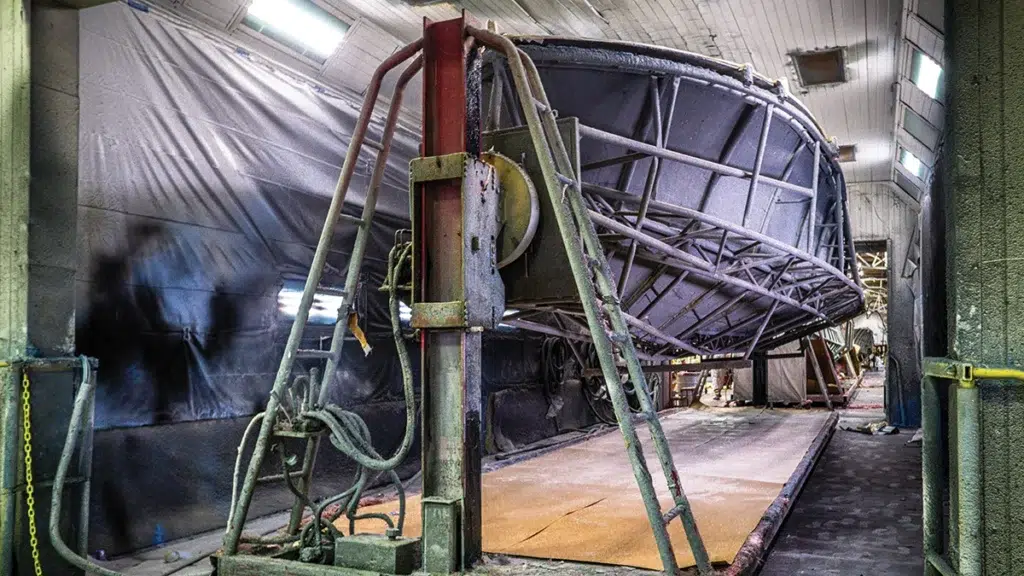
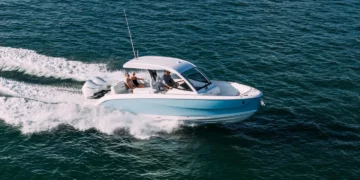
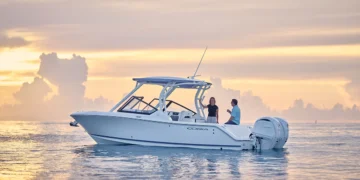
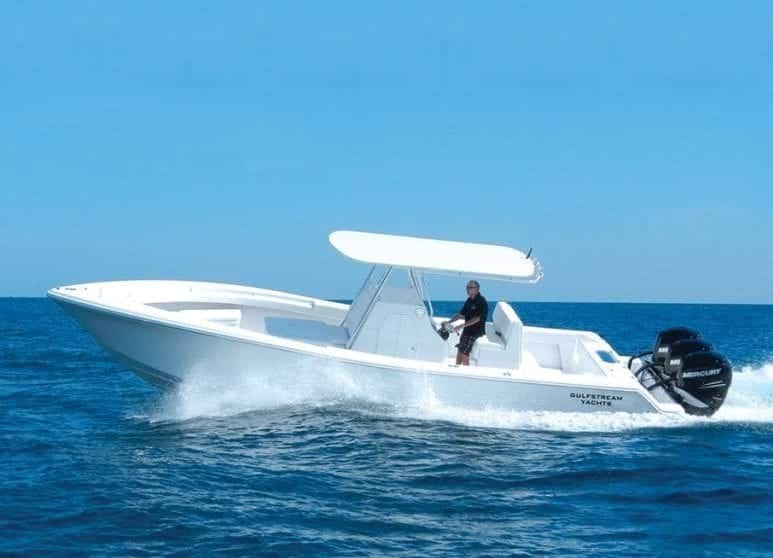
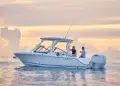
Every boat (like the latest Pursuit DC 286) starts in the same place: the spray booth, where crews apply gelcoat and a hull first takes on its shape and finish. From there the vessel moves down the line as a project more than a product — one that demands attention and receives it.
How Does a Pursuit Hull Come Together?
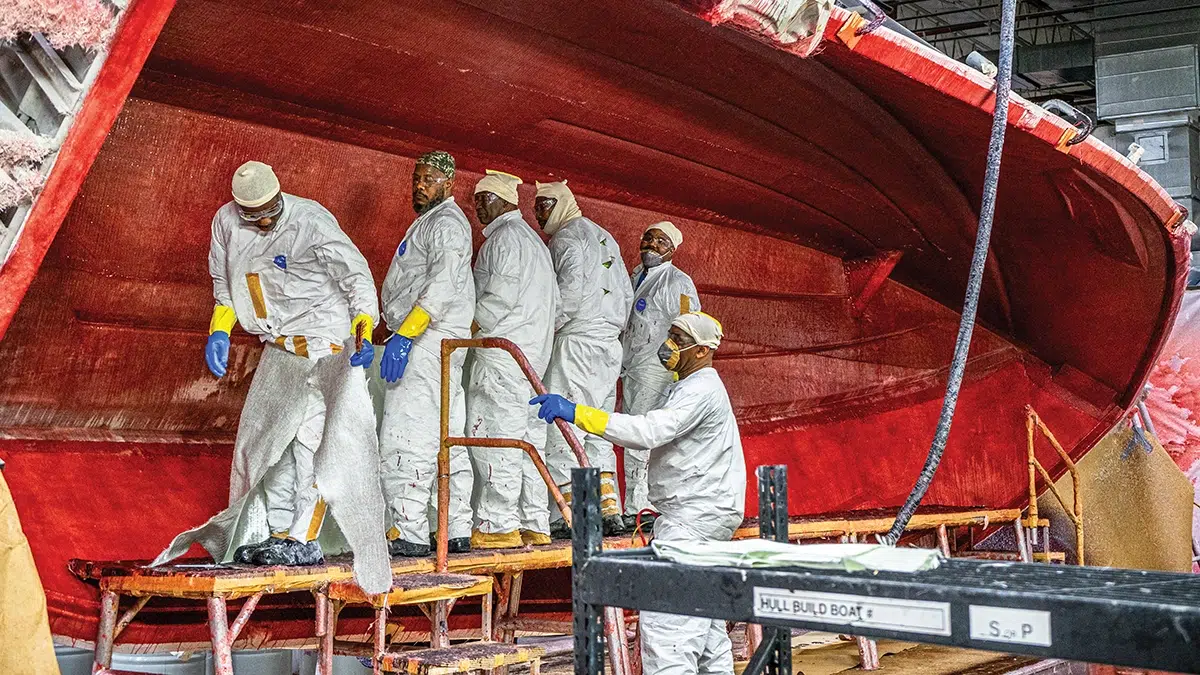
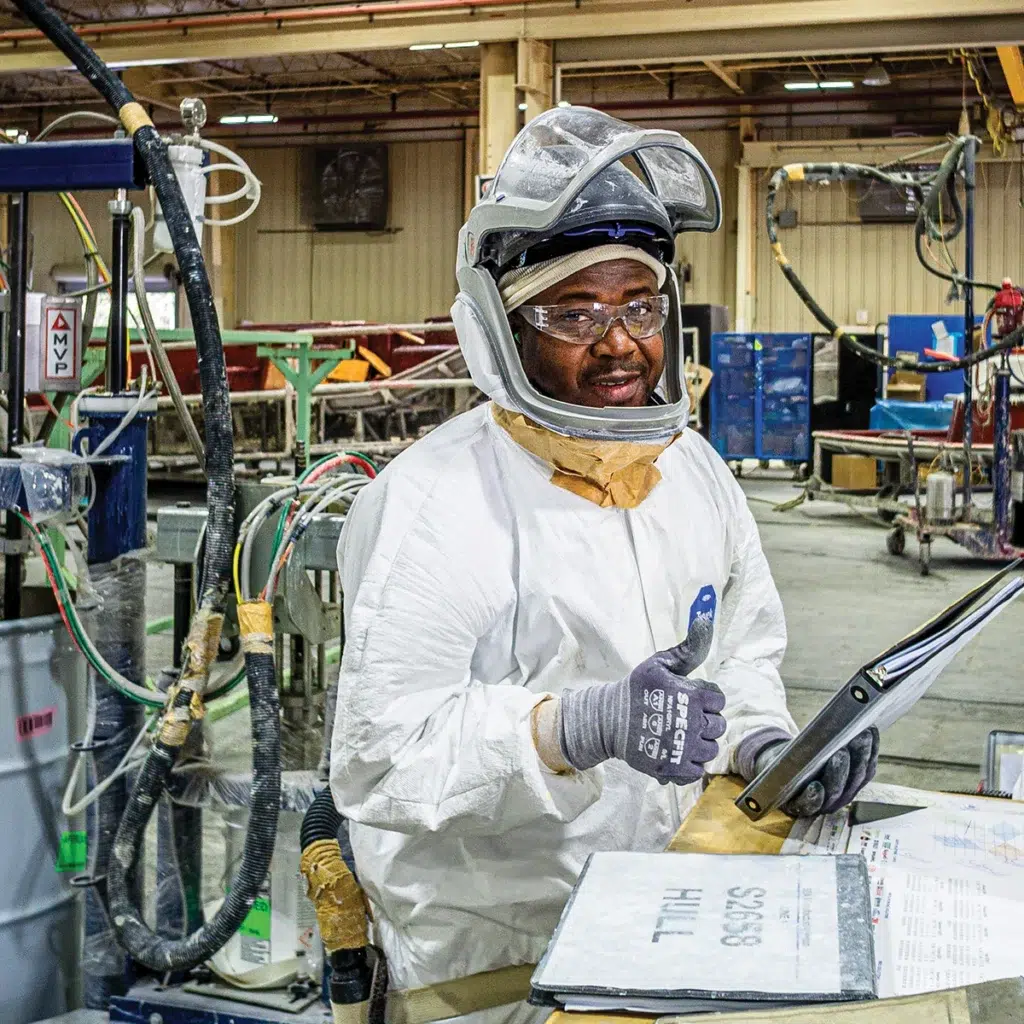
A hull begins as layers. Crews digitally cut each composite layer to exact specifications before placing it within the hull and the structural components, then apply knit fiberglass by hand during lamination. Taskie Walters and Wadson Louis work resin into a mold with the unhurried pace the stage demands. Nobody rushes this part. A mistake made now reverberates throughout the life of the vessel.
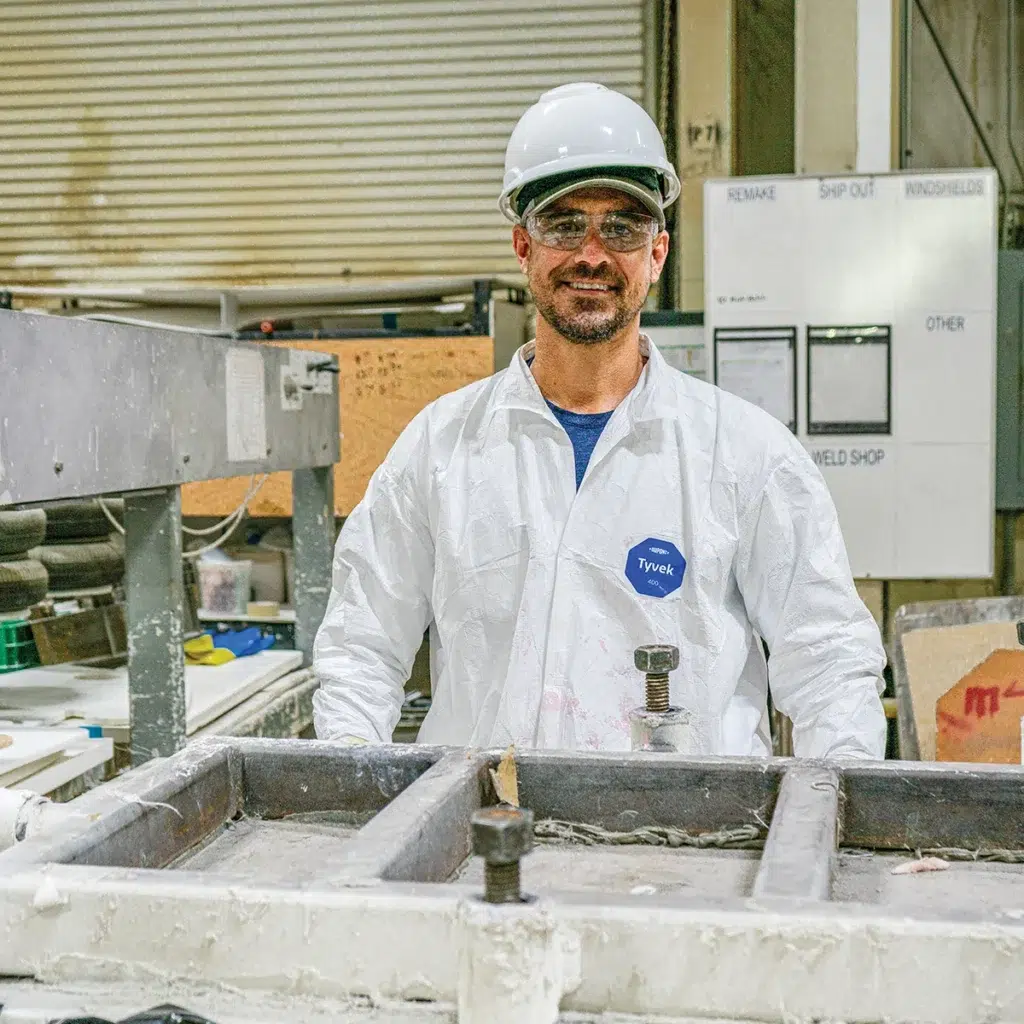
Smaller components get the same discipline. Pursuit manufactures deck hatches through a closed-mold process that produces a smooth Class A finish on both sides — the visible face and the one an owner may never look at twice.
Also Read:
Tilt and Trim Troubleshooting
When your outboard’s tilt and trim system fails, you feel it immediately. You can’t optimize your running angle...
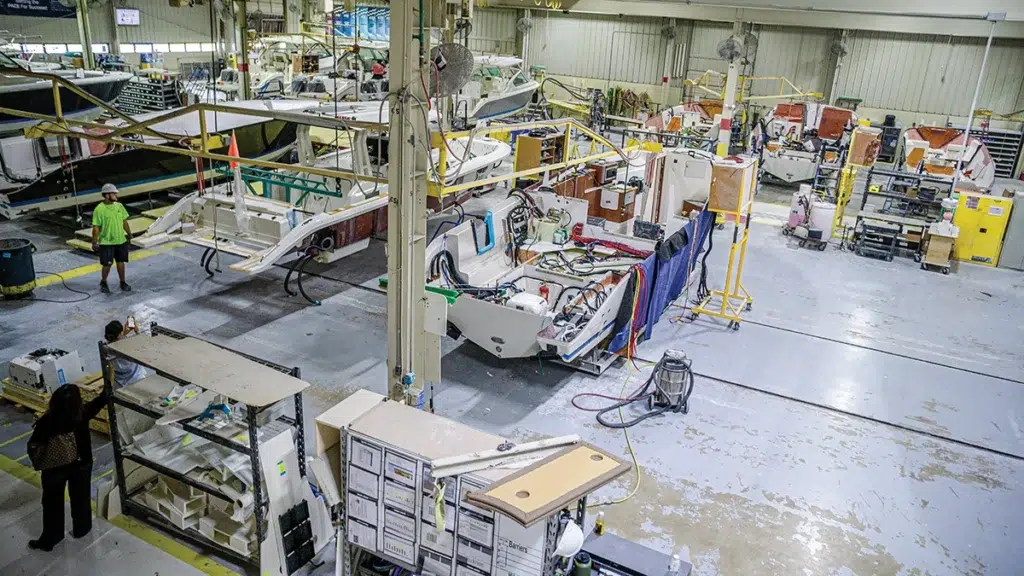
Then systems go in: electrical, plumbing, propulsion. Every wire runs secured. Every connection gets checked, then checked again. A single boat routinely passes through dozens of hands, each one responsible for a specific piece of the whole, and logbooks at each station track the steps behind it. Technicians work the checklists meticulously.
Upholstery runs its own craft alongside the line. Mike Tory and Maria Luviano of Pursuit’s upholstery team create custom-fitted cushions, canvas, and sun protection systems built to complement every boat’s unique configuration — which means no two sets come off the bench quite alike.
Before any boat ships, it goes in the water. Pursuit water-tests every vessel to confirm system performance and overall readiness, so the first person to find a problem works for the builder, not the buyer.
Why the Same Hands Stay on the Line
In an industry often marked by turnover, Pursuit became known for something quieter but more powerful: loyalty. Workers build careers with the brand. Supervisors once apprenticed on the same line they now run. Families pass down skills the way others pass down heirlooms, and in a sense the boats carry the fingerprints of entire lifetimes.
That loyalty ties to care as much as to culture. Safety, for instance, amounts to more than a requirement here — it functions as a point of pride. In 2021 the company reached one million work hours without a lost-time incident, a milestone the floor celebrated less as a statistic than as proof of collective discipline and respect for one another.
Ask a technician what they do and they will not simply name a task. They will talk about the finished boat — how it rides, how it feels, how it represents the brand. That sense of shared ownership resists manufacturing, and Pursuit cultivated it over decades. It shows in the details customers notice, and just as much in the ones they never will.

From 1977 Fishing Boats to Yacht-Level Comfort
The company began in 1977, when entrepreneur Leon Slikkers introduced a new line of fishing boats under the Pursuit name. What started as an extension of S2 Yachts — a modest operation with a few dozen employees — quickly became something more ambitious. It was not just about building boats. It was about building them right.
Through the 1980s, expansions came steadily and the employee count swelled into the hundreds. But growth alone does not define a company; plenty of manufacturers expand. What set Pursuit apart was the way it scaled — carefully and purposefully, never abandoning the craftsmanship that anchored it from the beginning. In the 1990s the company formalized programs around quality and continuous improvement, embedding a mindset that shaped generations of employees. Meeting expectations was not the goal; refining them constantly was.
Also Read
Walker Bay. Driven by Design.
walkerbay.com For many yacht owners, the tender is often viewed as a necessity—a practical tool used to shuttle guests ashore,...
By the 2000s and 2010s, Pursuit had established itself as a premium builder, making some of the best boats built in the USA, blending fishing functionality with yacht-level comfort. New models pushed boundaries — larger, more refined, more technologically advanced. Flagship vessels in the Offshore and Sport series signaled a company that was no longer just competing, but leading.
Malibu Boats acquired the brand in 2018, and the transition opened a new chapter with expanded resources and broader reach. For some companies that kind of change dilutes identity; for Pursuit it became an opportunity to reinforce it. Investments in facilities, including the Fort Pierce plant, let the company scale production while its exacting standards held.
The consistency shows up in the scorecard, too. Pursuit has earned the NMMA Marine Industry Customer Satisfaction Index award for more than 20 consecutive years. That kind of track record does not come from marketing. It comes from execution.
What 50 Years Looks Like From the Floor
Back on the factory floor, another hull inches forward. A technician pauses, runs a hand along the surface, and checks for imperfections too subtle for machines to detect. Nearby, a newer employee watches closely, learning not just the technique but the standard. This is how the company moves forward — not in leaps, but in layers. Boat by boat, year by year, generation by generation.
Fifty years in, Pursuit Boats is not just marking longevity. It is marking continuity — the rare ability to evolve without forgetting exactly who you are.
For more builder profiles and boat reviews from people who actually run the boats, subscribe to the Southern Boating & Yachting newsletter — then explore the digital magazine for the full issue.