
...
Southern Boating & Yachting
  • Boats
    • Center Consoles
    • Day Boats
    • Downeast
    • Dual Consoles
    • Hybrid Electric Boats
    • Long-range cruisers
    • Motoryachts
    • Power Cats
    • Sailing
    • Sport Cruisers
    • Sport Fishing Boats
    • Superyacht
    • Tenders & Ribs
    • Trawlers & Tugs
  • Destinations
    • Bahamas
    • Caribbean
    • Central/South America
    • Charter
    • Europe
    • Great Loop
    • Pacific
    • U.S. Atlantic
    • U.S. Gulf
    • U.S. Inland
    • U.S. Mid-Atlantic
    • U.S. Midwest
    • U.S. Northeast
    • Travel
  • Engine Room
    • Electrical Systems
    • Engines
      • Electric & Hybrid
      • Inboards
      • Outboards
    • Generators
    • Stabilizers
    • Systems & Pumps
  • Maintenance
    • DIY
    • Haul-Out Guides
    • Refit
  • Electronics
    • Audio
    • Gadgets
    • Helm Electronics
    • Lighting
    • Radios & Communication
    • Other Technology
  • Lifestyle
    • Fishing
    • Finance & Insurance
    • Food
      • Appetizers
      • Dessert
      • Drinks
      • Entrées
      • Holiday
      • Menus
    • Gear
    • News
    • People
    • Safety & Regulations
    • Shop
  • Digital Edition
  • Subscribe
No Result
View All Result
  • Boats
    • Center Consoles
    • Day Boats
    • Downeast
    • Dual Consoles
    • Hybrid Electric Boats
    • Long-range cruisers
    • Motoryachts
    • Power Cats
    • Sailing
    • Sport Cruisers
    • Sport Fishing Boats
    • Superyacht
    • Tenders & Ribs
    • Trawlers & Tugs
  • Destinations
    • Bahamas
    • Caribbean
    • Central/South America
    • Charter
    • Europe
    • Great Loop
    • Pacific
    • U.S. Atlantic
    • U.S. Gulf
    • U.S. Inland
    • U.S. Mid-Atlantic
    • U.S. Midwest
    • U.S. Northeast
    • Travel
  • Engine Room
    • Electrical Systems
    • Engines
      • Electric & Hybrid
      • Inboards
      • Outboards
    • Generators
    • Stabilizers
    • Systems & Pumps
  • Maintenance
    • DIY
    • Haul-Out Guides
    • Refit
  • Electronics
    • Audio
    • Gadgets
    • Helm Electronics
    • Lighting
    • Radios & Communication
    • Other Technology
  • Lifestyle
    • Fishing
    • Finance & Insurance
    • Food
      • Appetizers
      • Dessert
      • Drinks
      • Entrées
      • Holiday
      • Menus
    • Gear
    • News
    • People
    • Safety & Regulations
    • Shop
  • Digital Edition
  • Subscribe
No Result
View All Result
Southern Boating & Yachting
No Result
View All Result
Home Maintenance DIY
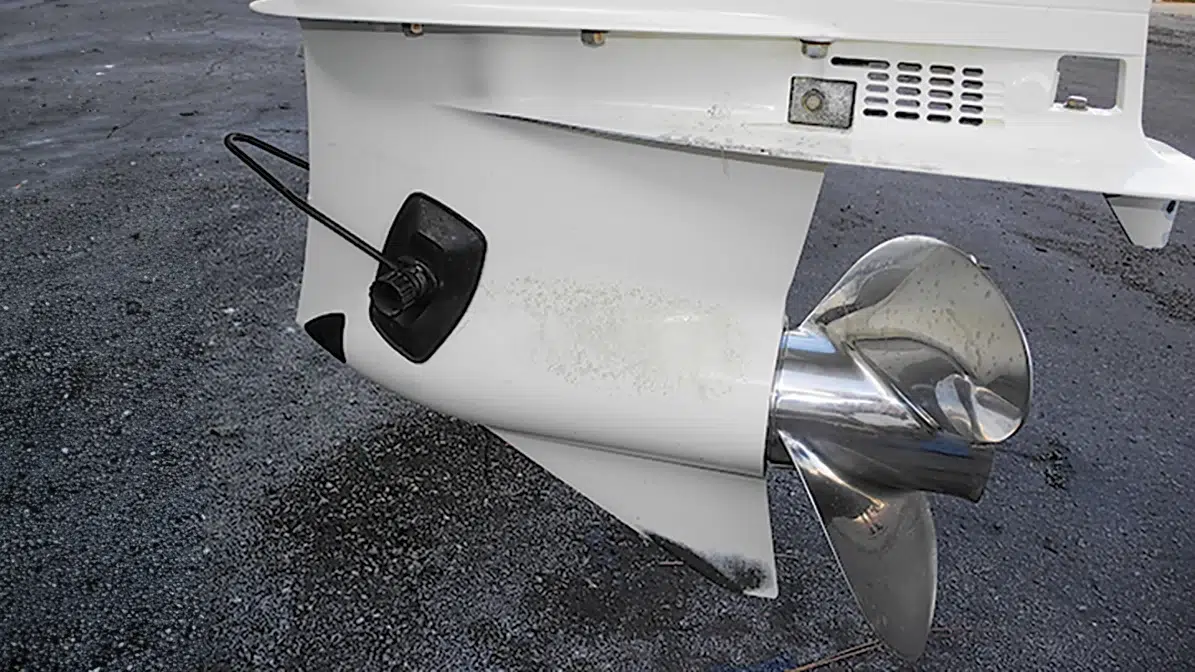
Outboard Motor Maintenance showing a clean prop

Outboard Motor Maintenance Fundamentals: Keep Your Engine Clean And Vibrant

Flush It

April 17, 2024
in DIY, Maintenance
0
685
SHARES
3.8k
VIEWS
Share on FacebookShare on LinkedInShare via Email
Subscribe to the print magazine | $29.95 for 12 issues

Keep Your Outboard Motor Clean

You couldn’t imagine drinking the water your boat floats in. That’s exactly what your engine ingests with raw-water cooling: saltwater crystals, gritty freshwater, sand, or mud. Let’s not forget the microscopic organisms such as zebra mussels, barnacle larvae, or oyster spats. All this and more are pumped through your boat’s engine cooling system. Some of this may remain inside the system and should be flushed out. These are fundamentals to outboard motor maintenance.

Why Flush?

Engine cooling systems are defined in two different styles, open loop and closed loop. Open loop is usually used on outboard engines. The closed-loop cooling system is seen more on inboard engines using heat exchangers. 

Simply stated, an open-loop outboard motor pulls raw water up from the lower unit by using a rubber vane impeller pump. Next, the water is pumped up to the power head through the engine block. Finally, the raw water is discharged out through the exhaust system, usually flowing underwater through the hub of the propeller. A tattle tale side stream of water will also discharge above the waterline on the starboard side of the engine to confirm water flow. 

Also Read: A Reliable Watermaker - Your Guide To Fresh And Clean Water

The raw water flows through the engine block to cool the power head, fuel pump, and exhaust system. Most engines have one or more thermostats to regulate the water flow and temperature in the engine block. A happy engine stays cool and is less likely to overheat when the raw-water cooling system flows smoothly. But remember, this raw water is full of minerals, salt, sand, dirt, and organisms. 

At the End of the Day…

Consider what happens when you put the boat away for the day. Maybe your next boat trip isn’t for another month. A lot is going on inside the raw-water cooling flow path in the engine. 

While the water drains out, it may still leave debris in the engine. That debris can grow salt crystals. All sorts of marine life may attach to the internal metal of the engine itself. A bit of sand might clog the thermostat preventing proper operation. All these concerns could cause the engine to run hotter temperatures than designed. Failure to flush can lead to a shorter engine life because of internal metal corrosion.
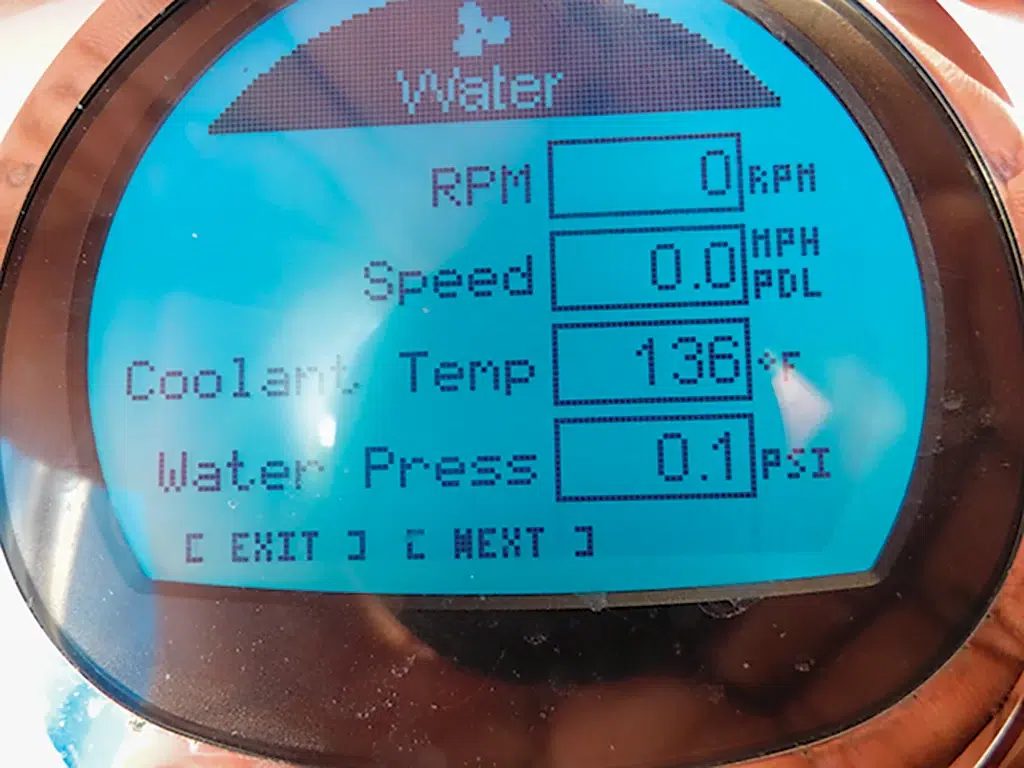
Outboard Motor Maintenance Tips

Outboard motorboats are often dry stored, either on a trailer, dry stack, or a lift behind the house. After a good day on the water, many boaters bring the boat home and do a lot of docking maneuvers. Reverse and forward and reverse again to land the boat at your dock or trailer. But look at the water as you aggressively reverse the engine. See the dirty water blowing forward? Your engine is ingesting that dirty water, stirred-up sand, and mud. Consider planning your docking further in advance to aim better at the landing dock. If you use reverse less, the water will be clearer and less agitated. Then you are not pulling up as much gritty water into the engine.

Subscribe For Regular DIY Articles

Freshwater Flush 

When possible after each boat trip, flush the outboard motor cooling system with freshwater. Use the convenient garden hose connector on the port side of the outboard. Read the engine manual to learn the proper method and amount of time suggested to flush the motor. This is done on the trailer or lift without running the outboard motor. Many people try to do this while the engine is warm from running and the thermostat is open. However, the colder water temperature from the garden hose will cool and close the thermostat anyway. Then the freshwater flush will bypass the closed thermostat and flush the rest of the cooling system not including the raw-water pump in the lower unit.

A special motor flushing device clamps your garden hose to the lower unit of the outboard. These clamps are also known as earmuffs and are sold in most boat stores. Connect the garden hose, turn it on, and start the engine. The water flow will go through the raw-water pump to satisfy the engine cooling needs. Run it at a fast idle to achieve the power head temperature to open the thermostat and flush the engine system. 
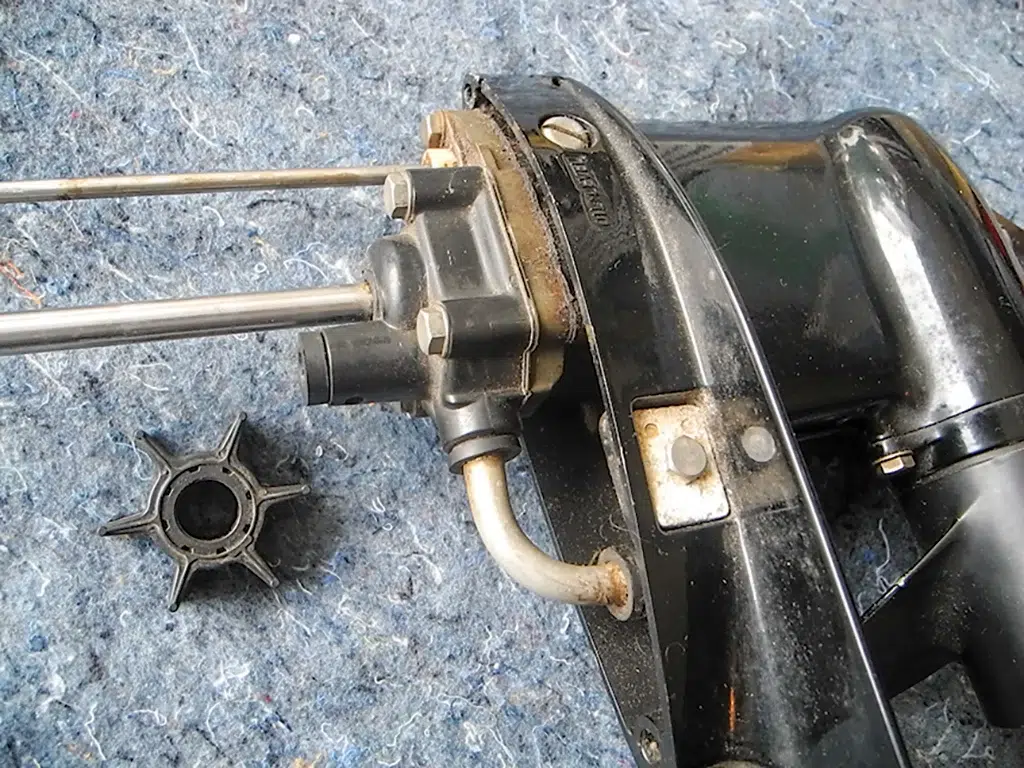
Water Pump

Instead of the earmuffs, consider using a large bucket or small drum full of freshwater to submerge the raw-water intake port. A product called a flush bucket or flush bag is a slightly quieter option than the earmuffs. Seems like a good idea to have a collapsible water bucket that is easy to stow when you don’t need it. But be sure to carefully follow the instructions for use.

Final Outboard Motor Maintenance Tip: Salt-free, Please!

Part of regular engine flushing should also include a salt-dissolving product to remove the salt crystals from the engine cooling system. A product such as Salt Away with a mixing unit can be attached to the muffs and help flush out the salt and debris during the regular flush process. Connect the flushing attachment to the lower unit water intake area, turn on the garden hose to run water through the system, start the engine at idle and advance to a fast idle, then open the mixing unit to flow the solvent into the engine and run until completely flushed. Check the manual for recommended amount of time.

These easy flushing steps will keep your outboard in top shape and ready to go again next time. Follow your engine service manual for recommended service visits for water pump impeller and thermostat changes along with oil and gear case oil changes. 

-by Capt. Chris Caldwell

Previous Post

Discover the Grady-White Freedom 415: Unmatched Value in Modern Boating

Next Post

Raymarine Announces Trade Up Sales Event

Next Post
Raymarine Trade Up Sales Event

Raymarine Announces Trade Up Sales Event

Leave a Reply Cancel reply

Your email address will not be published. Required fields are marked *

Recommended

Pursuit S 428 – FLIBS 2020 Preview

Pursuit S 428 – FLIBS 2020 Preview

October 23, 2020
3.3k
Craftsman applies Awlgrip paint

Hinckley, Awlgrip Celebrate 50 Years of Partnership in Premium Yacht Finishes

July 23, 2026
3.4k

Don't miss it

MarineMax marinas
Business

MarineMax Acquisition: Safe Harbor Agrees to $1.5 Billion Deal

August 13, 2026
3.3k
Lighthouse in Portland, Maine
Destinations

New England’s Best Anchorages for Late-Summer Cruising

August 12, 2026
3.7k
After his boat sank Easton Barrett recorded a farewell message
Safety Gear

A Beacon in the Blue: How a PLB Saved Five Boaters

August 12, 2026
3.4k
ProMariner TruePower Plus 2000PS marine inverter mounted in a boat’s engine room
Electrical

Marine Inverter Sizing: How Much Power Your Boat Needs

August 11, 2026
3.4k
Yacht Interior Designer Kimberly Pucci
People

Yacht Interior Designer Kimberly Pucci on American Luxury

August 7, 2026
3.4k
Boat holding tank maintenance
Boat Systems & Pumps

Boat Holding Tank Maintenance: What Owners Should Check

August 5, 2026
3.4k
Facebook Instagram TikTok Youtube LinkedIn

Navigation

  • About Us
  • Advertise
  • Subscribe
  • Careers
  • Contact Us
  • Terms Of Service
  • Privacy Policy
  • Manage My Subscription
logo

1591 E. Atlantic Blvd, 2nd Floor
Pompano Beach, FL 33060
Office: +1 (954) 522-5515
Contact us: info@southernboating.com


Newsletter

* indicates required

© 2026 Southern Boating & Yachting, Inc.

No Result
View All Result
  • Boats
    • Center Consoles
    • Day Boats
    • Downeast
    • Dual Consoles
    • Hybrid Electric Boats
    • Long-range cruisers
    • Motoryachts
    • Power Cats
    • Sailing
    • Sport Cruisers
    • Sport Fishing Boats
    • Superyacht
    • Tenders & Ribs
    • Trawlers & Tugs
  • Destinations
    • Bahamas
    • Caribbean
    • Central/South America
    • Charter
    • Europe
    • Great Loop
    • Pacific
    • U.S. Atlantic
    • U.S. Gulf
    • U.S. Inland
    • U.S. Mid-Atlantic
    • U.S. Midwest
    • U.S. Northeast
    • Travel
  • Engine Room
    • Electrical Systems
    • Engines
      • Electric / Hybrid Engines
      • Inboards
      • Outboards
    • Generators
    • Stabilizers
    • Systems & Pumps
  • Maintenance
    • DIY
    • Haul-Out Guides
    • Refit
  • Electronics
    • Audio
    • Gadgets
    • Helm Electronics
    • Lighting
    • Radios & Communication
    • Other Technology
  • Lifestyle
    • Fishing
    • Finance & Insurance
    • Food
      • Appetizers
      • Dessert
      • Drinks
      • Entrées
      • Holiday
      • Menus
    • Gear
    • News
    • People
    • Safety & Regulations
    • Shop
  • Digital Edition
  • Subscribe
  • Advertise

© 2026 Southern Boating & Yachting, Inc.

  • About Us
  • Advertise
  • Subscribe
  • Careers
  • Contact Us
  • Terms Of Service
  • Privacy Policy
  • Manage My Subscription
  • About Us
  • Advertise
  • Subscribe
  • Careers
  • Contact Us
  • Terms Of Service
  • Privacy Policy
  • Manage My Subscription