
...
Southern Boating & Yachting
  • Boats
    • Center Consoles
    • Day Boats
    • Downeast
    • Dual Consoles
    • Hybrid Electric Boats
    • Long-range cruisers
    • Motoryachts
    • Power Cats
    • Sailing
    • Sport Cruisers
    • Sport Fishing Boats
    • Superyacht
    • Tenders & Ribs
    • Trawlers & Tugs
  • Destinations
    • Bahamas
    • Caribbean
    • Central/South America
    • Charter
    • Europe
    • Great Loop
    • Pacific
    • U.S. Atlantic
    • U.S. Gulf
    • U.S. Inland
    • U.S. Mid-Atlantic
    • U.S. Midwest
    • U.S. Northeast
    • Travel
  • Engine Room
    • Electrical Systems
    • Engines
      • Electric & Hybrid
      • Inboards
      • Outboards
    • Generators
    • Stabilizers
    • Systems & Pumps
  • Maintenance
    • DIY
    • Haul-Out Guides
    • Refit
  • Electronics
    • Audio
    • Gadgets
    • Helm Electronics
    • Lighting
    • Radios & Communication
    • Other Technology
  • Lifestyle
    • Fishing
    • Finance & Insurance
    • Food
      • Appetizers
      • Dessert
      • Drinks
      • Entrées
      • Holiday
      • Menus
    • Gear
    • News
    • People
    • Safety & Regulations
    • Shop
  • Digital Edition
  • Subscribe
No Result
View All Result
  • Boats
    • Center Consoles
    • Day Boats
    • Downeast
    • Dual Consoles
    • Hybrid Electric Boats
    • Long-range cruisers
    • Motoryachts
    • Power Cats
    • Sailing
    • Sport Cruisers
    • Sport Fishing Boats
    • Superyacht
    • Tenders & Ribs
    • Trawlers & Tugs
  • Destinations
    • Bahamas
    • Caribbean
    • Central/South America
    • Charter
    • Europe
    • Great Loop
    • Pacific
    • U.S. Atlantic
    • U.S. Gulf
    • U.S. Inland
    • U.S. Mid-Atlantic
    • U.S. Midwest
    • U.S. Northeast
    • Travel
  • Engine Room
    • Electrical Systems
    • Engines
      • Electric & Hybrid
      • Inboards
      • Outboards
    • Generators
    • Stabilizers
    • Systems & Pumps
  • Maintenance
    • DIY
    • Haul-Out Guides
    • Refit
  • Electronics
    • Audio
    • Gadgets
    • Helm Electronics
    • Lighting
    • Radios & Communication
    • Other Technology
  • Lifestyle
    • Fishing
    • Finance & Insurance
    • Food
      • Appetizers
      • Dessert
      • Drinks
      • Entrées
      • Holiday
      • Menus
    • Gear
    • News
    • People
    • Safety & Regulations
    • Shop
  • Digital Edition
  • Subscribe
No Result
View All Result
Southern Boating & Yachting
No Result
View All Result
Home Haul-Out Guides
Watermaker screen options

A Reliable Watermaker: Your Guide To Fresh And Clean Water

July 18, 2023
in Haul-Out Guides
0
703
SHARES
3.9k
VIEWS
Share on FacebookShare on LinkedInShare via Email

Watermaker Woes

Ensuring Freshness: The Art of Watermaker Maintenance

Most water-making equipment on boats today use the reverse osmosis (RO) technique for converting sea water into drinking water. These RO watermaker systems remove solids, bacteria, and most viruses, and the water produced is often better quality than from a city water supply. 

Today’s yachts will often have a washer and dryer on board, and with freshwater toilets, showering, doing the dishes, and cleaning the boat, large amounts of freshwater are consumed. A good rule of thumb for water consumption is 20 gallons per day per person. A reliable watermaker that can produce 20-30 gallons per hour will more than handle the requirements of two to four people on board. While most systems start out as dependable, neglect or improper use of the equipment can soon make them problematic. 

Subscribe to the print magazine | $29.95 for 12 issues

Two factors can severely limit or destroy a watermaker’s ability to produce ample quantities of clean drinking water:

  • exceeding the maximum operating pressure range, and
  • lack of proper flushing after every water-making cycle.

There are a few other aspects of operating the water-making equipment that will improve the life of the system, but these two are paramount.
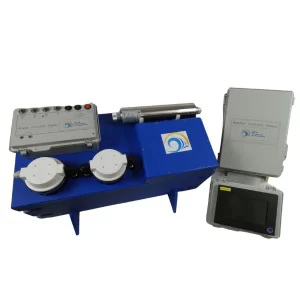
A watermaker with a white background

Watermaker Maintenance: Your Key to Reliable Fresh Water

Operating Pressure

Most systems are designed to operate at 800 psi back pressure. Excessive pressure, even for a few seconds, can cause issues. While most membranes can handle a bit more than 800 psi, the O-rings in the end caps and the hydraulic seal on the membrane are pushed to their design limits when exceeded.  

If the hydraulic seal on the membrane leaks-by or fails, the system won’t be able to build pressure, so water production volume can be affected, or in some cases, if the failure is substantial, it will not produce any water. Reducing the pressure will usually allow the hydraulic seal to hold it, but every time that method doesn’t work, a little damage is done which can be an issue down the road. Although failure of the hydraulic seal will limit the amount of water produced, the water will not be bad because of it.

Also Read: How Do Watermakers Work?

However, if the O-rings in the membrane housing end caps leak-by or fail, the system WILL produce water that has excessive dissolved solids. When those O-rings leak or fail, raw water is allowed to enter the freshwater side of the system and into the freshwater tank. The entire tank can be contaminated in a matter of minutes.

We have seen O-ring leak-by cause a Total Dissolved Solids (TDS) reading to jump from 190 ppm (parts per million) to 840 ppm within a few seconds (the EPA suggests not to consume water with TDS above 500 ppm). There are typically two O-rings in each end cap, so the redundancy should protect the system, but excessive pressure can damage them. Failed O-rings will also impede the system’s ability to come up to operating pressure. Those little O-rings are all that stand between you and bad water. 

Excessive pressure spikes, on the other hand, can rupture or damage the interior of the membrane, which will then allow raw water to enter the freshwater side of the system. Although this is rare, repetitive pressure spikes can cause a rupture. After you have set the pressure, it’s a good idea to monitor it because pressure can have momentum in some systems. We have seen pressure continually increase as the high-pressure pump comes up to operating temperature, so we recommend an initial setting between 725 psi and 750 psi as a safeguard. 

The Importance of Flushing

Remember, raw water contains bacteria and possibly viruses in addition to salts and minerals. These are all normally removed by the RO process. If the water from your watermaker tastes salty or is discolored, raw water, including bacteria, is likely getting to your tank. At the end of the water-making cycle, when the pumps stop, whatever raw water is remaining in the membranes, tubing, pipes, and pumps still houses those contaminants.

In addition, the membrane is a structure with lots of little crevices where bacteria can hide. If the equipment is not flushed out, those leftover bacteria and viruses can grow, which can limit your system’s ability to produce water and possibly get through the membrane into your water system. Flushing after each water making cycle will push most of those contaminants out thus protecting your system.
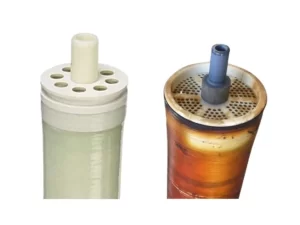
clean and dirty watermaker membranes

Dispelling Watermaker Rumors

Some folks believe that making water every couple of days negates the need to flush. We don’t subscribe to that thought process and believe that the continual buildup of contaminates will lead to a shortened membrane life. Typical systems will need 4-8 gallons of freshwater to properly flush the entire system.

Watermakers are an expensive investment. Caring for that investment will make sure the system performs as it should. Your health depends on safe, clean water.

-by Glenn Adams, GCA Automated Watermakers

Also Read: Keeping Up with the Watermakers

Previous Post

Innovative Boat Electronics at the 2023 Miami NMMA

Next Post

Cutlass Bearing Maintenance: The Easy and Comprehensive Guide You Need

Next Post
cutlass bearing maintenance success

Cutlass Bearing Maintenance: The Easy and Comprehensive Guide You Need

Leave a Reply Cancel reply

Your email address will not be published. Required fields are marked *

Recommended

Pursuit S 428 – FLIBS 2020 Preview

Pursuit S 428 – FLIBS 2020 Preview

October 23, 2020
3.3k
Craftsman applies Awlgrip paint

Hinckley, Awlgrip Celebrate 50 Years of Partnership in Premium Yacht Finishes

July 23, 2026
3.4k

Don't miss it

MarineMax marinas
Business

MarineMax Acquisition: Safe Harbor Agrees to $1.5 Billion Deal

August 13, 2026
3.3k
Lighthouse in Portland, Maine
Destinations

New England’s Best Anchorages for Late-Summer Cruising

August 12, 2026
3.7k
After his boat sank Easton Barrett recorded a farewell message
Safety Gear

A Beacon in the Blue: How a PLB Saved Five Boaters

August 12, 2026
3.4k
ProMariner TruePower Plus 2000PS marine inverter mounted in a boat’s engine room
Electrical

Marine Inverter Sizing: How Much Power Your Boat Needs

August 11, 2026
3.4k
Yacht Interior Designer Kimberly Pucci
People

Yacht Interior Designer Kimberly Pucci on American Luxury

August 7, 2026
3.4k
Boat holding tank maintenance
Boat Systems & Pumps

Boat Holding Tank Maintenance: What Owners Should Check

August 5, 2026
3.4k
Facebook Instagram TikTok Youtube LinkedIn

Navigation

  • About Us
  • Advertise
  • Subscribe
  • Careers
  • Contact Us
  • Terms Of Service
  • Privacy Policy
  • Manage My Subscription
logo

1591 E. Atlantic Blvd, 2nd Floor
Pompano Beach, FL 33060
Office: +1 (954) 522-5515
Contact us: info@southernboating.com


Newsletter

* indicates required

© 2026 Southern Boating & Yachting, Inc.

No Result
View All Result
  • Boats
    • Center Consoles
    • Day Boats
    • Downeast
    • Dual Consoles
    • Hybrid Electric Boats
    • Long-range cruisers
    • Motoryachts
    • Power Cats
    • Sailing
    • Sport Cruisers
    • Sport Fishing Boats
    • Superyacht
    • Tenders & Ribs
    • Trawlers & Tugs
  • Destinations
    • Bahamas
    • Caribbean
    • Central/South America
    • Charter
    • Europe
    • Great Loop
    • Pacific
    • U.S. Atlantic
    • U.S. Gulf
    • U.S. Inland
    • U.S. Mid-Atlantic
    • U.S. Midwest
    • U.S. Northeast
    • Travel
  • Engine Room
    • Electrical Systems
    • Engines
      • Electric / Hybrid Engines
      • Inboards
      • Outboards
    • Generators
    • Stabilizers
    • Systems & Pumps
  • Maintenance
    • DIY
    • Haul-Out Guides
    • Refit
  • Electronics
    • Audio
    • Gadgets
    • Helm Electronics
    • Lighting
    • Radios & Communication
    • Other Technology
  • Lifestyle
    • Fishing
    • Finance & Insurance
    • Food
      • Appetizers
      • Dessert
      • Drinks
      • Entrées
      • Holiday
      • Menus
    • Gear
    • News
    • People
    • Safety & Regulations
    • Shop
  • Digital Edition
  • Subscribe
  • Advertise

© 2026 Southern Boating & Yachting, Inc.

  • About Us
  • Advertise
  • Subscribe
  • Careers
  • Contact Us
  • Terms Of Service
  • Privacy Policy
  • Manage My Subscription
  • About Us
  • Advertise
  • Subscribe
  • Careers
  • Contact Us
  • Terms Of Service
  • Privacy Policy
  • Manage My Subscription