
Counter the harsh effects of lightning, humidity, saltwater, and sun to keep marine electronics performing at their best.
By Doug Thompson
What Damages Marine Electronics?
Boat electronics don’t seem to stand a chance. The marine environment’s ceaseless beating can destroy them without proper maintenance. While today’s MFDs, radars, and VHF radios are sun-resilient and water-resistant, you can make them even more hardy.
How Lightning Affects Boat Electronics
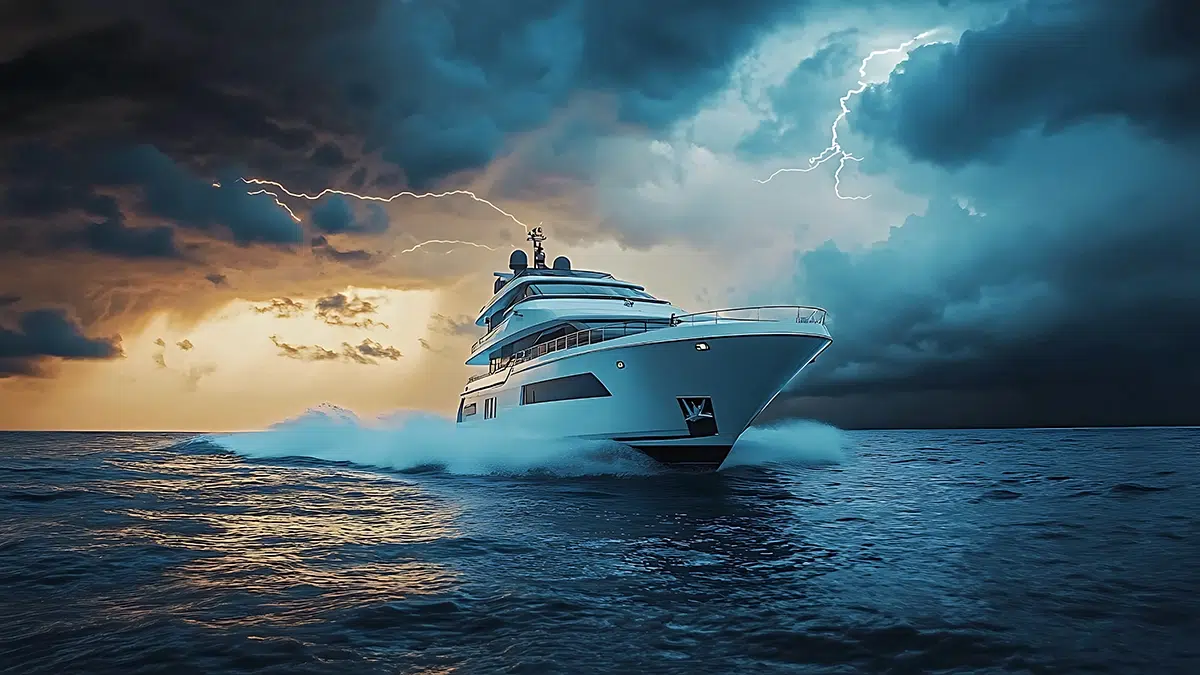
A lightning strike can be one of the most catastrophic threats, because even a nearby strike can send voltage spikes through antenna cables and power lines. Marine lightning arresters on antenna lines and DC surge protectors are common tactics, as is using isolated power circuits for crucial equipment.
“Lightning is the most difficult threat to address,” says James McGowan, senior marketing manager at Raymarine. “At a minimum, installations should follow manufacturer grounding recommendations, and owners who want added protection can consider dedicated lightning protection and surge suppression systems designed to give electrical energy a controlled path to the water.”
Subscribe Here For More Boating Content
Waterproofing and Proper Installation Matter
The first line of defense is proper installation with waterproof protection. Even equipment designed for outdoor use can fail if water penetrates cable entries or mounting points.
The key factors include installing devices with marine-grade gaskets and O-rings, and sealing screw holes and cable penetrations with marine sealant. It’s important to use highly rated IPX-rated connectors wherever possible.
Understanding IPX Ratings for Marine Electronics
Most marine electronics manufacturers test products using standards set by the International Electrotechnical Commission (IEC). IPX ratings measure an enclosure’s water resistance, where “X” indicates no rating for solid dust protection because it has not been formally tested against solid particle ingress.
IEC IPX Water Resistance Chart
IP0 No protection
IPX1 Vertically falling drops of water for minimum
of 10 minutes
IPX2 Vertically falling drops of water up to 15 degrees
from vertical for minimum of 10 minutes
IPX3 Direct spray of water up to 60 degrees from vertical
for minimum of 10 minutes
IPX4 A splash of water from any direction for minimum
of five minutes
IPX5 A 6.3 mm spray of water (12.5 liters per minute)
in any direction for at least three minutes
IPX6 A 12.5 mm spray of water (100 liters per minute)
in any direction for at least three minutes
IPX7 Complete submersion up to 1 meter deep for
30 minutes
IPX8 Continuous immersion in water under conditions
specified by the manufacturer
IPX9K Protected against high-pressure,
high-temperature jets
Also Read
Jeanneau TH38 Review: An Outboard Power Cat for the Weekend
Jeanneau TH38: What a Difference a Dayboat Makes Jeanneau's latest twin-hull series opens the door for extended fun. By Steve...
“Nothing is truly waterproof, but the majority is built to IPX7 or IPX8, which is going to be near the top of the water-resistant chart,” explains Michael Taylor, a salesman at The GPS Store in Ocean Isle Beach, North Carolina, a leading provider of recreational marine electronics worldwide. “Still, you don’t want to hose down your electronics directly for long periods of time if you can help it.”
For chartplotters or MFDs, make sure the mounting surface is flat and sealed properly. A poorly sealed mount allows saltwater spray, rain, and fresh water from rinsing to seep behind the display, eventually damaging internal circuitry.
Preventing Saltwater Corrosion
Salt is one of the most destructive forces on a boat. Salt crystals attract moisture and create conductive paths that accelerate corrosion. Preventive measures include applying dielectric grease to connectors, using heat-shrink sealed crimp terminals, spraying exposed connections with corrosion inhibitors, and regularly rinsing exposed electronics with fresh water. Special attention should be paid to antenna connectors for radar and VHF radios, which are frequently exposed to spray. Corroded connectors cause signal loss and degraded performance.
Stray electrical currents can be countered by proper grounding and bonding. Connecting electronics to a common grounding bus and then bonding them to metal structures (towers, rails, masts) can prevent damage.
Also Read:

15 Best Marinas for Yachts in 2026: Florida to the Caribbean and Beyond
Ports of Call: 15 Marinas That Elevate the Cruising Experience For today's cruisers, a marina means far more...
Why Clean Power Protects Electronics
Power management covers a wide range of techniques in protecting your electronics. That’s why you should never share poorly regulated power circuits with high-load equipment like winches or pumps. Instead, install a dedicated electronics breaker panel, using clean DC power from a regulated bus and adding inline fuses for each device. Clean power reduces voltage spikes and prevents damage to sensitive components such as radar processors and MFD network modules.
Managing Humidity and Condensation
One factor you cannot control while boating in tropical environments is humidity and condensation. These twin bugaboos can destroy electronics even without direct water exposure. “Humidity and salt water deserve the most day-to-day attention because they are constant and can cause damage quickly through corrosion of connectors, terminals, and mounts,” McGowan says.
A good idea is to use ventilated electronics lockers with desiccant packs or moisture absorbers. You can also run a fan inside electronics compartments because condensation often forms overnight when warm humid air contacts cooler electronics housings.

Protecting Electronics from Heat and UV Exposure
The sun’s ultraviolet rays also can damage electronics’ exteriors. While salt and moisture get the most attention, heat and ultraviolet radiation also shorten their lifespans. Mounting displays under helm shades or hardtops can help shield equipment, and there are also protective covers you can use when electronics are not in use. Excessive heat can degrade LCD displays and damage internal processors over time.
Boat Electronics Protection Checklist
- Inspect connectors every month.
- Apply dielectric grease annually.
- Rinse exposed electronics with fresh water.
- Cover displays when not in use.
- Check antenna connectors for corrosion.
- Verify grounding and bonding systems.
- Replace damaged seals and gaskets.
- Use surge protection where possible.
- Inspect wiring before each boating season.