
It’s that time again when we must ponder: to paint or not to paint? And what else might demand attention once your boat is hauled? There’s a lot going on under your waterline. But it is possible to make your scheduled haul-out something to look forward to rather than a dreaded chore.
How to Prepare for a Boat Haul-Out
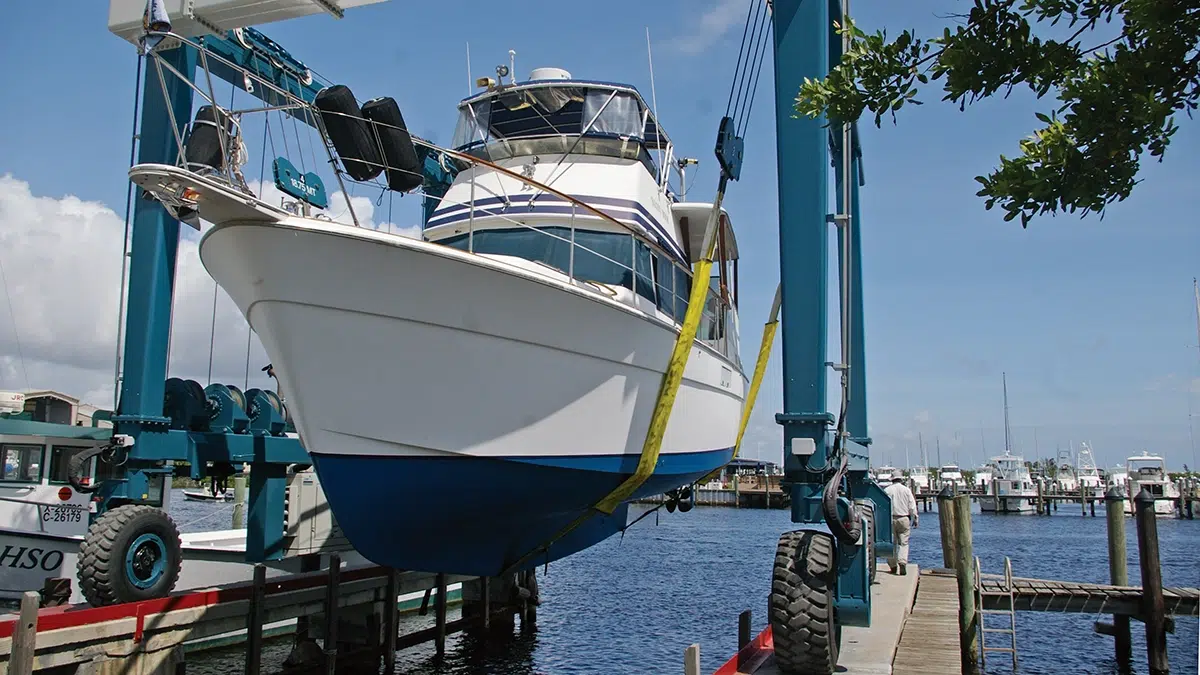
It can be nerve-racking the first time you watch your boat get plucked from the water, dangling precariously over land. Your first step is to know where the yard should place the straps that lift the boat.
If you are lucky, your boat already has labels marking recommended strap placement. If not, bring a photo of your prepurchase boat survey while it was hanging for inspection. Show your photo to the travel-lift operators so they can see your hull design and will know where to place the straps. This is important to balance the boat and prevent bending propeller shafts.
Subscribe Here For More Boating Content
What to Inspect After Your Boat Is Hauled
Once the boat is hauled, the yard should pressure-wash the grime from the hull. While this is happening, the yard team may knock off some barnacles and other growth. This is good prep for sanding later before applying antifouling paint.
Checking Anodes, Bonding Systems and Corrosion
Anodes are often called zincs regardless of their actual composition. They should be checked and compared to the last time the anodes were replaced. Look at the through-hull fittings for the engine, generator, and other raw-water pickup locations. They may have growth inside the pipe, restricting water flow.
The yard team should also study the bottom paint in search of abnormalities. A key find that might need attention is a light discoloration around the bronze fittings. We call this a halo, which is often a sign of stray electrical current shorting out into the water. This is dangerous, and the interior bonding system should be checked for proper grounding. Look for green wires on the inside of the hull fittings that may have become disconnected from the bronze valve.
Also Read:
The Luxury Water Toy Every Boater Will Want This Summer
LIND Electric Surfboards Let You Surf Anywhere—No Waves Required The modular electric surfboard system from LIND delivers wave-free...
Is It Time for New Bottom Paint?
After the pressure washing is complete, walk around and study the condition of the bottom paint. Use an approved chemical rinse to clean off the stains above your waterline before applying any new antifouling paint.
If there are many coats on the hull, then you may see the older coats bleeding through. It’s possible the more recent coat is peeling off. Some boaters even change bottom-paint colors from one haul-out to the next. This technique allows you to easily see the degradation of the paint layers.
Inspecting Running Gear and Propulsion Systems
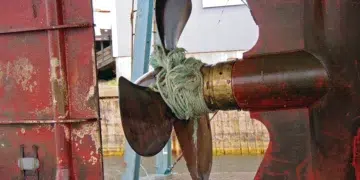
For inboard boats, check the rubber bearing insert of the propeller shaft cutlass bearing. Bounce the propeller and shaft up and down to see if there is any play or looseness that needs to be addressed.
Inboard/outboard (I/O) drive units need to be checked for the pliability of the rubber boot. There may be as many as three boots per unit (i.e., shifter, gimbal, and exhaust).
Also Read
Why the Tiara 39 LE Is One of the Best Luxury Express Cruisers Under 40 Feet
With Mercury V12 power, joystick docking, and flexible Lounge or Adventure layouts, the Tiara 39 LE delivers luxury cruising, entertaining,...
Both the I/O and straight outboard engine lower units should have anodes. Depending on the brand and horsepower, there can be many, starting with under the anti-cavitation plate, the transom bracket, power-trim push rods, and other locations. Pods require that you check the anode inside the exhaust port.
Trim tabs, bow or stern thrusters, and active fin stabilizers have anodes to be checked or replaced. The stabilizer anode may be hidden, tucked inside the shaft pocket.
Additional Maintenance Projects During a Haul-Out
Since your boat is on the hard, consider proactively changing the raw-water pump impeller and the lower-unit grease. Inboard powered boats can have that service done anytime the boat is floating at the home dock. During a three-day haul-out, additional work can be done, such as a propeller tune-up or installing a new refrigerator using the yard’s forklift.
And if you are renaming your prize possession, decal application could be easier when your boat is in the yard rather than rocking and rolling in the marina. And don’t forget the renaming ceremony.
Boat Haul-Out Inspection Checklist
- Verify travel-lift strap placement
- Pressure wash hull
- Inspect bottom paint
- Check anodes and zincs
- Examine through-hulls and seacocks
- Look for signs of stray current corrosion
- Inspect propellers and shafts
- Check cutlass bearings
- Inspect trim tabs and thrusters
- Replace impellers if needed
- Service lower units
- Schedule propeller repairs
- Complete cosmetic projects
- Plan relaunch inspection
Captains Chris & Alyse Caldwell are USCG 100-ton Masters and cruising coaches who offer personal boat training online or on board your boat anywhere. Questions? Ask Captain Chris, chris@captainchrisyachtservices.com.