Every boater along Florida’s Atlantic coast knows Boynton Inlet demands respect.
On calm mornings it’s a straightforward gateway to the Gulf Stream. But when a strong easterly swell collides with an outgoing tide, the inlet transforms into one of South Florida’s most challenging passes. Standing waves stack up outside the jetties, creating a narrow gauntlet where timing, experience and boat handling make all the difference.
On one unforgettable day, those conditions turned a family outing into a life-or-death emergency, and highlighted the initiative of a group of personal watercraft riders who happened to be in exactly the right place.
A Front-Row Seat to Disaster
Shane McDonald and his teenage son, Jake, were at the inlet that day with the Florida Freeriders, a group of personal watercraft enthusiasts who regularly train and ride in heavy surf.
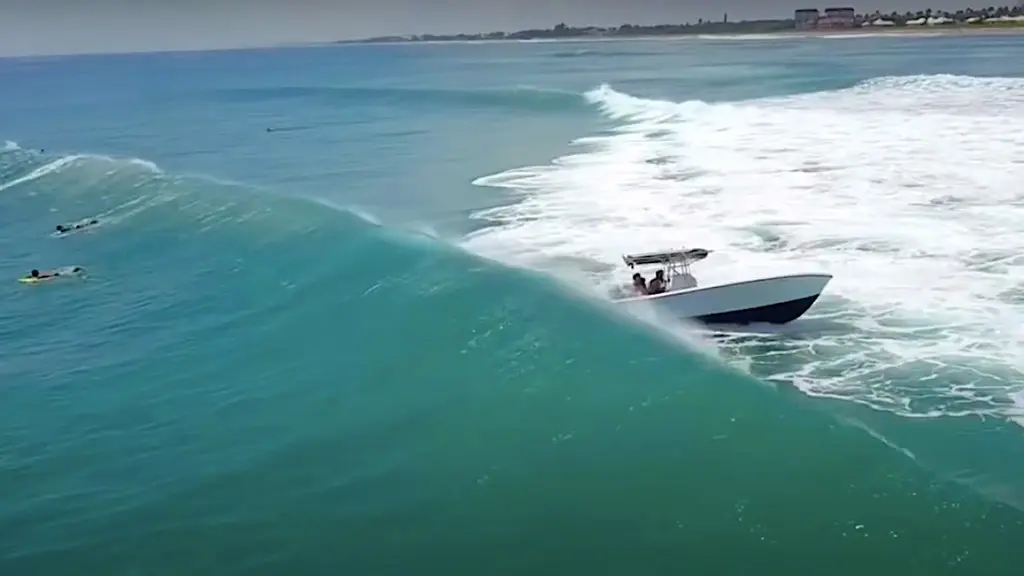
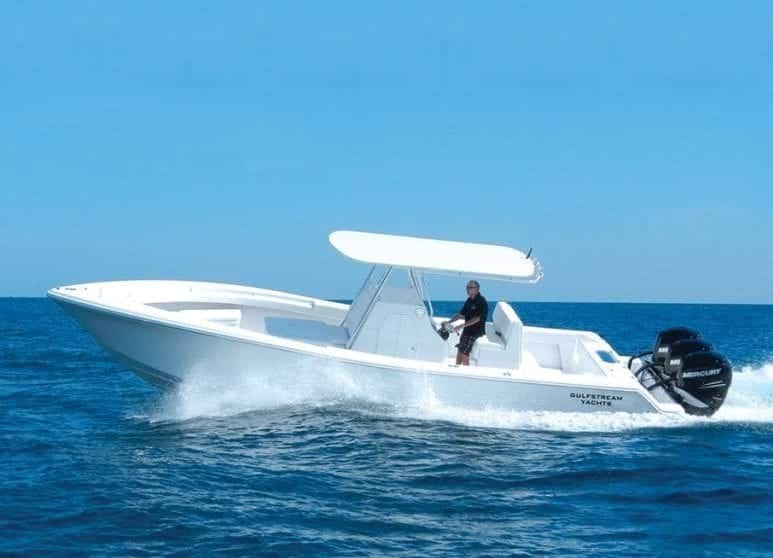
For them, the conditions were exhilarating. Ahead of the father and son, however, a 30-foot center-console was preparing to run the inlet. The McDonalds watched as the boat committed to the line of breaking waves outside the jetties. It punched through the first crest and climbed awkwardly over the second. Then came the third wave—the biggest of the set.
Instead of meeting the wave head-on, the boat turned, apparently attempting to outrun it. Andrew Nycz, another Freerider riding nearby with a camera mounted to his personal watercraft, immediately recognized what was unfolding.
“I knew this was going to be extremely bad,” he recalled. “Then I saw the wave actually submerge the boat and the boat go over… at that point, you just have to go try to help as fast as you can.”
The wave overtook the boat from astern, pushing it sideways before rolling it over in the surf. Within seconds, six people and a dog were in the water.
No Time to Think
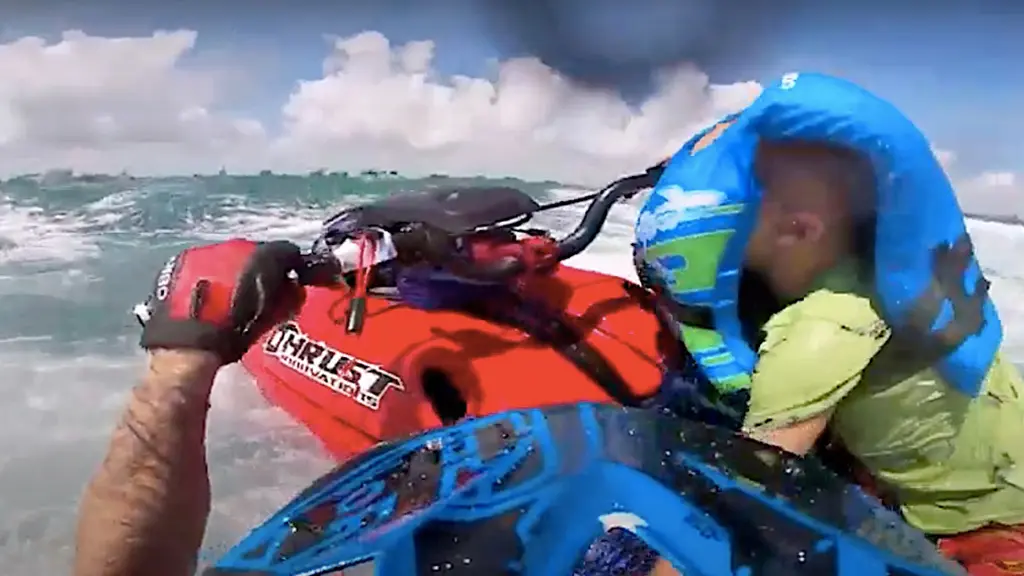
Shane immediately spotted the youngest child—a three-year-old struggling in the violent whitewater. The boy was wearing a life jacket, but it was much too large, riding nearly over his ears.
“I wasn’t sure how long he was going to be staying afloat,” Shane later said, “especially since it seemed like he was about to come out of the lifejacket.”
He maneuvered into the impact zone, lifted the frightened child onto his stand-up ski and shouted, “Hold on! Hold on tight!” before accelerating toward the beach just ahead of the next breaker.
Teamwork in the Surf
While Shane headed shoreward, 16-year-old Jake McDonald steered toward the remaining children. He stayed with three youngsters in the surf until Andrew Nycz, riding a larger sit-down personal watercraft, could safely reach them.
“When you first see an emergency situation you just want to run in and help,” Nycz explained. “But sometimes you have to pump the brakes for a second.”
Waiting briefly for a lull, he gathered the three children and the family onto his craft before transferring them to a waiting Sea Tow boat outside the breakers. After a careful head count, everyone was safely accounted for.
Know Your Boat. Fit Your Life Jackets.
Ironically, the conditions that challenged the center-console were nearly ideal for the experienced stand-up personal watercraft riders.
“We’re talking crystal clear blue, aqua looking waves, like Hawaii pipeline type stuff,” Nycz said. “That’s the stuff that we live for.”
The rescue underscores two timeless boating lessons. First, know the capabilities and limitations of your vessel, particularly when negotiating inlets where ocean swell meets an outgoing tide. Sometimes the safest decision is to wait.
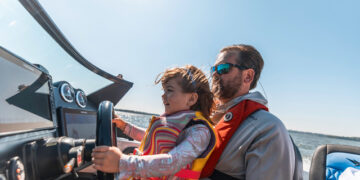
Second, make sure every life jacket fits properly. The image of the rescued three-year-old, his oversized vest nearly over his head, is a reminder that life jackets save lives only when they are worn, and properly fitted.
Thanks to quick thinking, skilled rescuers and remarkable teamwork, what could have been a tragedy became a story of seamanship, preparation and neighbors helping neighbors—values Southern boaters understand well.
Watch the full rescue video: