
Summary
Learn how to handle the most common fishing injuries with confidence. This practical guide covers safe hook removal, treating cuts and lacerations, preventing strains from long days on the water, and stocking a well-equipped onboard first aid kit so you're prepared when accidents happen.
Don’t be caught off guard. Use this fishing injury guide to be prepared and get your medical kit ready.
By E. Jason Gates
A day on the water chasing fish can turn into a trip to urgent care faster than any angler expects. Embedded hooks, deep lacerations, and strained shoulders rank among the most common injuries boaters face — and most of them are preventable or treatable with basic fishing first aid.
This guide covers what to do (and what to avoid) for the fishing injuries you’re most likely to encounter, plus what belongs in a well-stocked first aid kit before the next trip leaves the dock.
Subscribe Here For More Boating Content
What to Do When a Fishing Hook Gets Embedded in Skin
A hook embedded in the skin is the most common fishing injury on board. Hooks catch skin while anglers tie line, cast, remove a hook from a fish, or haul up a deep-drop rig. A wet deck, a rocking boat, or an angry fish all raise the odds of a mishap. Anchor the hook to a secure point — a loop of 100-pound monofilament crimped around a grab handle works well — before cinching any knot. Never hold the hook in your hand while you tie it.
Two safe removal methods work once a barb sets in the skin. Push the hook forward until the barb clears the skin, then cut off the barb (or the hook) and pull the shank out. Or loop a length of line around the bend of the hook, press down on the shank, and pull the line sharply to pop the barb free.
A tool called the DHUKR (available on Amazon) handles the second method and removes hooks from human skin more reliably than line alone. After removing the hook, sterilize the puncture site with betadine or hydrogen peroxide, apply antibiotic ointment, and cover it with a clean dressing. Repeat the cleaning routine — warm compress, antiseptic, ointment — for several days to keep the site from getting infected. Never attempt to remove a hook embedded near the eye; head to urgent care instead.
Also Read
The Boats That Built America: The Story Behind America’s Greatest Boat Builders
From mahogany runabouts to deep-V sportfishermen, these American boat builders shaped life on the water for 250 years. By Jesse...
How to Treat Fishing Lacerations on Board
Cutting bait, bleeding a tuna, coring a mahi, filleting a yellowtail, or dehooking a wahoo or kingfish all create chances for a bad cut. A sharp knife cuts cleaner and safer than a dull one, so keep a sharpening stone on board, stored in a dry case to prevent rust. Wear a fillet glove even for bait prep, skip filleting on a rocking boat, and use a dehooking tool instead of your fingers.
Apply direct pressure with a clean cloth the moment a laceration happens, then call in a crew member to help. Sterilize the wound with betadine or hydrogen peroxide and apply a pressure dressing once the bleeding slows. For small cuts, place a 2-by-2-inch bandage over the wound and wrap medical tape snugly around the area to encourage clotting. For larger wounds, wrap a non-adhesive dressing and gauze tightly around the area — without cutting off circulation — and secure it with medical tape. Severe bleeding calls for a tourniquet. Head to shore and seek medical attention as soon as you control the bleeding.
Also Read:
20 New Power Catamarans You’ll Want to Cruise in 2026
Catamarans are stable, roomy, and love to purr. It it seems like there are a lot of new...
Preventing and Treating Musculoskeletal Fishing Injuries
Hours of casting and reeling take a toll on shoulders, elbows, wrists, and backs. Repeated casting can trigger rotator cuff tendonitis, so stretch your shoulders before fishing and take breaks during long sessions. A long fight with a strong fish, or hours of jigging, can strain the wrist and forearm into tennis elbow. Ergonomic rods, lighter reels, and shorter sessions all cut the risk.
Heavy fish and gear put wrists and hands at risk of sprains and tendonitis; gloves and an extra set of hands go a long way toward preventing them. Standing, bending, and holding an awkward position for hours strains the back, and a rough ride to the fishing grounds only makes it worse. Maintain good posture, sit when you can, and use a fighting belt or harness for bigger fish.
What Belongs in Your Boat's Fishing First Aid Kit
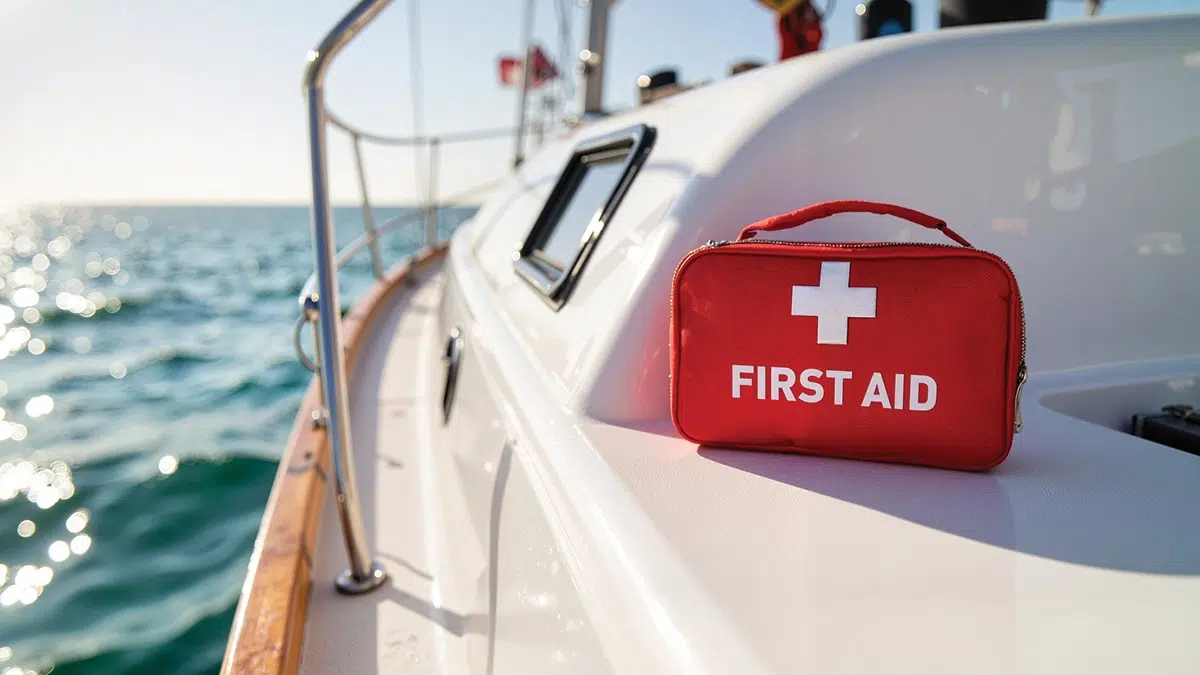
Every fishing vessel needs a well-stocked medical kit that stays accessible to the whole crew — store it in a waterproof box and keep it dry. Stock it with small and large bandages, non-adhesive dressing (Telfa), medical tape, a roll of Kerlix gauze, several 4-by-4-inch gauze pads, betadine, hydrogen peroxide, a rubber tourniquet, tweezers, scissors, a strong wire cutter for hooks, antibiotic ointment, a hook extraction device (DHUKR), Benadryl spray, and clean hand towels. Replace supplies as the crew uses them, and confirm the VHF radio works before leaving the dock in case cell service runs out.
A great day of fishing doesn’t have to end at the ER. Awareness, preparation, and the right gear keep the risk in check and get everyone home safely.