
LIND Electric Surfboards Let You Surf Anywhere—No Waves Required
The modular electric surfboard system from LIND delivers wave-free surfing adventures for boaters, lake riders, and watersports enthusiasts around the world.
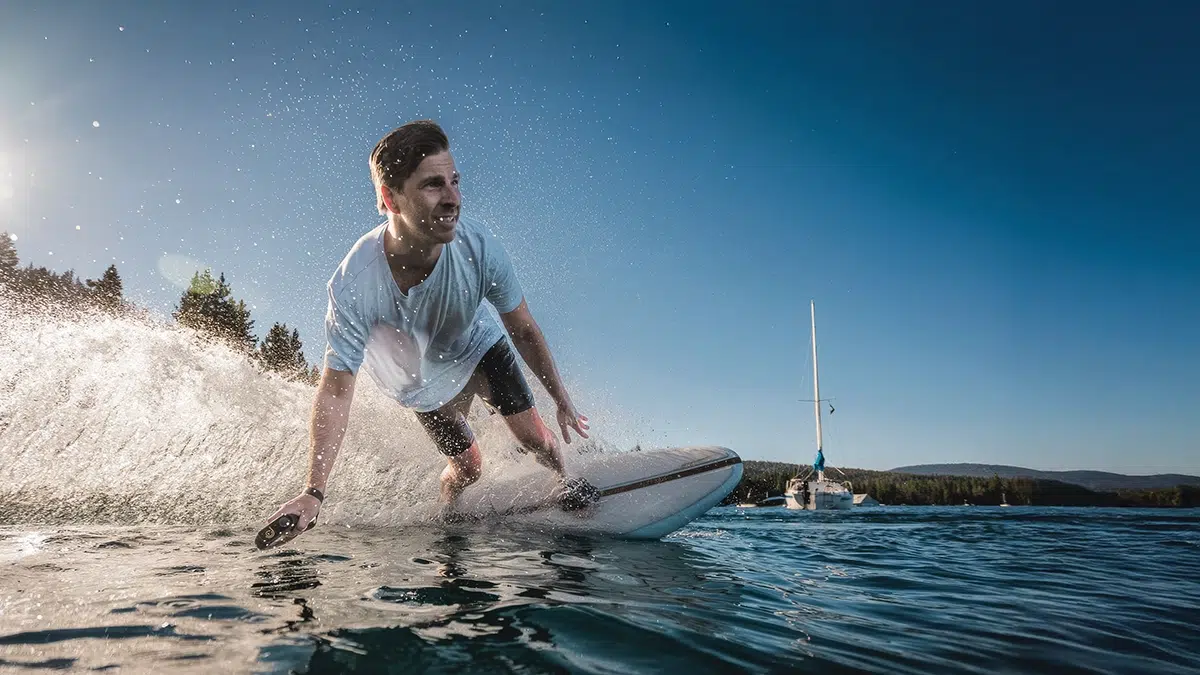
Surf those small channels in Nordic fjords. Or off the beach in Santa Cruz, California. Or on lakes, rivers, seas, and oceans anywhere in the world, with or without waves.
By Linda Marx
What Makes LIND Electric Surfboards Different?

LIND self-powered surfboards allow boaters—or any water lovers—to surf where others can’t. The electric surfboards are built for flat water, allowing adventure seekers a “new way to play.”
“Growing up in Stockholm, Sweden, natural waves weren’t always consistent, so the idea of creating surf freedom on demand became very motivating,” says the brand’s co-founder and visionary Alexander Lind. “Electric surfboards offered a way to bring that experience to more places where traditional surfing isn’t possible.”
Subscribe Here For More Boating Content
Lind, who lives in Sweden, began developing the concept in 2014 when he was in his twenties. He first brought it to life through his electric jetboard company, Radinn, where he gained deep experience in electric propulsion and a clear understanding of what matters most to electric surfboard owners. “The ability to ride on any body of water and experience a feeling similar to powder snowboarding is still what inspires me most,” says Lind, who also spends time in Southern California.
The Modular Design Behind LIND's Success
LIND boards, which he founded in 2021, is not the only electric surfboard company. But what makes it stand out against others is its modular system: The board, battery, and jet unit are separate components that assemble at the shoreline. This design makes the board lighter, easier to transport, ideal for boaters, and more convenient than the typical one-piece electric board.

“Once in the water, riders feel a natural connection to the board that is similar to traditional surfing,” he says. “It’s responsive, agile, and playful, and boasts a powerful and energy-efficient drivetrain with nearly 30 horsepower.”
Lind’s vision was to approach product design from the outside in by starting with a surfboard—something organic, natural, and respected—and finding a way to seamlessly integrate state-of-the-art technology. He wanted to take the layers of what makes surfing so attractive and apply those qualities to LIND boards—the craftsmanship of board shaping, the deep connection between a surfer and their board, the ease of ownership, the sense of youthfulness the sport inspires, and the artistry of “storytelling and filmmaking.”
Also Read
Jeanneau TH38 Review: An Outboard Power Cat for the Weekend
Jeanneau TH38: What a Difference a Dayboat Makes Jeanneau's latest twin-hull series opens the door for extended fun. By Steve...
Why Boaters Are Embracing Electric Surfboards
Lind believes boating is about freedom and the enjoyment of exploring the water. Having an electric board on the boat adds to the experience. You can launch the board from almost anywhere with no rope, no setup, and no additional equipment. It’s easy to use and brings a sense of adventure to any day on the water.
Although LIND offers a diverse line of electric surfboards from which to choose, one stands out above the others—and it especially appeals to boaters. It’s the limited-edition Ventana Redwood LIND Board Shaper by California-based master artisan Martin Stiphout. (Stiphout is best known for building wooden surfboards and boats from reclaimed and recycled materials like wood from Nobel Prize-winner John Steinbeck’s Western Flyer, the fishing boat he chartered on a 1940 expedition into the Sea of Cortez.) It’s LIND’s most premium model, with a hefty price tag of $59,950.
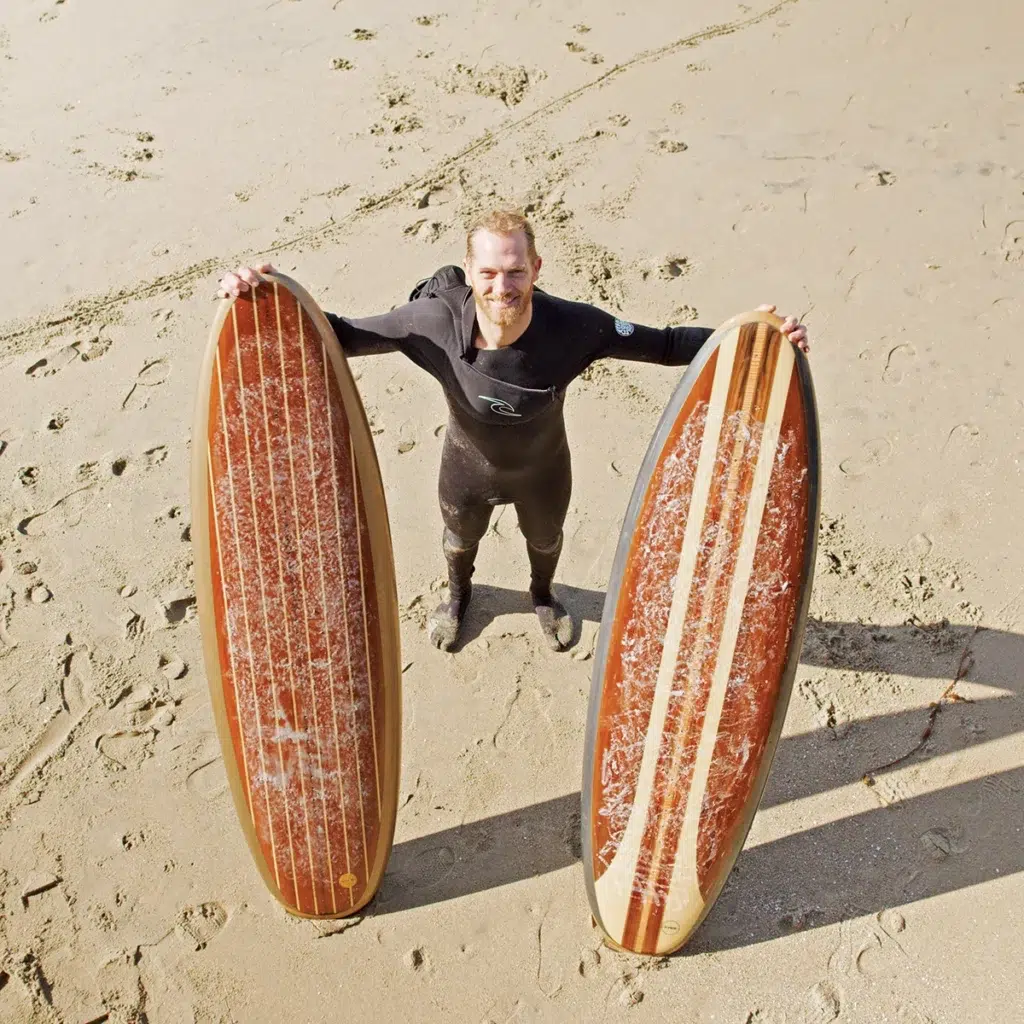
The Ventana Redwood Limited Edition: Functional Art on the Water
“We use historic reclaimed wood,” says Stiphout, who was born in South Africa and lived in Europe before relocating to Santa Cruz. “We embellish the board with a wood bottom. It’s unique to do this.”
Lind says Stiphout’s craftsmanship enhances the experience through the beauty of his woodwork. The natural materials and attention to detail create a board that feels like a functional piece of art. “If I owned a board made by Martin, I would proudly display it as well as ride it,” says Lind.
Also Read:
Jeanneau TH38 Review: An Outboard Power Cat for the Weekend
Jeanneau TH38: What a Difference a Dayboat Makes Jeanneau's latest twin-hull series opens the door for extended fun....
Stiphout created two boards for LIND. One has the design of an old Chris Craft boat; it’s extraordinary because he creates a connection with wood and a backstory. “We spent time finding the correct resources,” Stiphout notes. “Like the fact that Steinbeck has a connection to the Bay Area, and the product is different from hollow wood surfboards.”
The artisan says such a board appeals to boat owners because it’s unique and has a historic connection to old ship planks. “I’ve been building surfboards for 15 years,” he says. “It’s a passion for me. And I believe that LIND stands apart from others.”
LIND Canvas: The Brand's Signature Electric Surfboard
Then there is the LIND Canvas, the heart of the brand. This model captures the soul of traditional surfing at speeds of up to 37 mph and a ride time of up to 45 minutes. Each board’s modular, lightweight structure allows it to be transported easily with refined engineering that combines a water-cooled battery with an efficient jet propulsion system. Shaped from EPS foam and glassed in epoxy resin with fine details like its oak tail block and stringer, it combines timeless appeal with high-tech drivetrain technology.
Are Electric Surfboards Safe for Beginners?
For those intrigued with this concept, the safety factor is positive when the product is used responsibly. The board includes built-in safety logic that prevents it from activating unless it’s correctly positioned in the water and the rider is holding the activation button. A wireless remote offers controlled acceleration.
“To stay safe, I recommend starting at a comfortable speed, beginning with low throttle to learn balance, wearing a life or impact vest, and keeping a distance from swimmers and boats,” says Lind. “Many new riders start slowly, find their balance, and increase when comfortable. Some people ride comfortably within minutes.”

The Future of Electric Surfing Technology
Lind hopes to expand into additional shapes and styles of electric surfboards, which could include performance-focused models, more travel-friendly options, and boards designed for different riding purposes. Plus, the company continues to refine its drivetrain to improve efficiency, reduce weight, and extend ride time.
Lind’s years of collaboration with shapers, industrial engineers, and electro-mechanical engineers has created a product that looks, rides, and handles like a surfboard, an outstanding piece of performance art to be enjoyed at your leisure.
Related Posts