
Summary
Discover how America's most influential boat builders—from Chris-Craft and Hatteras to Boston Whaler, Viking, and Hinckley—revolutionized recreational boating through groundbreaking designs, engineering innovations, and craftsmanship that continue to shape life on the water today.
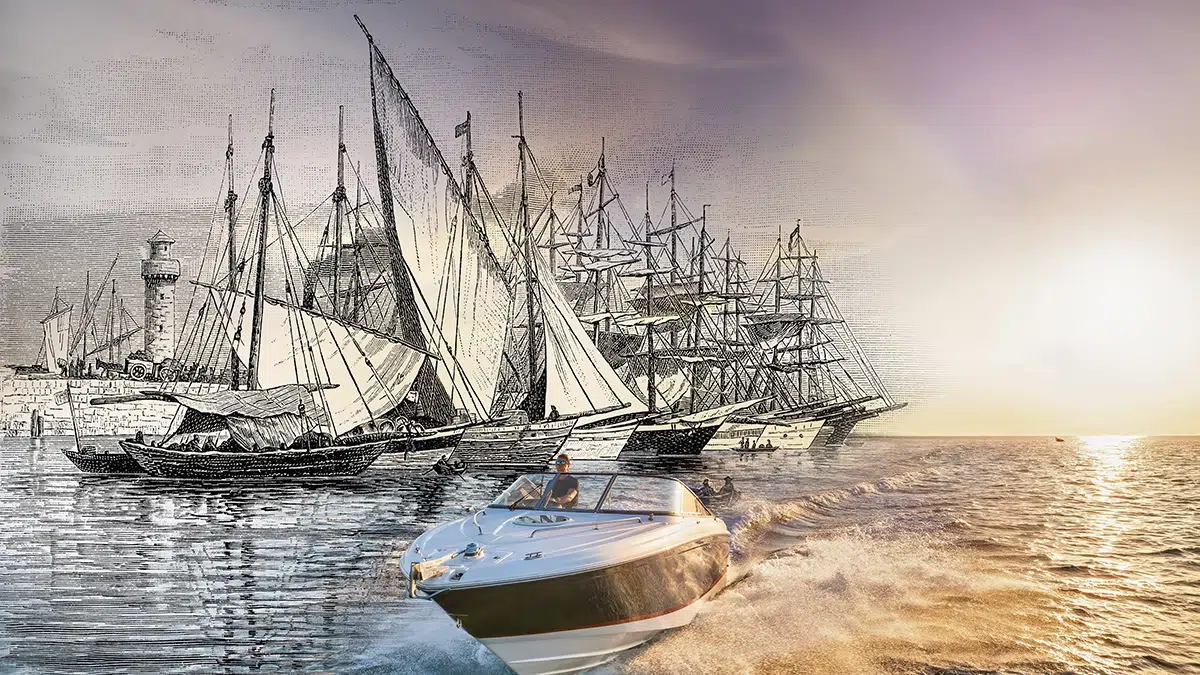
From mahogany runabouts to deep-V sportfishermen, these American boat builders shaped life on the water for 250 years.
By Jesse Scott
There’s something deeply American about a boat pointed toward open water. Maybe it’s the idea of escape — throttles forward, shoreline shrinking behind you. Maybe it’s the freedom to chase marlin off North Carolina, anchor in a Maine harbor, or idle through a Florida sandbar with nowhere urgent to be. For 250 years, America’s relationship with the water has mirrored the country itself: young, scrappy and hungry.
What are the most influential American boat builders?
Some of the most influential American boat builders include Chris-Craft, Hatteras, Bertram, Boston Whaler, Viking Yachts, Grady-White, Hinckley, Sea Ray and Herreshoff Manufacturing Company. Together, these companies pioneered innovations ranging from mahogany runabouts and fiberglass hulls to deep-V offshore designs and modern luxury yachts.
Subscribe Here For More Boating Content
How American Boat Builders Changed Recreational Boating
Long before boating became a lifestyle brand or a social media backdrop, it was a working-class craft tied to commerce, fishing and survival. Over time, American boat builders transformed it into recreation, aspiration and culture. They built vessels that reflected the eras around them, spanning the polished optimism of postwar suburbia, the offshore fishing boom and the modern pursuit of luxury afloat.
What emerged wasn’t one singular American boating story, but many. In Michigan, mahogany runabouts became symbols of elegance and Hollywood glamour. In North Carolina, rough Atlantic seas inspired stronger offshore hulls. In New Jersey, tournament-tested sportfishing machines became engineering benchmarks. In Maine, Downeast craftsmanship evolved into minimalist luxury icons.
Together, these American boat builders shaped how generations of Americans experienced the water. Their influence extends far beyond marinas and boat shows — they changed leisure culture, family recreation, coastal economies and even the design language of modern boating itself.
Also Read:
Safe and Fun: Best 18 U.S.-Made Boats with Family Amenities
18 U.S.-made boats with amenities for the whole family to enjoy. Family-friendly amenities on boats are appealing because...
From Working Boats to Luxury Yachts
America’s boating roots were commercial, military and practical. Wooden sailboats dominated the coastline, and shipyards built fishing boats, merchant vessels, river craft and naval ships. Coastal trade and rivers were America’s highways, and innovations in hull shape and early naval architecture — including the American clipper ship — set the stage for everything that followed. The intellectual DNA of American yacht engineering traces back to this era’s shipbuilding craftsmanship, later carried forward by builders like Herreshoff Manufacturing Company.
Steam propulsion changed everything next. Mississippi paddleboats, commercial river traffic, ferry systems and early recreational cruising meant boats no longer depended on wind, reliability improved dramatically, and river economies exploded. Boating became both transportation and entertainment — a cultural shift that never reversed.
Pleasure boating arrives in America
By the 1870s, “pleasure boating” had truly emerged in America, driven by competitive yacht racing, scientific hull design and luxury leisure craft. Herreshoff Manufacturing Company led the charge, and Nathanael Herreshoff — often called the greatest yacht designer in history — brought lightweight metal construction and precision naval architecture to a string of America’s Cup victories. America became a global leader in yacht engineering during this period.
Then came gasoline engines, and everything got smaller, faster and easier to own. Wealthy Americans embraced motorboats, lakeside recreation exploded, and Chris-Craft was there to meet the moment.
Chris-Craft and the Rise of the Mahogany Runabout
Many of America’s great boatbuilders were founded the American way: by stubborn founders, risky bets and breakthroughs people initially thought would never work.
Chris-Craft’s story begins in Algonac, Michigan, where 13-year-old Christopher Columbus Smith built his first skiff in 1874. Those early wooden boats quickly gained attention, eventually leading Smith and his brother Hank to formalize production and lay the foundation for one of the most recognizable names in marine history.
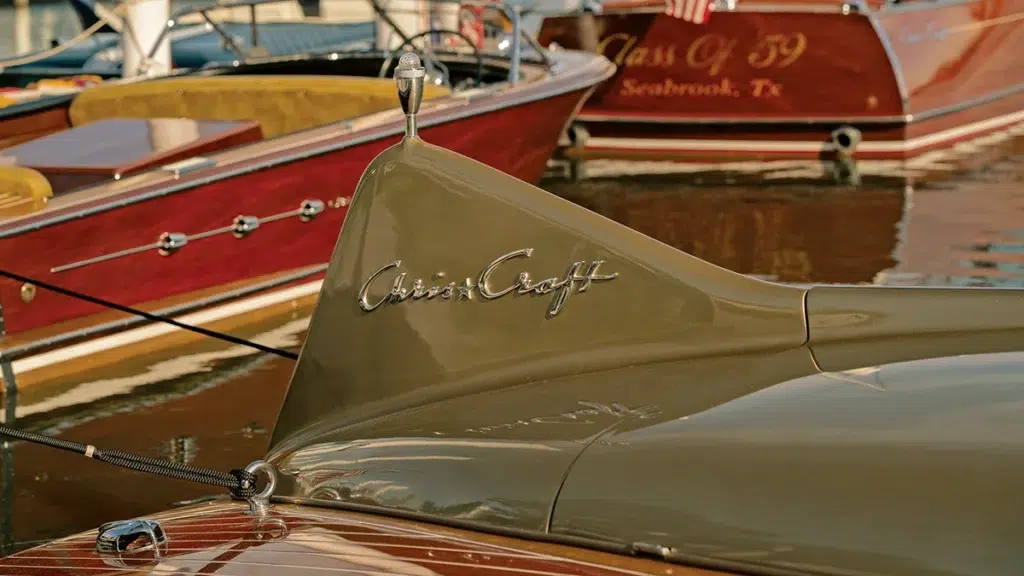
By the 1920s and ’30s, Chris-Craft had become synonymous with polished mahogany runabouts that represented luxury, craftsmanship and upward mobility. Their varnished decks and sweeping lines embodied the romance of American boating during the interwar years, and under Jay Smith’s leadership, the company grew into the world’s largest builder of mahogany powerboats.
The boats became Hollywood fixtures, owned by stars like Frank Sinatra, Dean Martin and Elvis Presley, while films such as On Golden Pond immortalized classic Chris-Craft models for generations of moviegoers. In many ways, Chris-Craft created the visual language of American leisure boating itself, with teak docks, polished chrome and sunset cocktail cruises.
The company also reflected the resilience of American manufacturing. During World War II, Chris-Craft shifted from pleasure boats to military production, building roughly 12,000 patrol boats, rescue vessels and utility launches for the U.S. military. By the 1950s, it had embraced fiberglass construction while maintaining the classic styling cues that made the brand iconic.
Also Read
This Must Be the Place: The Reintroduced Sabre 38 Salon Express
There is a curious thing that happens the moment the lines are cast off. The constant urge to check your...
How Hatteras Revolutionized Offshore Fishing Boats
If Chris-Craft captured elegance, Hatteras captured toughness.
The waters off Cape Hatteras, North Carolina, are notoriously unforgiving. Gulf Stream currents collide with rough Atlantic weather there, creating conditions that humbled generations of wooden fishing boats. Willis Slane believed there had to be a better answer. In 1959, the hosiery manufacturer and avid angler introduced Knit Wits, a 41-foot fiberglass sportfisher designed by Jack Hargrave that would change offshore boating forever.
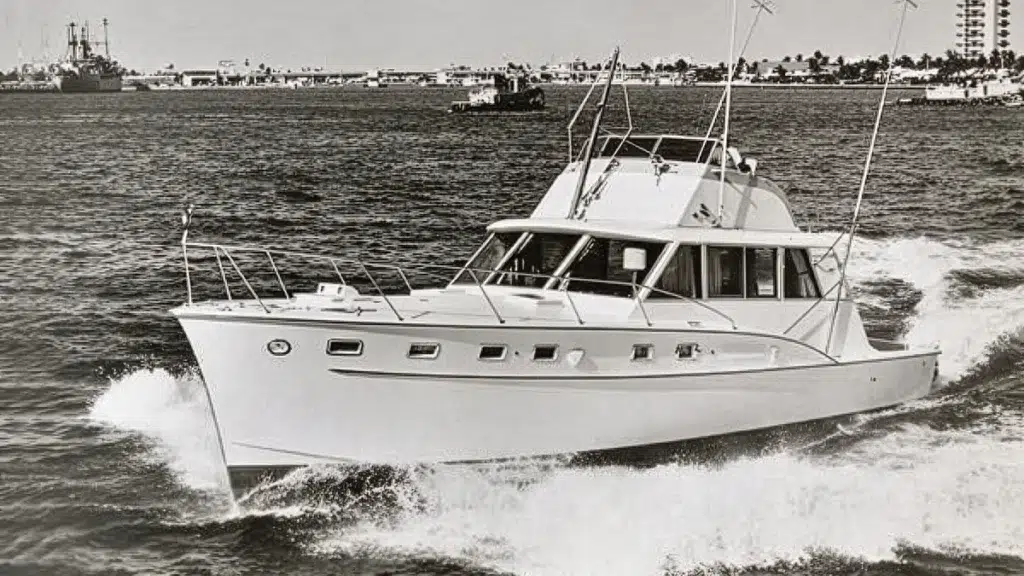
At the time, building a large offshore boat from fiberglass sounded reckless — the material was still viewed as experimental for serious yachts. But Slane’s gamble paid off. Knit Wits proved lighter, stronger and more durable than many wooden competitors while handling rough water with confidence, and the success of that boat accelerated fiberglass adoption throughout the marine industry.
Hatteras kept innovating from there, refining hull construction with advanced resin infusion methods and vinylester technology designed to improve strength and blister resistance. The emphasis on overbuilding became part of the brand’s identity — yachts engineered for canyon runs, ugly weather and long offshore passages. Serious offshore anglers suddenly had boats capable of venturing farther from shore with confidence, and modern convertible sportfish yachts still owe much of their DNA to those early Hatteras innovations born from North Carolina seas.
Bertram and the Deep-V Hull Revolution
Around the same time, another revolution was forming farther south in Miami.
Richard Bertram wasn’t originally trying to create a legendary yacht company — he was trying to build a faster, better offshore race boat. Inspired by naval architect C. Raymond Hunt’s deep-V hull design, Bertram launched the original Moppie in 1960 after watching Hunt’s 23-footer dominate rough-water races.
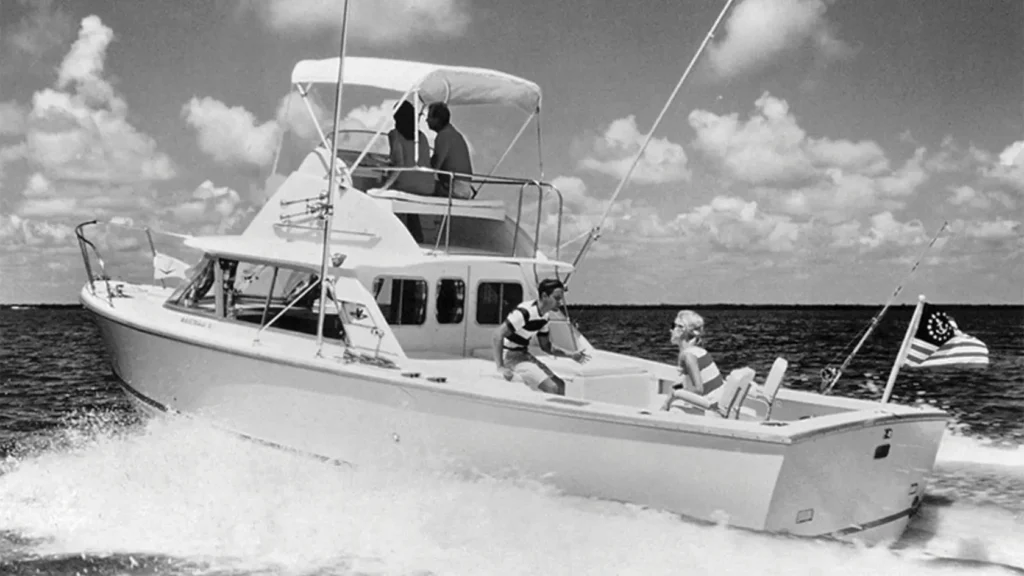
The deep-V hull transformed offshore boating. Instead of pounding violently through chop, Bertram’s hull sliced rough water with unprecedented control and speed, changing expectations overnight for performance offshore boats. The Bertram 31 became an instant icon — part race boat, part battlewagon and wholly influential. Offshore racers embraced it, sportfishermen embraced it, and designers across the industry borrowed from it. The deep-V concept quickly spread beyond Bertram, becoming foundational to modern offshore hull design worldwide.
What made Bertram distinctly American was its combination of engineering and swagger: boats built for marlin tournaments, Miami speed runs, and owners who viewed rough seas as part of the fun.
Performance culture spread quickly through the 1960s and ’70s. Donzi Marine, guided by the influential Don Aronow, helped launch Donzi, Cigarette, Formula and Magnum. Meanwhile, bass fishing exploded into its own category — B.A.S.S. professionalized the sport, and Ranger Boats defined the modern bass boat with tournament layouts, livewells and fishing-specific ergonomics that outfitters still build around today.
Boston Whaler and the Unsinkable Boat
Not every marine breakthrough centered on speed. Some centered on survival.
Boston Whaler built its reputation around a single unforgettable promise: unsinkability. Founder Dick Fisher’s Unibond construction method — bonding fiberglass shells around foam flotation — created boats that could literally remain afloat when cut in half. The company famously demonstrated this by sawing a Whaler apart and driving away in one half with the outboard still attached. It became one of the greatest marketing moments in marine history, because it was real.
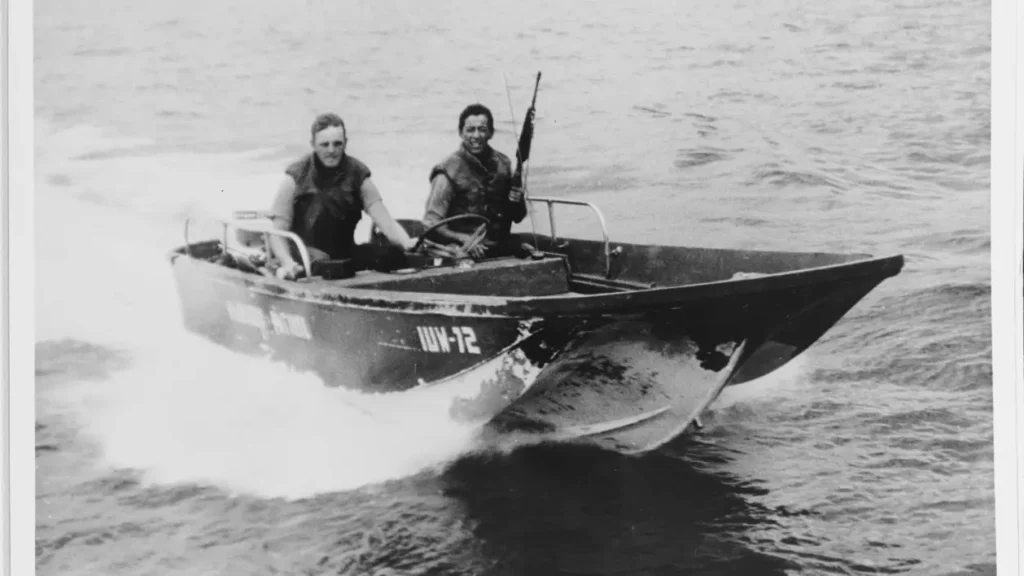
Boston Whaler’s influence stretched far beyond safety demonstrations. The company helped expand boating to families who wanted confidence, simplicity and versatility. Models like the Montauk became instantly recognizable American classics — center consoles equally comfortable fishing, island hopping or towing kids on tubes. Whalers also crossed into mainstream pop culture in ways few boat brands ever have, appearing in films like Jaws and Ferris Bueller’s Day Off, while their practical durability made them staples for harbor patrols, yacht tenders and waterfront workboats. Even non-boaters recognize the silhouette.
That balance of accessibility and rugged capability helped define the rise of center console boating in America.
Viking Yachts and Tournament Sportfishing
Further down the East Coast, Viking Yachts was building something different: tournament-ready precision.
Founded in 1964 after brothers Bill and Bob Healey purchased a struggling New Jersey boatbuilder, Viking grew from modest wooden sportfish beginnings into one of the most dominant names in modern offshore fishing. The company’s evolution mirrored the rise of competitive sportfishing itself, aggressively refining convertible layouts, engineering systems and enclosed bridge concepts while introducing larger and increasingly sophisticated models throughout the 1980s and beyond. Its enclosed bridge designs helped reshape long-range offshore comfort, giving captains climate-controlled command centers during extended runs.
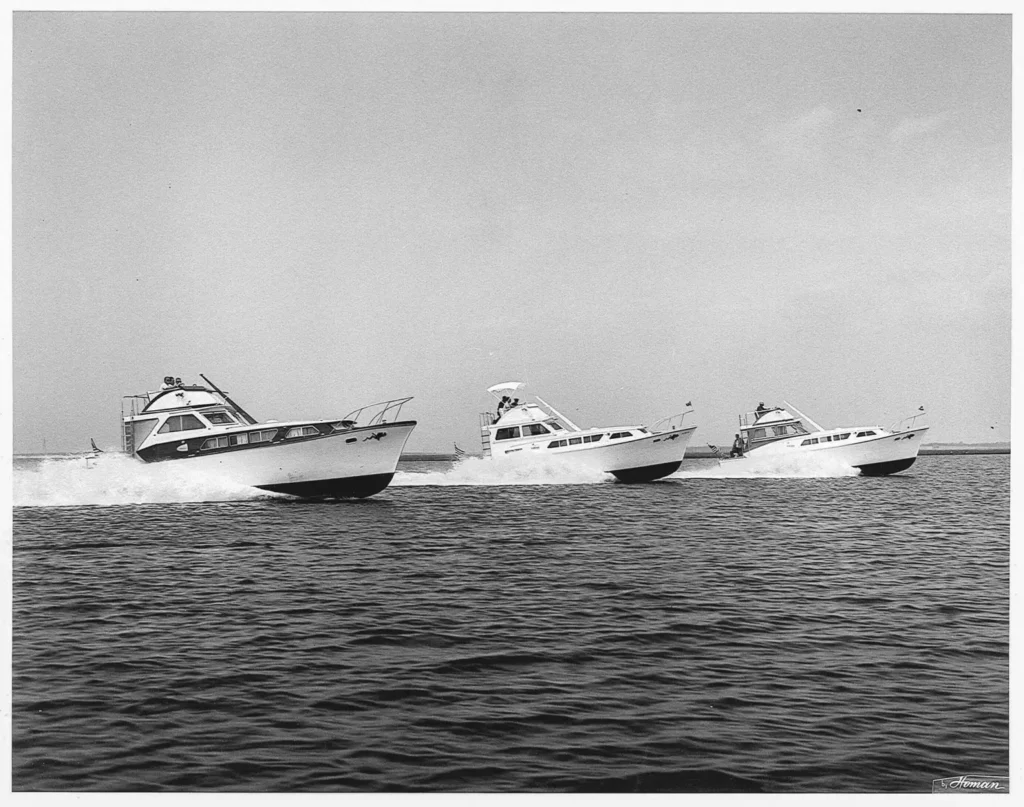
Viking’s story also reflects American entrepreneurial resilience. The federal luxury tax of the early 1990s devastated the marine industry, shrinking Viking’s workforce from roughly 1,500 employees to fewer than 80. The Healey family fought through the downturn, advocated against the tax and rebuilt the company stronger afterward. Today, Viking’s vertical integration — from Palm Beach Towers to Atlantic Marine Electronics — reflects a uniquely American obsession with control, precision and constant improvement.
Grady-White and the Modern Family Fishing Boat
Grady-White took a different path to loyalty. While tournament prestige mattered to the industry, this North Carolina builder became beloved for balancing hardcore fishability with family practicality.
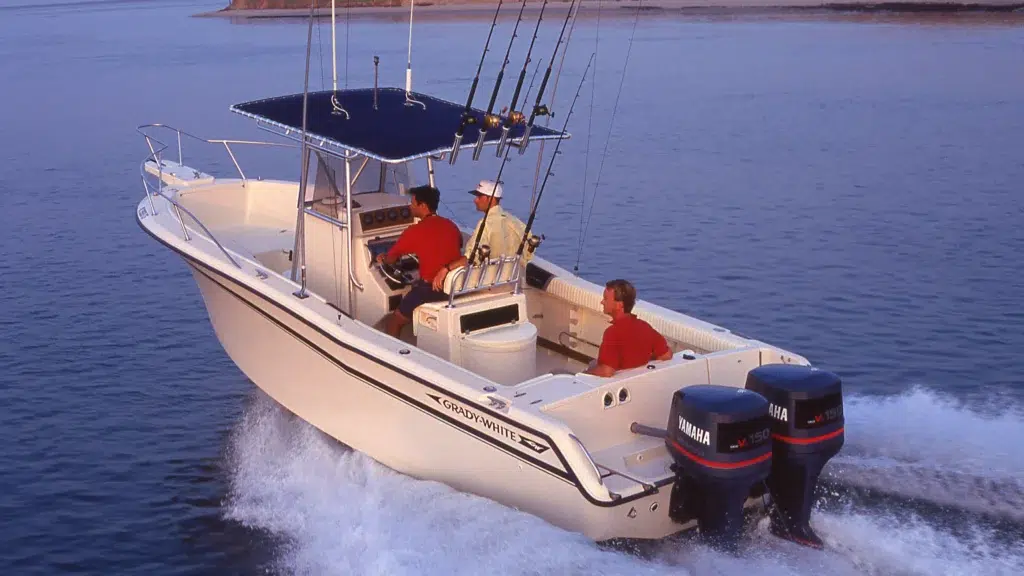
Founded in 1959 and later revitalized by owner Eddie Smith, Grady-White steadily built a reputation for seaworthiness and owner satisfaction. The company’s signature SeaV² hull became renowned for smooth rides in rough conditions, reinforcing Carolina-style offshore performance. But Grady also recognized that many boaters wanted versatility — center consoles and coastal explorer models evolved into crossover platforms capable of serious fishing one weekend and sandbar duty the next.
That blend became increasingly important as boating shifted toward multigenerational use. Owners wanted casting decks and livewells alongside foldaway seating, swim access and family comfort, and Grady-White embraced that evolution without sacrificing offshore credibility.
Hinckley and the Downeast Tradition
If Grady-White reflected practical family boating, Hinckley represented boating as art.
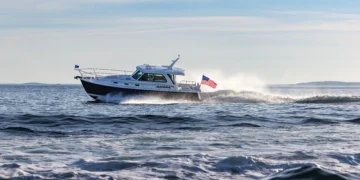
Founded in Maine in 1928, Hinckley developed around the rugged realities of New England waters. Henry Hinckley believed boats needed to be beautiful, yes, but also capable of enduring harsh coastal conditions. The result became the timeless Downeast aesthetic — sweeping sheerlines, elegant brightwork and purposeful hulls that looked equally appropriate outside a yacht club or tucked inside a rocky harbor. Hinckleys developed a cult-like following among owners who appreciated understated luxury.
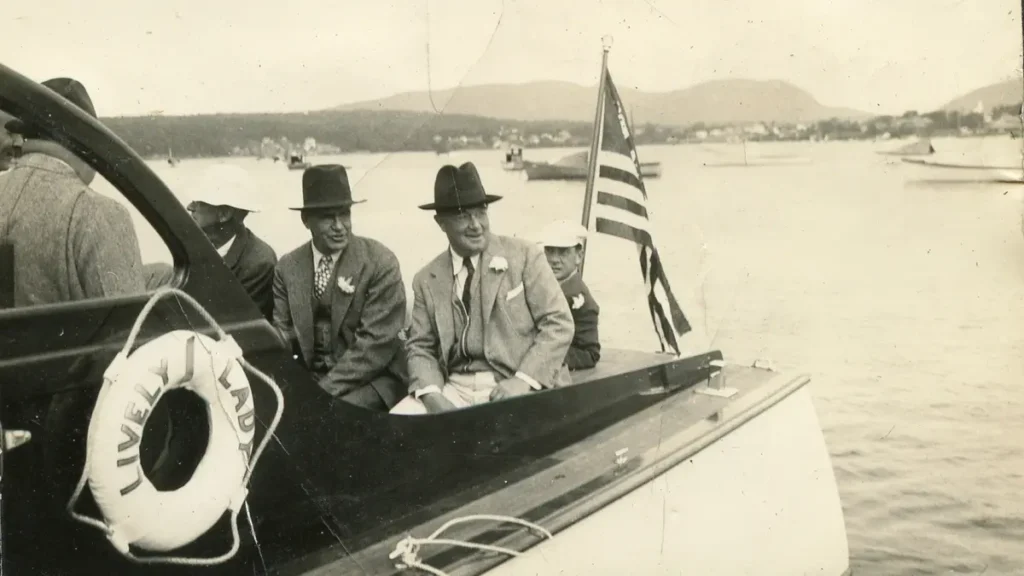
Like many great American builders, Hinckley paired tradition with innovation. The company adopted fiberglass early, later embraced carbon fiber composites and eventually became synonymous with waterjet propulsion and joystick maneuvering. Its Picnic Boats helped define modern luxury day boating: sophisticated but approachable, polished but seaworthy. Today, Hinckley continues pushing technology through hybrid propulsion systems like SilentJet while maintaining handcrafted customization.
Sea Ray and the Growth of Recreational Boating
Sea Ray, meanwhile, helped bring boating to the masses.
Founded in 1959 by C.N. Ray in Detroit, Sea Ray emerged during America’s postwar economic boom, when suburban families increasingly viewed recreational boating as attainable rather than elite. The company excelled at scale, producing family-friendly cruisers and express boats that introduced countless Americans to weekends on the water. Its growth paralleled the expansion of inland marinas, lake communities and middle-class leisure culture throughout the second half of the 20th century.
Sea Ray also helped shape the express cruiser category, emphasizing comfort, sociability and overnight capability — boats designed for raft-ups, sunset cruises and family vacations, floating extensions of the American backyard dream.
The Future of American Boat Building
Taken together, these companies tell the broader story of American boating itself. They reflect regional identities, technological leaps and changing lifestyles across generations. They also demonstrate how innovation often begins with frustration — rough seas, unsafe hulls or outdated materials — and founders willing to challenge convention.
As the industry looks ahead, American boatbuilding faces another transition period. Electrification, sustainability initiatives, hybrid propulsion and advanced composites are reshaping conversations throughout marine manufacturing. Connectivity and onboard technology continue accelerating, and consumer expectations around customization, comfort and versatility keep evolving.
Yet the core appeal remains remarkably unchanged. People still chase the same things on the water they did generations ago: freedom, adventure, family traditions, and the feeling that somewhere beyond the next inlet or horizon lies possibility. American boatbuilders have spent decades designing vessels to carry those dreams forward.
And if the past 250 years prove anything, it’s that the next breakthrough is probably already taking shape in some workshop, marina town or waterfront factory — built by people convinced there’s still a better way to experience the water.