
...
Southern Boating & Yachting
  • Boats
    • Center Consoles
    • Dual Consoles
    • Motoryachts
    • Power Cats
    • Sport Cruisers
    • Sport Fishing
    • Tenders & Ribs
    • Trawlers & Tugs
  • Destinations
    • Bahamas
    • Caribbean
    • U.S. Atlantic
    • U.S. Gulf
  • Engines
  • Maintenance
    • DIY
    • Haul-Out Guide
  • Electronics
  • Lifestyle
    • Food
      • Menus
      • Drinks
      • Appetizers
      • Entrées
      • Dessert
      • Holiday
    • Fishing
    • Gear
    • News
    • People
    • Safety
    • Shop
  • Digital Edition
  • Subscribe
No Result
View All Result
  • Boats
    • Center Consoles
    • Dual Consoles
    • Motoryachts
    • Power Cats
    • Sport Cruisers
    • Sport Fishing
    • Tenders & Ribs
    • Trawlers & Tugs
  • Destinations
    • Bahamas
    • Caribbean
    • U.S. Atlantic
    • U.S. Gulf
  • Engines
  • Maintenance
    • DIY
    • Haul-Out Guide
  • Electronics
  • Lifestyle
    • Food
      • Menus
      • Drinks
      • Appetizers
      • Entrées
      • Dessert
      • Holiday
    • Fishing
    • Gear
    • News
    • People
    • Safety
    • Shop
  • Digital Edition
  • Subscribe
No Result
View All Result
Southern Boating & Yachting
No Result
View All Result
Home Maintenance How To
Can You Take the Helm? Boating Safety Tips for Mates

Can You Take the Helm? Boating Safety Tips for Mates

March 10, 2026
in How To, Safety
0
585
SHARES
3.2k
VIEWS
Share on FacebookShare on LinkedInShare via Email

By Captain Chris Caldwell

Your mate is a significant part of the marine team. Having worked as both a captain and a mate, we can vouch that there are different skills that each role brings to a successful day on the water. Truth be told, most days the mate works harder.

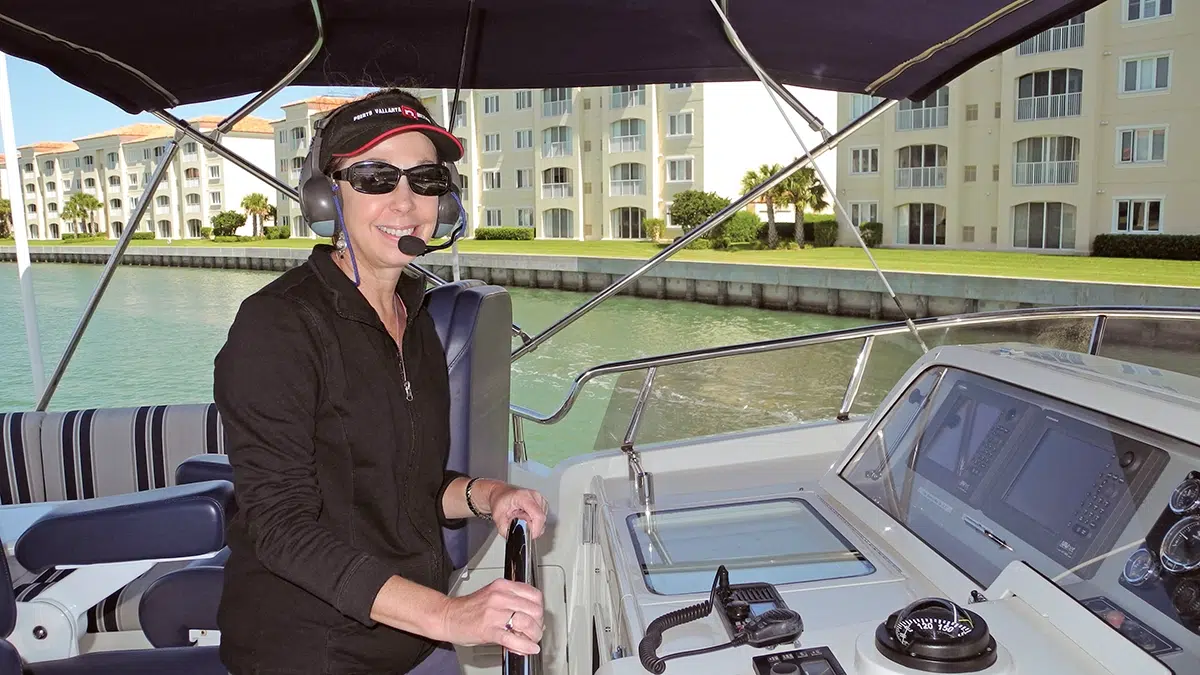
But what happens if the captain suddenly can’t operate the boat? Whether due to illness, injury, or another emergency, every mate or passenger should have a basic understanding of boating safety procedures. Knowing how to call for help on a VHF radio, maintain control of the vessel, anchor safely, or bring the boat to a dock can make a critical difference. With a little preparation and practice, stepping in for the captain doesn’t have to turn into a crisis.
Safety First: Preparing for the “Just in Case”

Safety is often as easy as prevention, which leads to the end goal of being prepared. Prepare for the “just in case.” Think ahead and be ready for plans A, B, C, or, if necessary, D. Talk about the what ifs before they happen.

Uh-oh, the captain suddenly told you he can’t drive the boat. Assess the situation to determine if this is an emergency. Just like with CPR, assess the person first, then call for help.

Subscribe Here For More Boating Content

How to Call for Help on a VHF Radio

Do you know how to call for help? If not, get familiar with your own equipment before an emergency occurs. Know what VHF radio buttons to push and how to call for help: “Mayday, Mayday, Mayday! (This means “help” in nautical terms.) This is the motorboat Sandy Hook, and my captain is hurt. We are in the ICW north of the Lake Worth Inlet (situational awareness of your location).” Then wait. Let someone answer your call. Take a deep breath and assess.

Read our full guide on how to use a VHF radio like a pro. 

If you are lucky enough to have cell coverage, you might also try calling 911. Put your phone on speaker so you can continue to assess the situation with your eyes and ears while you are talking with EMS.

Decide what you can do and tell the first responders your plan. Can you keep the boat in the deeper water without running aground? At minimum, a competent mate should know how to lower the anchor to prevent drifting into more trouble. The ability to hold a course in the channel is a bonus.

Maybe you need a towboat to bring you to a dock so you can attend to the captain, or it’s possible that you can bring the boat to a nearby marina. More about that next.

Also Read:

Best Spring 2026 Waterfront Events: Florida Openings, Boat Shows, Bahamas Festivals & Caribbean Swims

Best Spring 2026 Waterfront Events: Florida Openings, Boat Shows, Bahamas Festivals & Caribbean Swims

March 4, 2026
3.7k

Spring signals a fresh start on the water, and across the coastlines of the U.S., the Bahamas, and...

Basic Boat Handling Every Mate Should Know

Know enough about boat handling to be safe. Knowing more than that will keep it fun for everyone, even in the absence of a real emergency. But sometimes it’s as simple as getting the boat close to the fuel dock. Most marine fuel pumps are located on an easily accessible face dock. Staff can better help to fend you off and grab your lines at a face dock. It’s not always essential to get the boat into a slip.

You don’t think all captains are natural-born boat drivers, do you? The book Outliers explores why people are good at what they do. The simple reason that separates the novice from the skilled expert is practice.

Docking in a Pinch: Getting Safely to the Fuel Dock or Marina

It doesn’t matter if you are at the helm or acting as mate—find out about where you are docking before you get to the marina. Set your lines and your fenders to consider a fixed or a floating dock. Pay attention to how the wind and current could move your boat toward or away from the dock. And if docking isn’t in your skill set, then consider anchoring and waiting for a towboat or the USCG to assist you in your emergency.

Anchoring as an Emergency Backup Plan

Long before you hear the words, “You have to take the helm,” you should consider practicing with the anchor. Lower and raise it at least once each time you leave the dock. While traveling throughout your day of fun, discuss a few possible places to set the anchor. Consider why or why not. Look at charts for depth and water bottom. Determine how much scope to play out to avoid dragging. You’ll be glad you’ve thought it through if an emergency ever arises.

These simple tips can help you discover how to take the helm when the captain can’t. Practice safety, effective communication, and competent boat handling—and practice like your life depends on it.

Captains Chris & Alyse Caldwell are USCG 100-ton Masters and cruising coaches who offer personal boat training online or on board your boat anywhere. Questions? Ask Captain Chris at chris@captainchrisyachtservices.com.

Also Read

Inside the Formula 360 CBR: A 36-Foot Luxury Bowrider Built for Speed and Comfort

Inside the Formula 360 CBR: A 36-Foot Luxury Bowrider Built for Speed and Comfort

March 3, 2026
3.4k

By Marilyn DeMartiniFormula has a formula for creating boats that loyalists return to and new customers embrace. The 70-year-old company,...

FAQ

What should you do if the captain becomes incapacitated on a boat?

First assess the captain’s condition and determine whether it’s a medical emergency. Call for help using a VHF radio by issuing a Mayday call or contact emergency services if you have cell coverage. Then focus on maintaining control of the boat by staying in safe water, slowing down, or anchoring until help arrives.

How do you make a Mayday call on a VHF radio?

To make a Mayday call, press the transmit button and say:
“Mayday, Mayday, Mayday.”
Then identify your vessel, give your location, describe the emergency, and state how many people are on board. Wait for a response from the Coast Guard or nearby vessels before repeating the call if necessary.

Can a passenger legally operate a boat in an emergency?

Yes. In an emergency, any capable person on board can take the helm to ensure the safety of passengers and the vessel. Maritime safety guidelines prioritize protecting lives and preventing accidents over normal operating roles.

What basic boat-handling skills should every mate know?

At minimum, a mate should understand how to slow or stop the vessel, maintain a safe course in a channel, operate the throttle and steering, and deploy the anchor. Familiarity with docking basics and communication with marina staff can also help in stressful situations.

Why is practicing anchoring important for boat safety?

Anchoring is one of the safest ways to stabilize a boat during an emergency. Practicing how to lower and raise the anchor, calculate proper scope, and choose a suitable anchoring location ensures the crew can quickly prevent drifting into hazards if the captain cannot continue operating the vessel.

Related Posts

How to Use a Marine VHF Radio Like a Pro: Channels, Safety Calls and Proper Protocol
Electronics

How to Use a Marine VHF Radio Like a Pro: Channels, Safety Calls and Proper Protocol

February 18, 2026
3.4k
Why Clear Communication Is the Foundation of Safe Boating
Lifestyle

Why Clear Communication Is the Foundation of Safe Boating

December 23, 2025
3.5k
A Kadey-Krogen yacht cruising the Great Loop
How To

Stay in the Loop: How to Pick the Right Great Loop Boat

October 28, 2025
3.8k
Aerial view of three boats anchored while cruising.
Safety

Must-Have Pre-Cruising Boat Checklist: Safety, Systems & Gear

October 15, 2025
3.4k
How to tie a boat knot
How To

How to Tie Boat Knots: The Best Cleat Knot & Bowline for Docking

October 8, 2025
3.9k
Electronic Fuses
DIY

Marine Electronics Troubleshooting: Repair, Resell, or Replace?

September 30, 2025
3.4k
Subscribe to the print magazine | $29.95 for 12 issues
Previous Post

Horizon FD80 Review: 80-Foot Luxury Meets Long-Range Comfort

Leave a Reply Cancel reply

Your email address will not be published. Required fields are marked *

Recommended

Century Boats Acquires Luxury Brand Vanquish Boats

Century Boats Acquires Luxury Brand Vanquish Boats

May 20, 2020
3.4k
Southern Boating & Yachting's Miami Boat Show RoundUp

Missed Miami?

February 21, 2017
3.3k

Don't miss it

Horizon FD80 Review: 80-Foot Luxury Meets Long-Range Comfort
Boats

Horizon FD80 Review: 80-Foot Luxury Meets Long-Range Comfort

March 9, 2026
3.3k
Best Spring 2026 Waterfront Events: Florida Openings, Boat Shows, Bahamas Festivals & Caribbean Swims
Bahamas

Best Spring 2026 Waterfront Events: Florida Openings, Boat Shows, Bahamas Festivals & Caribbean Swims

March 4, 2026
3.7k
New Tiara Yachts 46 LS: Specs, Features and Palm Beach Boat Show Debut
Boats

New Tiara Yachts 46 LS: Specs, Features and Palm Beach Boat Show Debut

March 4, 2026
3.4k
Inside the Formula 360 CBR: A 36-Foot Luxury Bowrider Built for Speed and Comfort
Boats

Inside the Formula 360 CBR: A 36-Foot Luxury Bowrider Built for Speed and Comfort

March 3, 2026
3.4k
The Ultimate Marine Seawater Pump That Prevents Marine AC Failures
Electronics

The Ultimate Marine Seawater Pump That Prevents Marine AC Failures

February 24, 2026
3.3k
First-Class Cast: Premium Fishing Accessories for Your Next Expedition
Accessories

First-Class Cast: Premium Fishing Accessories for Your Next Expedition

February 24, 2026
3.3k
Facebook Instagram TikTok Youtube LinkedIn

Navigation

  • About Us
  • Advertise
  • Subscribe
  • Careers
  • Contact Us
  • Terms Of Service
  • Privacy Policy
  • Manage My Subscription
logo

1591 E. Atlantic Blvd, 2nd Floor
Pompano Beach, FL 33060
Office: +1 (954) 522-5515
Fax: +1 (954) 522-2260
Contact us: info@southernboating.com


Newsletter

* indicates required

© 2026 Southern Boating & Yachting, INC.

No Result
View All Result
  • Boats
    • Center Consoles
    • Dual Consoles
    • Motoryachts
    • Power Cats
    • Sport Cruisers
    • Tenders & Ribs
  • Destinations
    • Regional Reports
    • Bahamas
    • Caribbean
    • U.S. Atlantic
    • U.S. Gulf
  • Engines
    • Engine Buyers Guide
  • Maintenance
    • DIY
  • Electronics
  • Lifestyle
    • News
      • Boating Log
    • Fishing
    • Food
      • Drinks
      • Appetizers
      • Entrées
      • Dessert
      • Holiday
  • Gear
  • Shop
  • Digital Edition
  • Advertise
  • Subscribe

© 2026 Southern Boating & Yachting, INC.

  • About Us
  • Advertise
  • Subscribe
  • Careers
  • Contact Us
  • Terms Of Service
  • Privacy Policy
  • Manage My Subscription
  • About Us
  • Advertise
  • Subscribe
  • Careers
  • Contact Us
  • Terms Of Service
  • Privacy Policy
  • Manage My Subscription