adBanner

Archive for October, 2010

New Model to the Market


Road Map to Success

We ask three men who know what it

takes to get a boat from an idea to the water.

By Bill Ando

Wandering around a boat show, it’s impossible to keep track of the different boats that are available to help us fulfill our dreams of getting out on the water. Seeing all those boats, whether in their element or gleaming on the hard at the show, we wondered what it took to get a new model to market. Oh sure, we knew about the fiberglass and hardware and sweat, but what about the intangibles, the behind the scenes stuff?
So, we asked the CEOs of three distinctly different, and extremely successful, companies to share how their organizations get a boat from the imagination to the water.
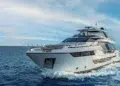
Roger Brooks, owner of Brooks Boatworks, operates a semi-custom shop in Wilmington, North Carolina.  He discussed his latest creation, the Brooks 34, a fishing and diving yacht, which debuted at the Annapolis Powerboat Show in October. Chris-Craft’s Chairman, Stephen Julius, resurrected the brand in 2001, when he acquired the rights to the storied company’s trademark as well its assets. Stephen talks about the Chris-Craft Corsair 28, launched earlier this year. Helming Turkish luxury yacht builder Vicem (pronounced veach-em) is its Chief Executive Officer, Alberto Perrone Da Zara, who spoke about the new 78-foot Cruiser that represents a stylistic departure for the yard (see feature on page 38). The boat debuted in September at the annual Cannes, France, boat show. (All three executives plan to  be at the 2010 Fort Lauderdale International Boat Show.)

What is the inspiration for a new boat model?

Stephen says, “It starts with understanding what your own brand is and what it stands for, not only within a historical context, but in the mind of the consumer. It has to start from understanding the brand DNA.”
Alberto says that the concept for the new 78 Cruiser came straight from Vicem Chairman and Founder Sebahattin Hafizoglu.

The emotion is apparent in Chris-Craft’s Corsair 28, opposite. Right: The 28’s dash is one of the elements that the design team may take months to finalize.

The timing can be critical. The idea for the Brooks 34 was thrust upon the company by uncontrollable circumstances. “We were working on the tooling for a 40 Express Sportfisher when the U.S. economy slipped into a deep recession,” Roger recalls. This caused the 40-foot market to completely disappear. He turned his attention to finding out, “What happened to the 40-foot customers,” he says. “Their portfolios were hit so hard by the collapsing economy they were either in no mood to spend $700,000 on a new boat or they downsized their needs in order to make some sense out of spending money on a boat. It turns out, that customer is looking at boats in a much more moderate price range.” A 34-foot boat is more in line with that market.
Where does information like this come from?  It’s not something you can get from the Internet. You have to talk to people.

The new Brooks 34 offers user-friendly overnight accommodations and is available with multiple engine options. The idea behind this semi-custom yacht was a product of the recent economic downturn.

“We look to our biggest allies in the industry, the dealer and the broker, to help us with design criteria. They are the ones seeing the retail customer every day, and hearing what the customer is saying about what they want,” says Roger. They also know what is moving off the showroom floor faster than anything else.  And that’s not the only touchstone available to the savvy builder who takes the time to listen. Roger adds that he enlists the help of end users too. “My family and many of my friends are avid boating people and of course, no one is more opinionated than the fisherman. We take all this info and weed out the ridiculous and keep the sensible, whether it is from a usability standpoint or a build standpoint.”
When it comes to designing and styling a new model, Chris-Craft takes a more intuitive approach. “It starts off with a vision, not only about the shape and look of the boat, but also the finish,” Stephen says. “We as a brand—and this is an important point—we don’t do massive focus groups with consumers. That’s one way of developing a product. Our fear is that we will end up with what is a cross between a camel and a horse. Like a luxury goods brand we have a good understanding of what we are, and what the product should look like, and we try and sell that to the consumer.”  He adds that there are some areas where input from end users is essential, however. “We are also making a highly technical product with a huge amount of functionality—that’s where we’ll listen to consumers and our dealers in a big way.”
Alberto says he keeps his finger on the pulse of the boating public. “We run clinics and face-to-face interviews as standard pre-marketing process. This allows us to fine-tune product, layout, general specification and a price range,” he says.
Market research is a much relied-on tool for Brooks Boatworks.What Roger’s research uncovered is that there is a need for a boat that can be easily handled by a short-handed crew or by people with limited boating experience, in particular women — who are a big part of the boat purchase decision. “We looked at how we could cater to them as well,” he says. “That research led us to the Volvo IPS drive system. With its joystick operation, a child can dock this boat and handle it around traffic.”
He adds, “We wanted a smaller boat with room to overnight with the family. It had to handle well in all circumstances and it had to have all the reasonable fishing amenities to go offshore.”
Vicem’s process is similar. Alberto says that the product development process starts by segmenting the market and benchmarking competitors in order to identify a potential niche or segment not yet properly covered. “Then we fix the new product milestones: typology of boat, length, cabins, main specs, desired speed and consumption, and desired price. After this process, we start to sketch the new boat and analyze if we have proper internal resources to successfully run the project. If not we begin to research outside design firms such as Frank Mulder or Art Line, [whom we consulted] for our new megayacht line,” says Alberto.
Stephen speaks passionately about Chris-Craft’s design process. “We are not only producing beautiful objects; they have to be safe, they have  to be functional, they have to be an object of desire,” he says. “If there isn’t a strong appeal to the emotions, you are failing in your job.”
Individual elements are viewed by the Chris-Craft design team as works of art. “We obsessed for months and months about the dashboards on the line of boats we have now. We spend weeks designing a bow light; a cleat is a form of sculpture in chrome and steel,” says Stephen.
With the Brooks 34, things happened quickly. “We decided to build the boat in February 2010, started the design immediately and started the plug and tooling work in April,” Roger recalls. Brooks uses a 3-D modeling process in the design phase of the build. “This type of design work really shows you a great perspective on what you have before you build it,” he says.
To be continued in a future issue: Find out more about the build process; how long it takes to launch hull number one, and what makes a model a success. Also, we will be talking to each of the three CEOs at the Fort Lauderdale International Boat Show to learn more about their team’s efforts and if the models were deemed successful.