...
Southern Boating & Yachting
  • Boats
    • Center Consoles
    • Downeast
    • Dual Consoles
    • Motoryachts
    • Power Cats
    • Sport Cruisers
    • Sport Fishing
    • Tenders & Ribs
    • Trawlers & Tugs
  • Destinations
    • Bahamas
    • Caribbean
    • U.S. Atlantic
    • U.S. Gulf
  • Engines
  • Maintenance
    • DIY
    • Haul-Out Guide
  • Electronics
  • Lifestyle
    • Food
      • Menus
      • Drinks
      • Appetizers
      • Entrées
      • Dessert
      • Holiday
    • Fishing
    • Gear
    • News
    • People
    • Safety
    • Shop
  • Digital Edition
  • Subscribe
No Result
View All Result
  • Boats
    • Center Consoles
    • Downeast
    • Dual Consoles
    • Motoryachts
    • Power Cats
    • Sport Cruisers
    • Sport Fishing
    • Tenders & Ribs
    • Trawlers & Tugs
  • Destinations
    • Bahamas
    • Caribbean
    • U.S. Atlantic
    • U.S. Gulf
  • Engines
  • Maintenance
    • DIY
    • Haul-Out Guide
  • Electronics
  • Lifestyle
    • Food
      • Menus
      • Drinks
      • Appetizers
      • Entrées
      • Dessert
      • Holiday
    • Fishing
    • Gear
    • News
    • People
    • Safety
    • Shop
  • Digital Edition
  • Subscribe
No Result
View All Result
Southern Boating & Yachting
No Result
View All Result
Home Maintenance DIY
an image of an engine with tilt and trim troubleshooting

Tilt and Trim Troubleshooting

August 9, 2018
in DIY, Outboards
1
20k
SHARES
110.9k
VIEWS
Share on FacebookShare on LinkedInShare via Email
Subscribe to the print magazine | $29.95 for 12 issues

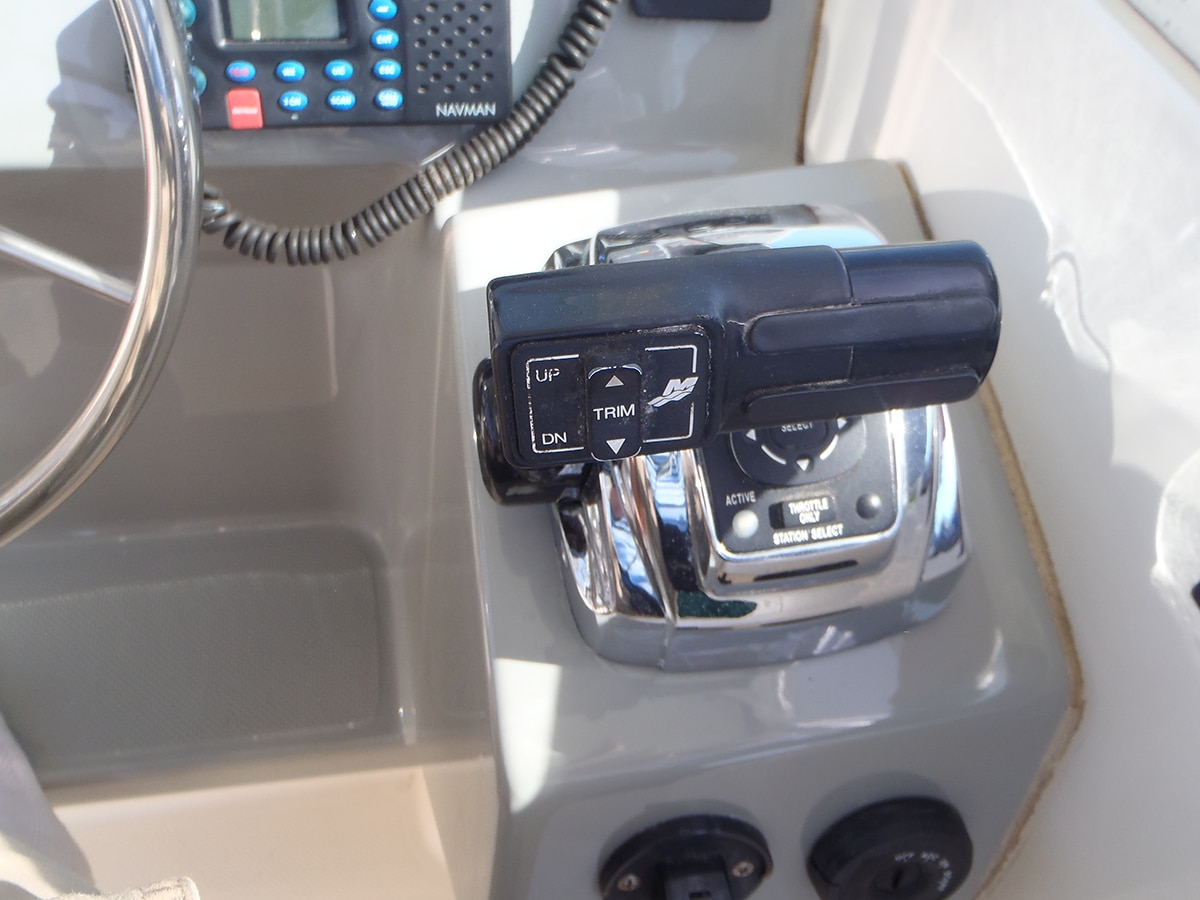
When your outboard’s tilt and trim system fails, you feel it immediately. You can’t optimize your running angle for fuel economy, smooth out a rough ride in heavy seas, or raise the engine to avoid damage when trailering. Here’s how to systematically track down the problem.

Understanding the System

The tilt and trim unit improves boat performance by adjusting the engine angle, which changes the running surface of the hull. That adjustability matters across a wide range of conditions, from reducing draft in skinny water to finding the right trim angle offshore when the seas build.

While this guide focuses on outboard engines, most of what follows applies equally well when troubleshooting stern drives.

There are two main types of tilt and trim systems. Older installations used an electric motor coupled to a mechanical lifting device such as a worm gear. The system you’ll find on most boats today is the electric/hydraulic power tilt and trim, which has three primary components: a 12-volt electric motor, a small hydraulic pump, and a reservoir/assembly unit. The electric motor drives the hydraulic pump, which forces fluid to the cylinders or rams that move the engine up or down.

Subscribe Here for More DIY and
Maintenance Content

Start With the Basics

If your tilt and trim fails to operate, the first step is determining whether the problem lies with the electric motor or the hydraulic pump assembly. Before going further, confirm the battery is fully charged and the battery switch is in the on position. Also check any inline fuses associated with the tilt and trim circuit — a blown fuse is one of the most common causes of a no-operation condition, and always worth ruling out first. Carry spares.

Diagnosing Electrical and Motor Issues

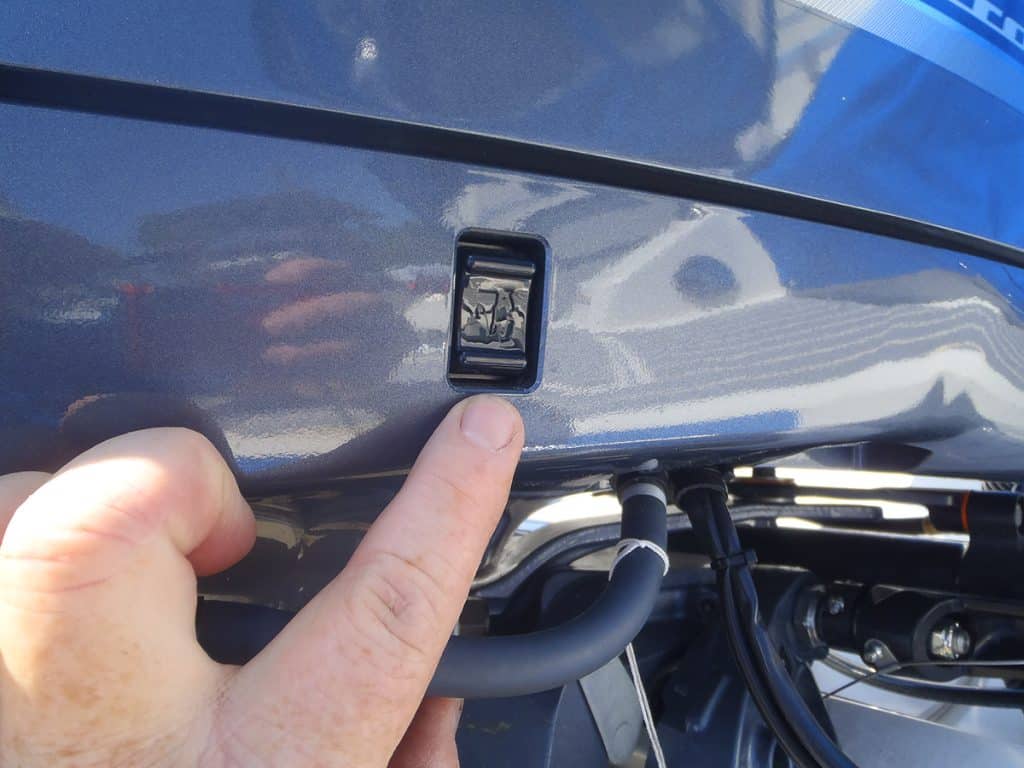
With the basics confirmed, operate the tilt switch and listen for the solenoid or start relay. If you hear nothing, the problem is typically with the tilt switch, the solenoid, or the wiring and connections between them. If you hear a faint click, you have power reaching the solenoid or relay. The next step is to test the motor itself.

All tilt and trim motors are 12-volt DC reversing-type units with one green wire and one blue wire. Older systems may also have a third black wire for grounding motors that don’t receive ground through their casing. The rule is simple: The blue wire raises the engine, the green wire lowers it. A useful memory aid is “blue sky, green grass.”

Also Read

Trade Winds & Second Chances: Rediscovering the British Virgin Islands by Boat

Trade Winds & Second Chances: Rediscovering the British Virgin Islands by Boat

April 21, 2026
3.5k

Sailing the British Virgin Islands remains one of the most iconic boating experiences in the Caribbean, even after the devastating...

To test the motor, disconnect it from the solenoid by unplugging the quick-disconnect plug or detaching the blue and green wires at the solenoid or relay. Then use a jumper wire to apply 12 volts DC directly to the appropriate wire. If the engine is down, energize the blue wire. If the engine is raised, energize the green.

If the motor fails to run with power applied directly, the motor itself has failed and will need replacement. If it runs, the problem is upstream — a faulty solenoid or relay, corroded connections, or a failed quick-disconnect plug. Corrosion at these connection points is one of the most common causes of tilt and trim failure, especially in saltwater environments.

Diagnosing Hydraulic Problems

If the motor runs but the engine won’t raise or lower, slips down from the raised position, or won’t hold trim, the problem is in the hydraulic side of the system.

Start by checking the hydraulic fluid reservoir level. Hydraulic fluid does not evaporate; a low level means there is a leak somewhere in the hoses, fittings, or seals. While you’re checking the reservoir, also look for water contamination. Water in the hydraulic system can cause erratic behavior even when the fluid level appears adequate.

Also Read:

A Second Chance at Sea

A Second Chance at Sea

May 13, 2026
3.8k

A spearfishing trip off Virginia Beach turned into a dramatic Coast Guard rescue after a 24-foot boat capsized...

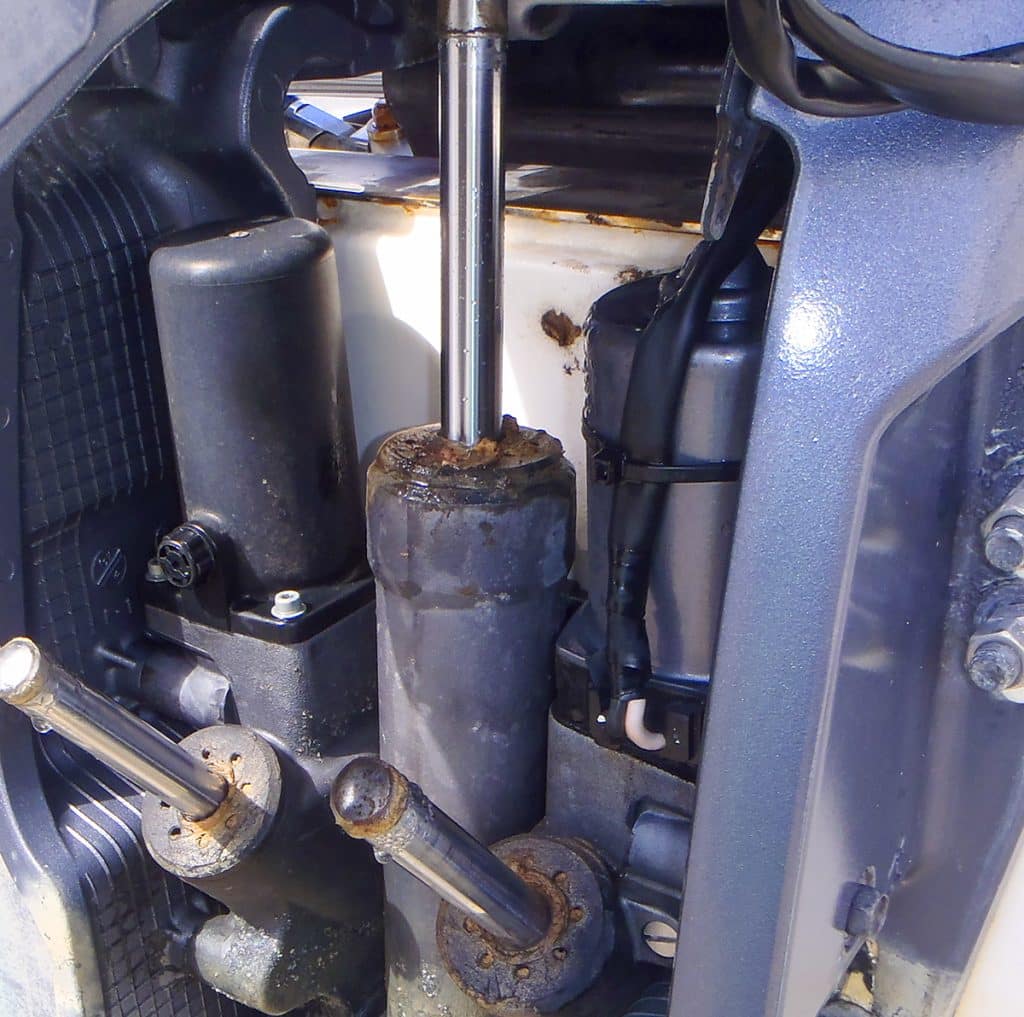
The most common location for leaks is the tilt and trim ram seals. Seals can fail from age and UV degradation, or from corrosion and pitting on the rams themselves. UV-damaged seals can simply be replaced. But if the rams are pitted, new seals won’t hold — the pitting will damage them during operation. In that case, both the seals and rams need to be replaced together.

If fluid level is adequate and no external leaks are visible, the hydraulic pump itself is the likely culprit. At that point, the repair typically requires removal and either rebuilding or replacing the pump at a qualified service facility.

—By Frank Lanier

Related Posts

5 Best Boat Cleaning Products for a Spotless Finish
DIY

5 Best Boat Cleaning Products for a Spotless Finish

April 15, 2026
3.4k
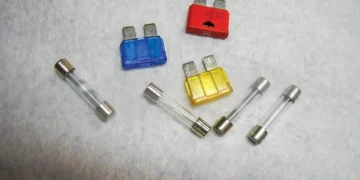
Electronic Fuses
DIY

Marine Electronics Troubleshooting: Repair, Resell, or Replace?

September 30, 2025
3.4k
Man cleaning hull of boat with a buffer
DIY

Experts Share 5 Fall Maintenance Tips Every Boat Owner Should Know

August 20, 2025
3.6k
view of boat's aft on a boat lift that is in the water
DIY

A Summer Survival Guide for DIY Boat Lift Care

August 19, 2025
3.5k
Jack plate control used during shallow-water fishing
DIY

Is This The Best Anchoring Gear for Shallow-Water Fishing?

June 24, 2025
3.4k
A golden propeller showing the end of this boat's steering system after a DIY project
DIY

Boat Steering Systems 101: A DIY Inspection and Repair Guide

May 28, 2025
3.8k
Previous Post

The Best Fishing Lures

Next Post

Boating with Drones

Next Post
Boating with a Drone

Boating with Drones

Comments 1

  1. Anonymous says:
    11 months ago

    It works but is slow going up and down

    Reply

Leave a Reply Cancel reply

Your email address will not be published. Required fields are marked *

Recommended

Grady-White Canyon 326

Grady-White Canyon 326

October 16, 2019
3.3k
An image of the Arrowcat 420 Express Cruiser is the ultimate cruising catamaran.

ArrowCat 420 Express Cruiser

May 8, 2018
4k

Don't miss it

A Second Chance at Sea
Safety

A Second Chance at Sea

May 13, 2026
3.8k
Bahamas Bareboat Charter Guide: Best Routes, Tips & Islands to Explore
Bahamas

Bahamas Bareboat Charter Guide: Best Routes, Tips & Islands to Explore

May 12, 2026
3.4k
Volvo Penta Unveils New D13 IPS Hybrid Yacht Propulsion System
Hybrid

Volvo Penta Unveils New D13 IPS Hybrid Yacht Propulsion System

May 12, 2026
3.4k
10 Tips for Marine Generator Maintenance When Cruising Remotes Locales
Generators

10 Tips for Marine Generator Maintenance When Cruising Remotes Locales

May 11, 2026
3.3k
Boating With Pets: Expert Safety Tips for Dogs and Cats at Sea
How To

Boating With Pets: Expert Safety Tips for Dogs and Cats at Sea

May 11, 2026
3.3k
How to Make Kendie’s Kick, a Fresh Caribbean Rum Cocktail
Drinks

How to Make Kendie’s Kick, a Fresh Caribbean Rum Cocktail

May 7, 2026
3.3k
Facebook Instagram TikTok Youtube LinkedIn

Navigation

  • About Us
  • Advertise
  • Subscribe
  • Careers
  • Contact Us
  • Terms Of Service
  • Privacy Policy
  • Manage My Subscription
logo

1591 E. Atlantic Blvd, 2nd Floor
Pompano Beach, FL 33060
Office: +1 (954) 522-5515
Contact us: info@southernboating.com


Newsletter

* indicates required

© 2026 Southern Boating & Yachting, Inc.

No Result
View All Result
  • Boats
    • Center Consoles
    • Downeast
    • Dual Consoles
    • Motoryachts
    • Power Cats
    • Sport Cruisers
    • Sport Fishing
    • Tenders & Ribs
  • Destinations
    • Regional Reports
    • Bahamas
    • Caribbean
    • U.S. Atlantic
    • U.S. Gulf
  • Engines
    • Engine Buyers Guide
  • Maintenance
    • DIY
  • Electronics
  • Lifestyle
    • News
      • Boating Log
    • Fishing
    • Food
      • Drinks
      • Appetizers
      • Entrées
      • Dessert
      • Holiday
  • Gear
  • Shop
  • Digital Edition
  • Advertise
  • Subscribe

© 2026 Southern Boating & Yachting, Inc.

  • About Us
  • Advertise
  • Subscribe
  • Careers
  • Contact Us
  • Terms Of Service
  • Privacy Policy
  • Manage My Subscription
  • About Us
  • Advertise
  • Subscribe
  • Careers
  • Contact Us
  • Terms Of Service
  • Privacy Policy
  • Manage My Subscription