Choosing the right dinghy for your boat is one of the most important decisions a boater can make. From size and weight to storage and horsepower, the right tender can dramatically improve your time on the water.
By Captain Chris Caldwell
Why Choosing the Right Dinghy Matters
Most boat owners spend countless hours imagining their ideal vessel, yet the dinghy—an essential extension of the boat—is often an afterthought. Understanding how to choose a dinghy requires just as much consideration as your choice of boat. Key factors include overall size and design, total weight with the engine installed, the number of passengers you plan to carry, and the speed you expect to achieve with a full load. Once you evaluate these elements, you’ll begin to understand that different dinghies are designed for different purposes.
Quick Buying Checklist
- Define your dinghy’s mission
- Check passenger capacity plate
- Calculate total weight (boat + motor)
- Choose storage location first
- Match horsepower to usage
Subscribe Here For More Boating Content
Key Factors When Selecting a Dinghy
A high-performance dinghy makes sense if you regularly cover longer distances, while a smaller engine may be perfectly adequate for leisurely trips ashore. Always check the load and capacity plate on the transom to confirm the maximum number of passengers the dinghy is designed to carry. If your plans include towing friends on a tube, hydro slide, or water skis, additional horsepower will be necessary. Keep in mind that more power typically means a heavier engine and a larger, longer dinghy. Defining your intended use—or “mission”—is the most important step in selecting the right dinghy for your boating lifestyle.
Dinghy Storage Options Explained
Now let’s consider storage options. A small dinghy paired with a low-horsepower outboard may weigh less than 150 pounds, with the engine accounting for approximately 35 pounds of that total. Roll-up dinghies offer excellent flexibility, as their removable floorboards can be stowed in a lazarette, while inflatable floors make storage even more convenient. The outboard can be secured on a motor bracket mounted to the boat’s handrail, keeping it accessible and out of the way.
Also Read:
Smart-Size Yachts: The Best Boats Under 50 Feet for 2026
Why Boats Under 50 Feet Hit the Sweet Spot Bigger isn’t always best.Boats under 50 feet strike an...
That said, many boat owners envision a dinghy that is larger, heavier, and faster than a simple roll-up, which introduces additional storage considerations.
Roof storage and davits
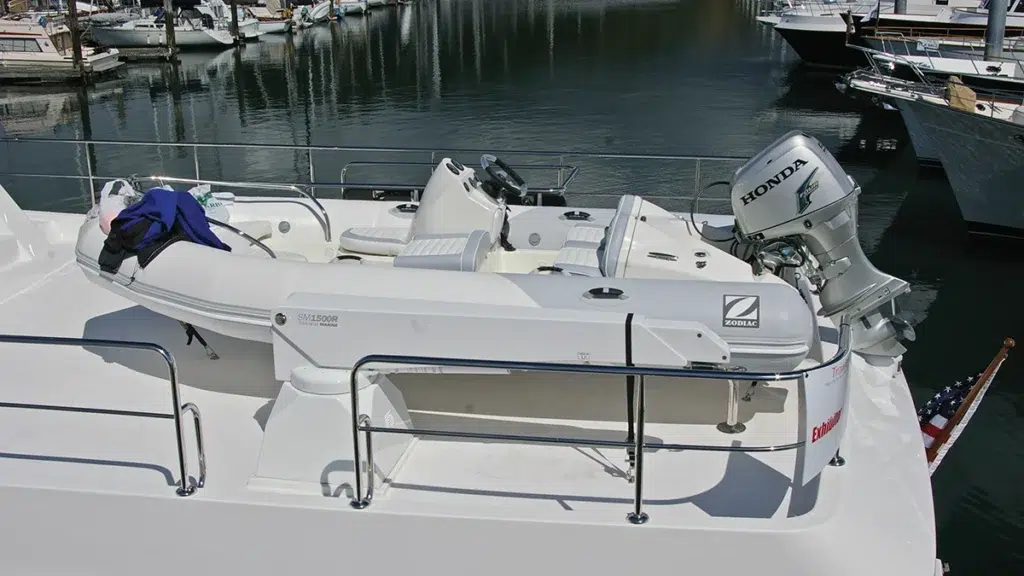
Start at the top and look to your roof for storage. Many pleasure boats have large aft deck hardtops perfect for dinghy storage—out of the way, easily accessible, and stowed intact without any disassembly. The outboard motor is ready to go. A davit or crane makes lifting effortless. Simply lift and lower the dinghy over the side for an easy launch and recovery.
Swim platform mounts
The stern is another convenient storage location. There are a few different bracket systems to mount your dinghy onto the swim platform. Rigged to hinge the dinghy up toward the transom, some brands require more swim platform space than others. Remember that a four-stroke outboard motor must be stored upright. A hinge on the outboard motor bracket allows for this consideration when the dinghy is cranked up onto the swim platform in this manner. As the dinghy changes angles, the outboard motor swivels on the special bracket, remaining vertical to sea level.
Transom-mounted systems
If the roof height is a fear factor, and the swim platform blocks more than it helps, you may want to consider storage high off your transom. A system like the St. Croix model allows davits that hang from the transom.
Under-platform lifts
And designs like the Freedom Lift are mounted underneath the swim platform, both offering better access at the stern of your boat.
Also Read
Sunreef Ultima 55 Review: A Different Kind of Catamaran
The Sunreef Ultima 55 is a hybrid foiling catamaran that represents an exciting departure for the Polish builder. By Kevin...
Types of Dinghies: Inflatable vs RIB
What is a RIB?
RIB stands for rigid inflatable boat, a design that combines an inflatable collar with a fiberglass hull. The rigid hull provides superior tracking compared to an inflatable keel and offers a more stable, durable platform when beaching on gravel, rocks, or shell-covered shores. Most RIBs are equipped with Hypalon inflatable tubes, which typically carry a 10-year warranty and offer excellent durability, while more budget-friendly PVC tubes generally have a shorter service life.
How to Match Your Dinghy to Your Boating Lifestyle
For those seeking the highest level of dinghy comfort, a center console represents the pinnacle of luxury. However, it’s important to account for the added weight of the console, particularly if rooftop storage is part of your plan.
Steering Options: Tiller vs Center Console
While tiller steering is perfectly functional, a center console provides a dedicated helm seat rather than perching on the inflatable tube. The result is a drier, more comfortable ride—no “dinghy butt,” the all-too-familiar condition of wet pants caused by constant spray when operating a basic RIB.
So, study your dinghy’s mission, decide where to stow it, and make your decision. Smart cruisers know that the closer the dinghy is stored to the water, the more you will use it. Wise words indeed when you consider how to select your dinghy. Now, let’s go for a ride.
Captains Chris & Alyse Caldwell are USCG 100-ton Masters and Cruising Coaches who offer personal boat training online or on board your boat. Questions? Ask Captain Chris: chris@captainchrisyachtservices.com.