By Captain Chris Caldwell
What Is a Marine VHF Radio and How Does It Work?
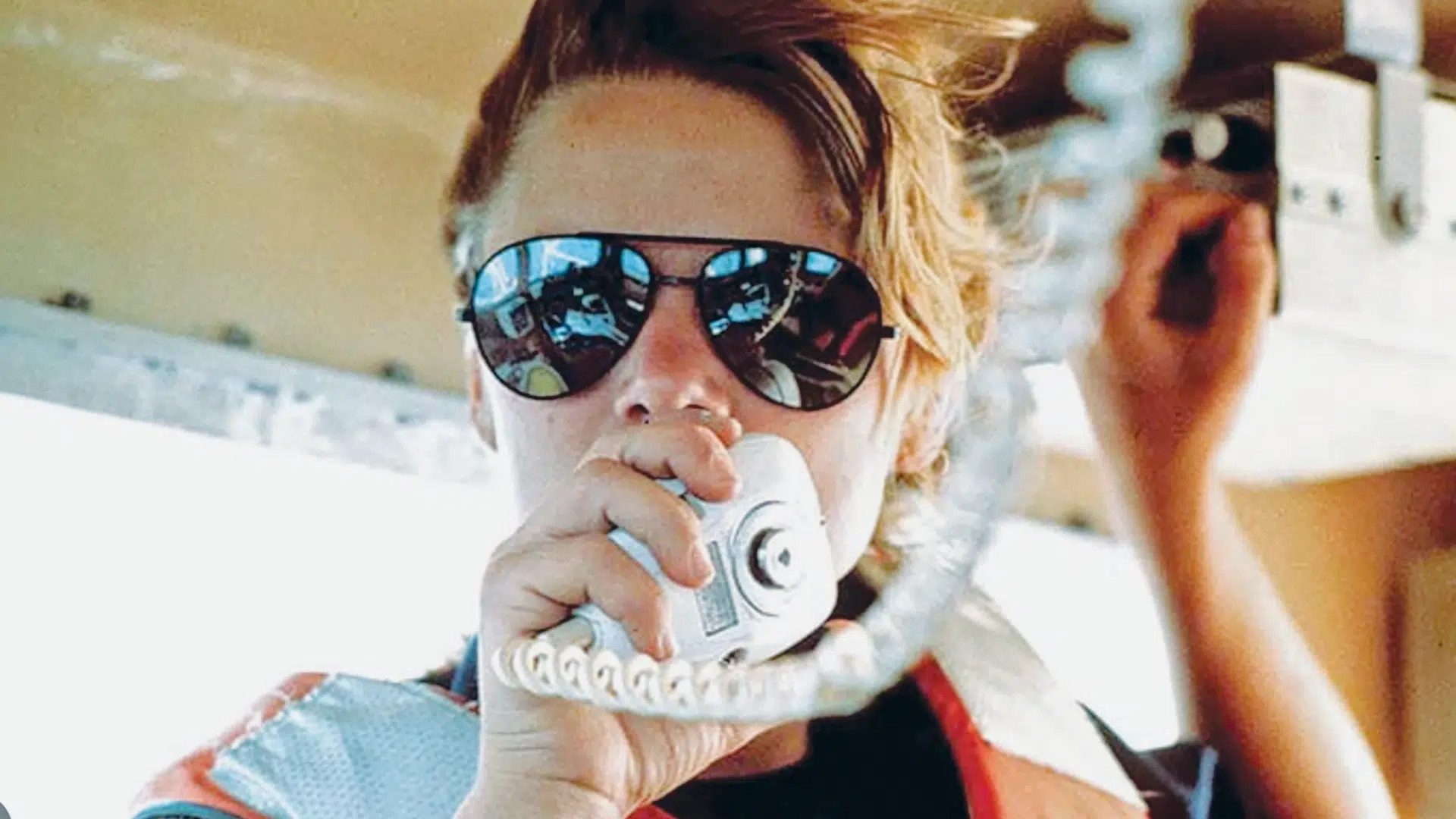
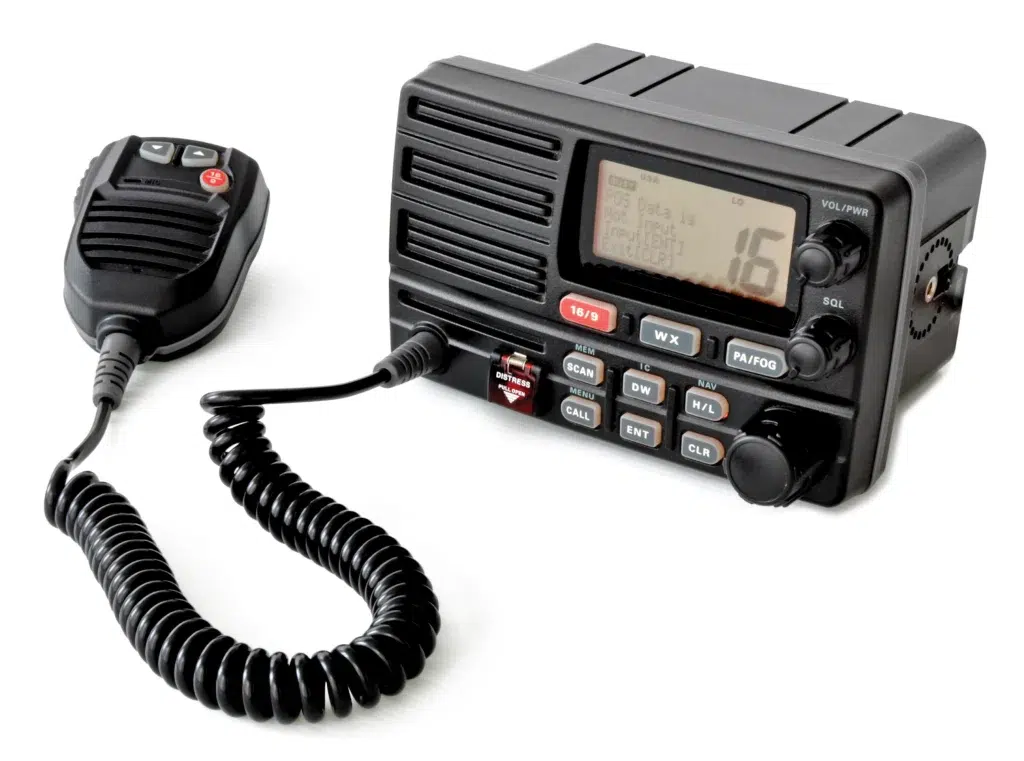
A marine radio is a simplex voice communication radio—a fancy term that means you cannot talk over the other person. Only one person can speak at a time on the VHF, unlike a telephone which is a duplex design.
Start by pressing the PTT (Push to Talk) button, aiming your voice into the microphone on the handset. Some marine radios have a speaker built into the microphone handset. This handset held near your ear allows you to hear better on a windy day. Proper protocol is to say, “Over” when your message is completed. Then the other person knows you’ve finished talking and can start speaking without interruption.
Subscribe Here For More Boating Content
Essential Marine Radio Channels Every Boater Should Know
Channel 16 – Hailing and Distress
Channel 16 is a 25-watt hailing and distress channel only, so keep your communication short and to the point so others can use it in an emergency.
Channel 9 – Bridge and Lock Communications
Channel 9 is commonly used to hail a bridge when you need an opening.
Channel 13 – Commercial and Navigation Safety
Some bridges and locks use channel 13 instead, along with work boats like a tug or a dredge. You may see a blue sign indicating which VHF channel the bridge tender monitors.
Channel 22A – U.S. Coast Guard Communication
New radios will have a 10-prefix on some channels that may be used by commercial vessels and the USCG. When hailing the USCG on channel 16 they may ask you to switch over to channel 22A—pronounced 22Alpha. On a newer radio, this is seen as channel 1022.
Weather Channels and Forecast Monitoring
Marine radios will offer ten weather channels. The station transmitting closest to you will come in clearer than others further away. Press the WX button on your radio and scroll through channels 1-10 for your local forecast.
You can find a longer list of required and recommended VHF channel numbers in the Chapman Piloting reference book.
Also Read
Pathfinder 2800 Hybrid Sets New Standard for Bay Boats with Offshore Capability
The Pathfinder 2800 Hybrid - a milestone model that represents the next evolution of the Pathfinder brand sets a new...
Step-by-Step Guide to Calling a Marina or Vessel on VHF Radio
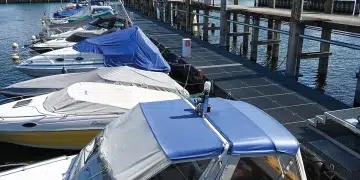
Let’s start from the beginning. When calling a marina or another boat, use channel 16 to hail, or contact, them. Start you radio transmission by pressing the PTT button, saying their name three times like this: “Harbortown, Harbortown, Harbortown. This is the vessel Sandy Hook. Over.” Then stop talking, releasing the PTT button.
The marina should answer, “Vessel calling Harbortown marina, please acknowledge and shift to channel 68” (or recreational use channel to talk about non-emergency topics). You answer, “Understand. Shift to 68. Over.” Then shift to channel 68 and say, “Harbortown—Sandy Hook”. They will then respond with something like, “How can we help you?” Since you are asking about a slip assignment, they will now be able to communicate without crowding the emergency hailing and distress channel 16. When your conversation is complete, state, “Sandy Hook clear channel 68 and standing by on channel 16.”
Many radios have a highlighted channel 16 button that will return to 16 without having to dial all the way back. If the marina calls you again on 16 they will ask you to go back to the recreational channel you were last on. Press the highlighted 16 button again and the radio will switch back to your last channel, in this case 68.
Also Read:
Useppa Is for Lovers
Chart Your Course for this Tropical Island Gem That Captures the Heart and Restores the Soul Boaters are...
What Does Mayday Pan-Pan Securite Mean?
Pay attention when you hear seh-cure-i-TAY said three times. A securité call broadcasts an alert that is not an immediate danger.
Pahn-pahn (Pan-Pan) is called three times to indicate an urgent but not life-threatening notice.
When a boater says Mayday-Mayday-Mayday, be prepared to hear that someone is injured, or a boat is on fire or sinking.
Marine Radio Etiquette and Best Practices
The Better to Hear You
Learn the phonic alphabet—Alpha, Bravo, Charlie, Delta, etc.—so your communication is clear, especially when confirming your slip assignment such as Echo 37. Keep it simple. While listening to the VHF radio, you may hear others using terms that sound phonetically different than they are spelled.
Keep It On
You can learn a lot by just listening to your VHF marine radio, so keep it on every time you leave the dock. Build your confidence by using proper technique when you call for a slip or bridge opening. With luck and planning, you may never need to use it for an emergency.
Captains Chris and Alyse Caldwell are USCG 100-ton Masters and Cruising Coaches who offer Personal Boat Training Online or Onboard your boat anywhere. Questions? Ask Captain Chris: chris@captainchrisyachtservices.com