
Last updated: July 29, 2026
Protect your vessel before storm season arrives with this expert-backed hurricane preparation checklist.
Additional reporting by Capt. Chris Caldwell
Key Takeaway
Preparing your boat for hurricane season includes reviewing insurance requirements, creating a hurricane plan, removing wind-catching equipment, securing dock lines, testing bilge pumps, documenting the vessel, and relocating or hauling out early when storms threaten.
Why Hurricane Preparation Matters for Boat Owners
With hurricane season officially beginning June 1, now is the time for boat owners to review storm-preparation plans and take proactive steps to safeguard their vessels. Whether you own a center console, sportfisherman, sailboat, or luxury yacht, preparation before a storm develops can significantly reduce the risk of damage and improve the likelihood of a successful insurance claim.
From reviewing your insurance requirements to securing dock lines and removing wind-catching equipment, these hurricane-preparation tips can help protect your investment when severe weather threatens.
Subscribe Here For Weekly Updates
Review Your Insurance Policy and Hurricane Plan
Before storm season ramps up, review your hurricane preparedness plan and make sure it is readily accessible. The plan should outline where the boat will be moved, who will assist with preparations, and what steps must be taken before a storm arrives.
Capt. Chris Caldwell advises boat owners to begin by reviewing the navigation limits and hurricane-related requirements outlined in their insurance policies. Many insurers restrict where vessels can be located during hurricane season or require a written hurricane plan. Some policies mandate hauling the boat at a pre-approved boatyard if a named storm threatens.
Relocate or Haul Out Before the Storm
If hauling is part of your plan, don’t wait until the last minute. Capt. Chris Caldwell notes that many drawbridges are locked down once sustained winds exceed 35 knots, potentially limiting access to haul-out facilities.
Waiting until a storm is imminent can also lead to crowded waterways, unavailable marina space, and difficulty securing professional assistance.
Whether you’re moving inland, hauling out, or relocating north of a designated hurricane zone, acting early provides more options and reduces stress.
Reduce Windage and Remove Loose Equipment
One of the most effective ways to protect a vessel is to reduce anything that can catch wind.
Remove or secure:
- Sails
- Bimini tops
- Canvas enclosures
- Dinghies
- Awnings
- Vinyl bridge windows
- Sunshades
- Deck umbrellas
Capt. Caldwell also recommends taping electronic navigation-screen covers securely in place to provide an additional layer of protection from flying debris.
Also Read
Jeanneau TH38 Review: An Outboard Power Cat for the Weekend
Jeanneau TH38: What a Difference a Dayboat Makes Jeanneau's latest twin-hull series opens the door for extended fun. By Steve...
Secure Your Boat at the Dock
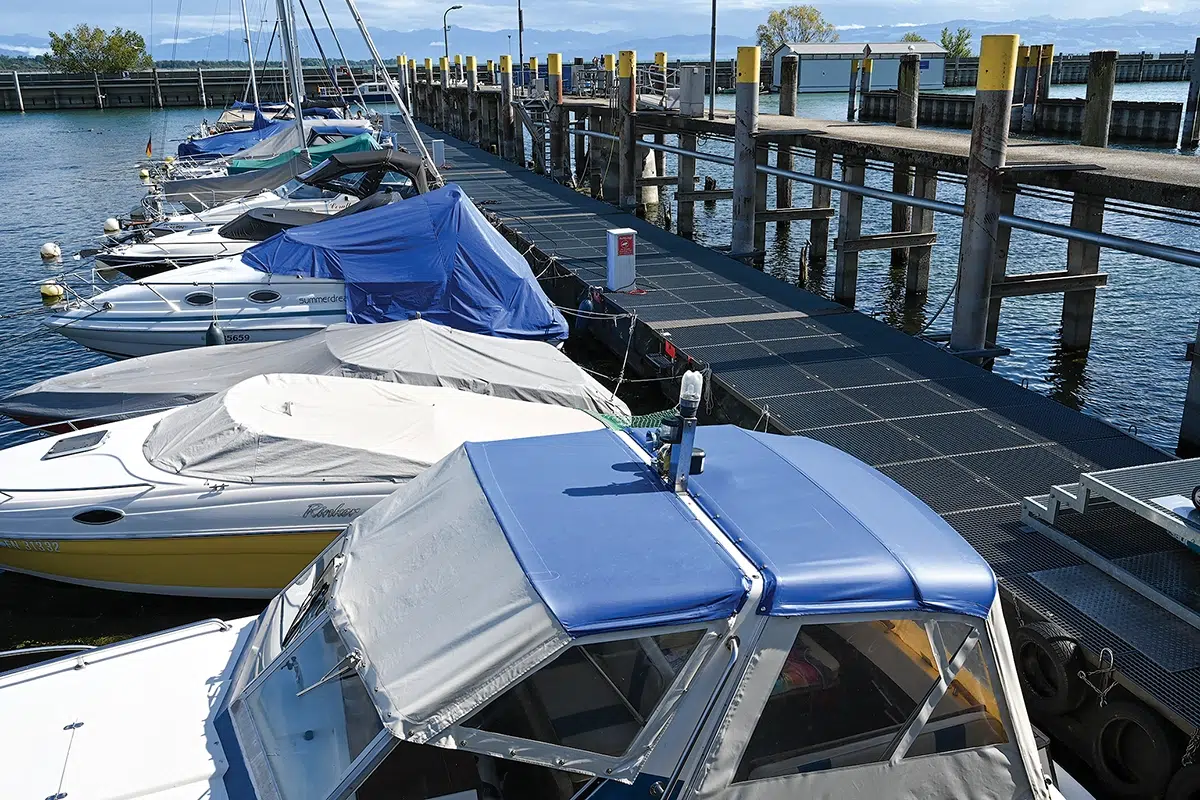
If your boat will remain in the water during a storm, carefully evaluate how it is secured.
Study the forecast and expected wind direction. Caldwell recommends pulling the boat slightly away from the slip when possible to prevent the swim platform from being forced against the dock.
When severe wave action is expected, consider securing lines directly to dock pilings rather than relying solely on finger-pier cleats. Use extra dock lines where appropriate and install chafe protection to reduce wear during prolonged periods of heavy movement.
Fenders should be attached securely to the boat’s cleats to help keep them in position throughout the storm.
Clear Decks and Remove Loose Gear
Any loose item left on deck can become a dangerous projectile during hurricane-force winds.
Remove or securely stow:
- Deck chairs
- Cushions
- Fishing equipment
- Water toys
- Portable grills
- Dock boxes
- Safety gear not permanently mounted
A clean deck reduces both wind resistance and the potential for damage.
Also Read:

15 Best Marinas for Yachts in 2026: Florida to the Caribbean and Beyond
Ports of Call: 15 Marinas That Elevate the Cruising Experience For today's cruisers, a marina means far more...
Ensure Proper Drainage
Heavy rainfall can quickly overwhelm a vessel if drainage systems are compromised.
Before a storm:
- Clear cockpit drains and deck scuppers
- Remove debris from gutters and channels
- Verify water can flow freely overboard
- Position the boat to encourage proper drainage
Good drainage helps prevent excessive water accumulation and reduces strain on bilge pumps.
Make the Boat Watertight
Inspect the vessel for any openings where water could enter.
Check and secure:
- Hatches
- Portlights
- Doors
- Ventilators
- Engine-room openings
- Exhaust outlets
Preventing water intrusion is critical to protecting electrical systems, engines, and interior furnishings.
Test Batteries and Bilge Pumps
Charge all batteries fully and confirm that automatic bilge pumps are functioning properly.
Clean debris from the bilge to prevent pump blockages and verify that float switches operate correctly. A working bilge system can be essential if heavy rain accumulates during the storm.
Remove Valuables and Hazardous Materials
Take valuables off the boat well before the storm arrives.
Items to remove include:
- Electronics
- Fishing tackle
- Important documents
- Registration paperwork
- Portable navigation equipment
For environmental safety, remove:
- Portable fuel tanks
- Oil containers
- Paint products
- Cleaning chemicals
- Other hazardous materials
Document Your Boat for Insurance Purposes
Capt. Caldwell also recommends documenting the vessel’s condition with photographs before the storm. These images can be invaluable if an insurance claim becomes necessary.
Communicate With Your Marina
If your boat is stored at a marina, confirm that management has your current contact information and understands your hurricane plan.
Leave a spare key if requested and ask how the marina will communicate post-storm access procedures once conditions are deemed safe.
Final Hurricane Boat Preparation Checklist
Before evacuating or leaving the boat:
✓ Review insurance requirements and hurricane plans
✓ Relocate or haul out early if necessary
✓ Remove sails, canvas, dinghies, and other wind-catching items
✓ Secure dock lines, fenders, and chafe protection
✓ Clear drains and scuppers
✓ Seal hatches and openings
✓ Charge batteries and test bilge pumps
✓ Remove valuables and hazardous materials
✓ Photograph the boat for insurance documentation
✓ Confirm marina contact information and access procedures
Preparation is the best defense against hurricane damage. By taking action before a storm is on the horizon, boat owners can improve safety, reduce potential losses, and give their vessels the best chance of weathering the season.
For official forecasts, storm tracking, and preparedness information, visit the National Hurricane Center.
Frequently Asked Questions About Hurricane Boat Prep
Should I haul out my boat before a hurricane?
If your insurance policy requires it or a trusted boatyard is available, hauling out is often one of the safest options before a major storm.
What should I remove from my boat before a hurricane?
Remove sails, bimini tops, dinghies, cushions, fishing gear, electronics, important documents, fuel containers, and other loose items.
How do I secure a boat at a dock during a hurricane?
Use extra dock lines, install chafe protection, secure fenders properly, and account for wind direction and storm surge.
Does boat insurance require a hurricane plan?
Many marine insurance policies require written hurricane plans or impose navigation restrictions during hurricane season.
Related Posts