Michigan’s Upper Peninsula regales us with stories of pretty shorelines, sunken ships, and valorous sailors.
My first shipwreck SCUBA dive was in the British Virgin Islands on a charter trip in 2000. The RMS Rhone sank in a hurricane off Salt Island in October 1867, lies in 85 feet of water, and is a very popular dive destination. On a return trip 12 years later, I was surprised at how much of the wreck had come apart and learned that shipwrecks tend to deteriorate much faster in warm, saltwater environments than in the cold freshwater found in northern climes. Great Loop cruisers interested in shipwrecks would do well to plan extra time transiting the Great Lakes, which are estimated to contain more than 6,000 wrecks. Lake Erie is assumed to have the most shipwrecks of all the Great Lakes, but there are several reasons to extend your cruising itinerary to Lake Superior. Whether you’re an experienced cold-water SCUBA diver, enjoy roaming the beach where remains of ships rest, or prefer to leisurely explore museums, Michigan’s Upper Peninsula in Lake Superior, including Pictured Rocks National Lakeshore, should be on your summer cruising itinerary.
Also Read
US-Built Highfield Escape 650/750: Deep-V Fiberglass RIBs
Built for America (Cadillac, MI plant + vision) Highfield Boats, America’s leading RIB brand, has introduced the Escape Series, a...
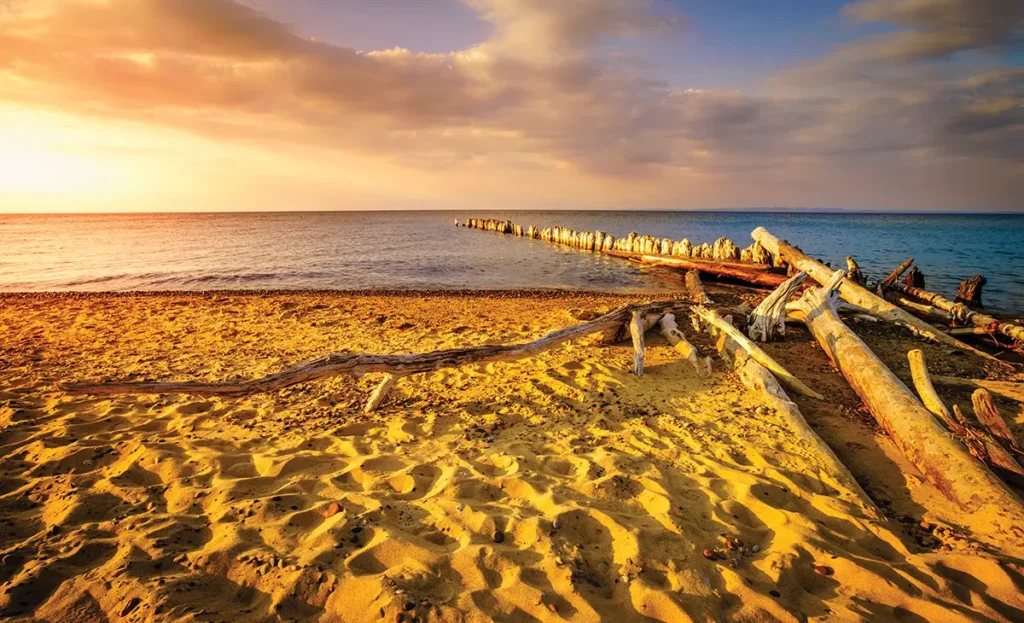
Lake Superior is the cleanest and clearest of all the Great Lakes with underwater visibility of 27 feet typically and up to 100 feet in places. Approximately 550 shipwrecks are thought to be in Lake Superior with 350 identified, but many are still undiscovered likely due to their locations in some of the most remote parts of this largest and deepest of all the Great Lakes. There are plenty of shipwreck opportunities to explore, since some 200 wrecks are known to rest off the Michigan shore between Munising and Whitefish Point on an 80-mile stretch known as Lake Superior’s Shipwreck Coast. Some are visible at or above the water or have been washed up on the beach. While exploring, keep in mind whether you’re diving below the water’s surface or combing the beach, Michigan state law protects all shipwreck remains making it illegal to scavenge.
Subscribe Here For More Boating Content
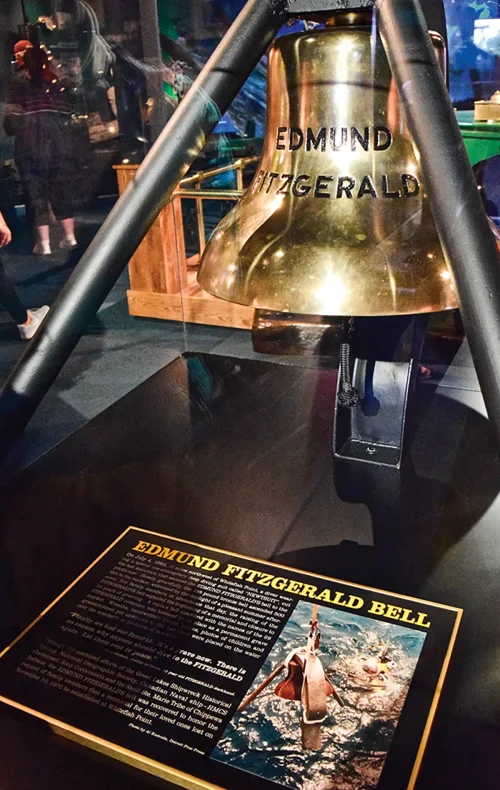
Many cruisers new to the Great Lakes mistakenly assume that any body of water named “lake” is relatively calm compared with what they’d encounter offshore. Gale warnings have estimated wave heights in the mid-20-foot range and above. It is recommended that people traveling the Great Loop ensure they are off the Great Lakes and headed south well before the deadly November gales. Many, if not most, of the shipwrecks in the Great Lakes occurred due to inclement weather, including Lake Superior’s most famous shipwreck, the SS Edmund Fitzgerald, which tragically sank on November 10, 1975, in a storm 17 miles northwest of Whitefish Point, Michigan, also known as the graveyard of the Great Lakes. The bell of the Edmund Fitzgerald was retrieved in 1995, and on display at the Great Lakes Shipwreck Museum. However, the wreck site is closed to recreational diving and forbidden by Canadian law (it lies 530 feet deep in Canadian waters), which will impose a $1 million fine to those who ignore it.
Notable Shipwrecks
Bermuda, a merchant schooner, sank in October 1870. It lies in 30 feet of water and is popular for SCUBA divers of all skill levels. (It is included in the glass bottom boat tour.)
Smith Moore, a 260-foot three-masted steam barge, sank July 13, 1889, in dense fog; lies in 95 feet of water with the deck at the 85-foot level; considered the most intact wreck in the area, and is buoyed.
Mary M. Scott, a 100-foot wreck, sank in 1870, depth in 15 feet of water; lies approximately 500 feet off the Sand Point channel buoy.
George, ran aground in a fall gale on October 24, 1893; lies in 15 feet of water near Mosquito Beach; all persons on the ship survived.
Kiowa, a 251-foot steamer, hit Au Sable reef in a gale on November 30, 1929, and lies in about 40 feet of water.
Mary Jarecki can be seen just east of Twelve-Mile Beach and ran ashore in fog on July 4, 1883.
Sitka and Gale Staples wrecks are mingled at Au Sable Point. The wrecks were similar double-decked wooden bulk freighters. Pieces of the wrecks are lying on the reef in shallow water. Sitka stranded in 1904, and Gale Staples grounded in 1918.
Things to Note
Keep in mind that cold-water diving requires specialized gear and experience and is not recommended for novices. Even experienced SCUBA divers are encouraged to use current and local knowledge from local dive shops and operators. Glass Bottom Shipwreck Boat Tours is highly recommended and offers a two-hour narrated guide and highlights two shipwrecks. shipwrecktours.com
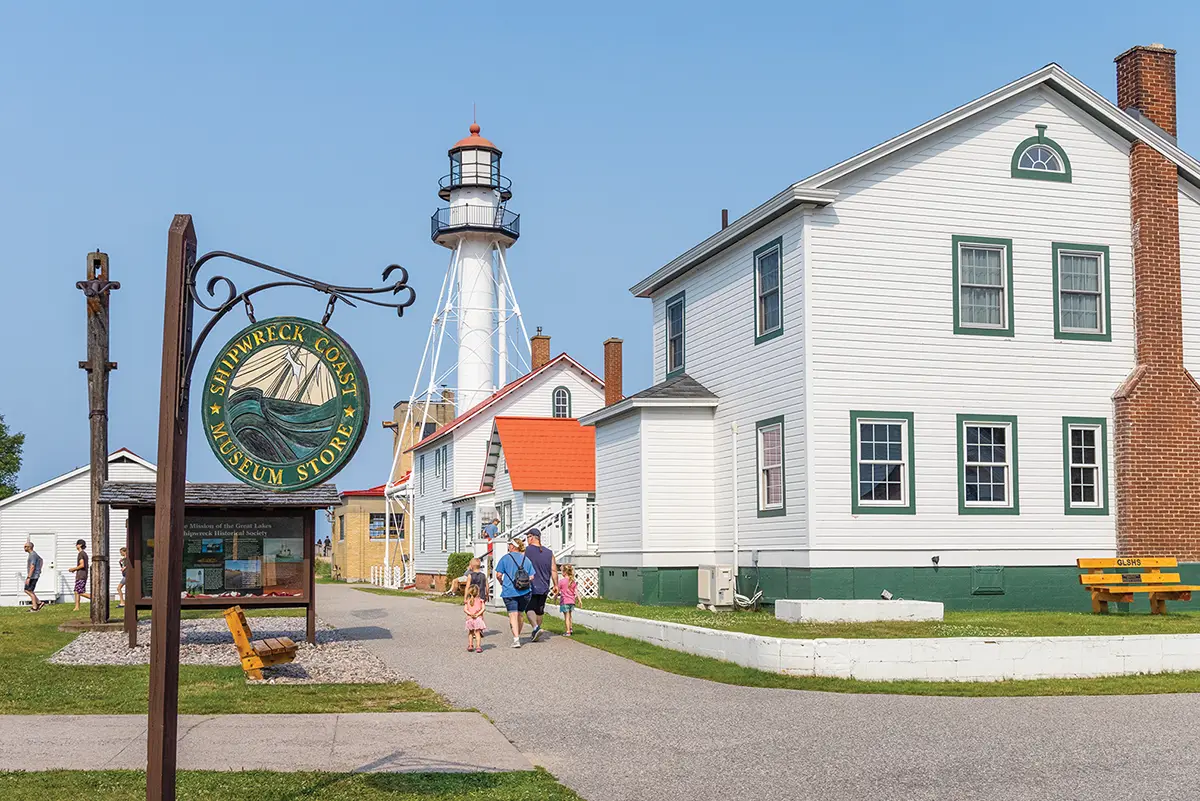
The Great Lakes Shipwreck Museum, open May 1st to October 31st, is a not-to-be-missed world-class resource for anyone interested in diving into the rich history of ships and men who courageously sailed Lake Superior during some of her most deadly storms. Its location at Whitefish Point Light Station—the oldest operational lighthouse on Lake Superior— includes exhibits that depict the trials faced by sailors on the Great Lakes, and historical structures provide a glimpse into life in days gone by. shipwreckmuseum.com
Don’t miss an opportunity to stretch your legs with a walk along the boardwalk to take in the view of Lake Superior and her resting place of the Edmund Fitzgerald, and if you’re so inclined, hum the tune or sing some of the lyrics from the 1976 song of the same name by Gordon Lightfoot.
In a musty old hall in Detroit they prayed,
in the “Maritime Sailors’ Cathedral.”
The church bell chimed ’til it rang twenty-nine times
for each man on the Edmund Fitzgerald.
The legend lives on from the Chippewa on down
of the big lake they call “GitcheGumee.”
“Superior,” they said, “never gives up her dead
when the gales of November come early!”
-by Liz Pasch
People Also Ask - FAQ
Is Lake Superior good for wreck diving?
Yes—cold, clear freshwater preserves hulls; visibility can exceed 50–100 ft in spots.Can I dive the Edmund Fitzgerald?
No. The site lies ~530 ft deep in Canadian waters and is protected; the bell is on display at the museum.Best time to visit the Shipwreck Coast?
Late spring through early fall—avoid November gales; confirm museum/tour seasonal hours.Do I need special gear?
Cold-water exposure protection and redundant safety gear are essential; go with local operators.Are artifacts legal to take?
No—Michigan law protects all wrecks; look, don’t remove.