

The Volvo Penta D13 IPS Hybrid Yacht Propulsion System combines diesel and electric propulsion to deliver quieter cruising, lower emissions, improved fuel efficiency, and seamless onboard control for luxury yachts between 70 and 100 feet.
By Marilyn DeMartini
Sweden, as a country, presents an ethos of cleanliness, precision and sustainability, and Volvo Penta, as a company, personifies its Swedish DNA. Having introduced its original Inboard Performance System (IPS) technology in 2005, a team of dedicated engineers and designers have since been working diligently to develop a new system that incorporates the rising dawn of electrified marine propulsion into the diesel engine platform.
Volvo Penta’s Integrated Helm-to-Propeller Solution
Since 2016, Volvo Penta engines have been compatible with HVO100, an alternative, renewable paraffinic fuel that reduces emissions by up to 90%. Combining HVO 100 fuel and electric motors addresses efficiencies, environmental awareness and complementary power options into a new fully integrated system, a complete “helm to propeller solution.” The D13 IPS Hybrid achieves the company’s goals of combining “superior onboard comfort with simplified ownership, installation and design.”
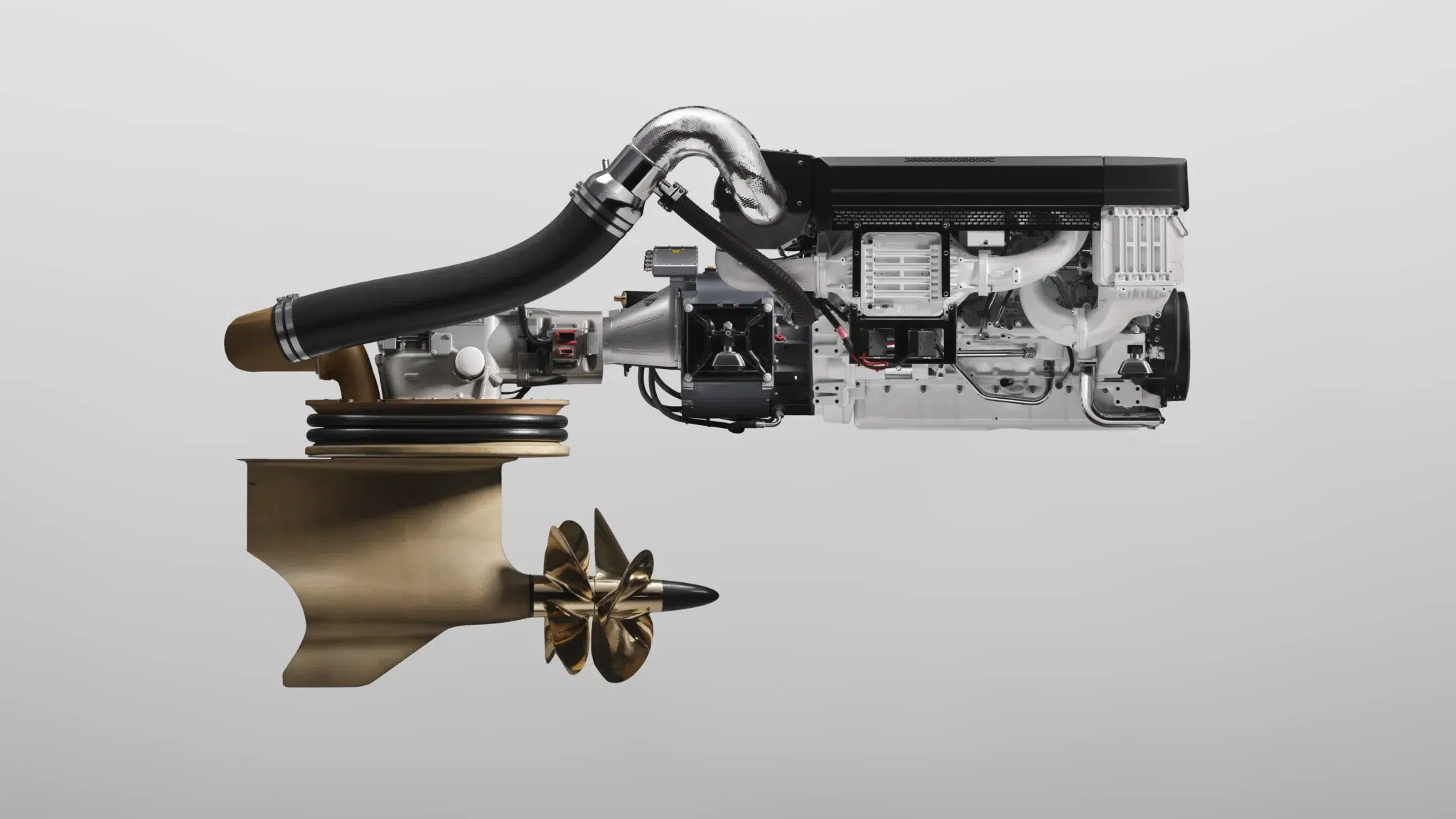
Seeing this system explained and unveiled at the Volvo Penta test facility in Gothenburg, Sweden, and witnessing the precision with which all components are built at its manufacturing facility in the rural area of Köping, brought a clear understanding of the passion, technological acuity, and skill that culminates in the company’s ongoing effort to bring the most innovative and efficient engines, motors and propulsion to the marine market. Those three mechanical elements, together with the latest in battery technology, comprise the D13 Hybrid IPS Yacht Propulsion System, which is all sourced through Volvo Penta, so having one supplier greatly simplifies acquisition, installation and service.
The present target market is yachts 70-100 feet. Nicola Pomi, VP of Yacht and Superyacht Sales, explained that the D13 Hybrid brings peace of mind as well as performance. “With one partner…our customers can focus on enjoying time on the water, knowing they have access to expert support every step of the way,” he stated.
Subscribe Here For More Boating Content
Battery Technology Designed for Luxury Yachts
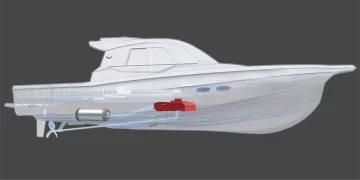
The diesel/alternative fuel engine is only used when needed for additional speed and to charge the batteries and management system while underway. The batteries, available in small pack (147 kWh) and large pack (221 kWh), and with a hybrid power distribution unit (PDU), are designed for the harsh marine environment with protective functionality. They are also banked in an efficient way to reduce cabling and weight, and provide high power levels and energy density for the 900- to 1,350-horsepower system.
All components are consolidated into one place for simplified serviceability—and without a generator. Approximately 45 minutes of internal combustion engine acceleration provides about 11 hours of silent and emission-free running time, saving space, weight and up to 30% in fuel costs. Fully charged batteries can run the entire electric system at 6 knots for 4 hours, depending on the vessel.
Also Read
Ferretti 940 Review: A Pocket Megayacht With Italian Luxury and Practical Comfort
The Ferretti 940 represents a pleasing mix of Italian style and onboard comfort. By Kevin Koenig Whenever I go to...
A New Era of Quiet, Efficient Cruising
The torque and power of the electric motor engage the Volvo Penta propulsion system with surprising efficiency, thanks in part to the forward-facing, counter-rotating propeller system where the props operate in untouched water. We felt this ease while operating a 68-foot aluminum test vessel, shifting seamlessly between electric hybrid and crossover modes. A push of a button and throttles allows the boat to shift from fuel to electric or utilize both when needed, while the joystick offers ease of operation.
In pure electric mode, yachts can cruise quietly at low speeds, dock with precision, and anchor in near silence, which can enhance entering or exiting a port at various times of morning and night. It also provides the perfect environment for a peaceful night’s rest. Imagine hearing only the sound of the sea instead of a generator hum.
All this hybrid technology interfaces with Volvo Penta’s glass cockpit, a touchscreen operation system, enabling intuitive Electronic Vessel Control (EVC), Joystick Driving, Assisted Docking and Autopilot.
Also Read:
Tilt and Trim Troubleshooting
When your outboard’s tilt and trim system fails, you feel it immediately. You can’t optimize your running angle...
Which Yacht Builders Are Using the New Hybrid IPS System?
While the Volvo Penta IPS is currently being used in many OEM builds including Azimut, Beneteau and Sunseeker, Azimut and Sanlorenzo will be the first builders to use the new D13 IPS hybrid system. The company is working with other selected OEMs to incorporate this new technology into their designs and builds, not just for operational efficiency and environmental benefits, but also to free engine compartment space for usable, livable space aboard. While still sizable, Volvo Penta has compactly designed its units, demonstrated by the refit of its 27 test vessels. The D13 IPS Hybrid is designed for 70- to 100-foot yachts.
Stay tuned for an article in an upcoming issue of Southern Boating & Yachting, where we will present more detail on the Volvo Penta D13 Hybrid Yacht Propulsion System and how it can enhance your boating lifestyle.
Volvo Penta D13 IPS FAQ
What is the Volvo Penta D13 IPS Hybrid system?
The D13 IPS Hybrid is a diesel-electric yacht propulsion platform that combines Volvo Penta IPS drives, electric motors, battery packs, and advanced vessel controls into a fully integrated marine propulsion system.
How long can the system run in electric mode?
Volvo Penta says fully charged batteries can power a yacht at approximately 6 knots for up to four hours, depending on vessel configuration.
What yachts will use the D13 IPS Hybrid?
The system is designed for yachts 70 to 100 feet, with Azimut and Sanlorenzo among the first builders adopting the technology.
What are the benefits of hybrid yacht propulsion?
Benefits include quieter cruising, reduced emissions, lower fuel consumption, improved onboard comfort, and more efficient use of engine-room space.