Safety first and the fun follows. Clear communication onboard is possibly the number one skill that supports a safe boating adventure. After all, this is pleasure boating.
When helmsman and deckhand are speaking, make every word matter. Know before you go. So, be sure everyone understands basic boating terms. While enjoyment on the water is our plan, everyone in our crew should prepare for the just-in-case.
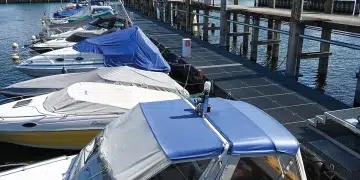
Avoid Docking Drama
It is essential to keep your crew in the loop. Plan your docking strategy, then share the plan with your crew. Agree to it and be prepared for inevitable changes. It helps if you understand the responsibility and skill level of each crew member.
Shout, “Breast line is ON!” when the line is secured. The helmsman may decide that a change in the plan is required. So, be clear in that new instruction.
Also Read
Aspen C128 Review: A 46-Foot Power Cat Built for Tropical Adventure
The Aspen C128’s Mission as a Long-Range Power Catamaran Aspen power catamarans new flagship 46’ C128 is meant for serious...
Communicating in Wind, Weather, and Noise
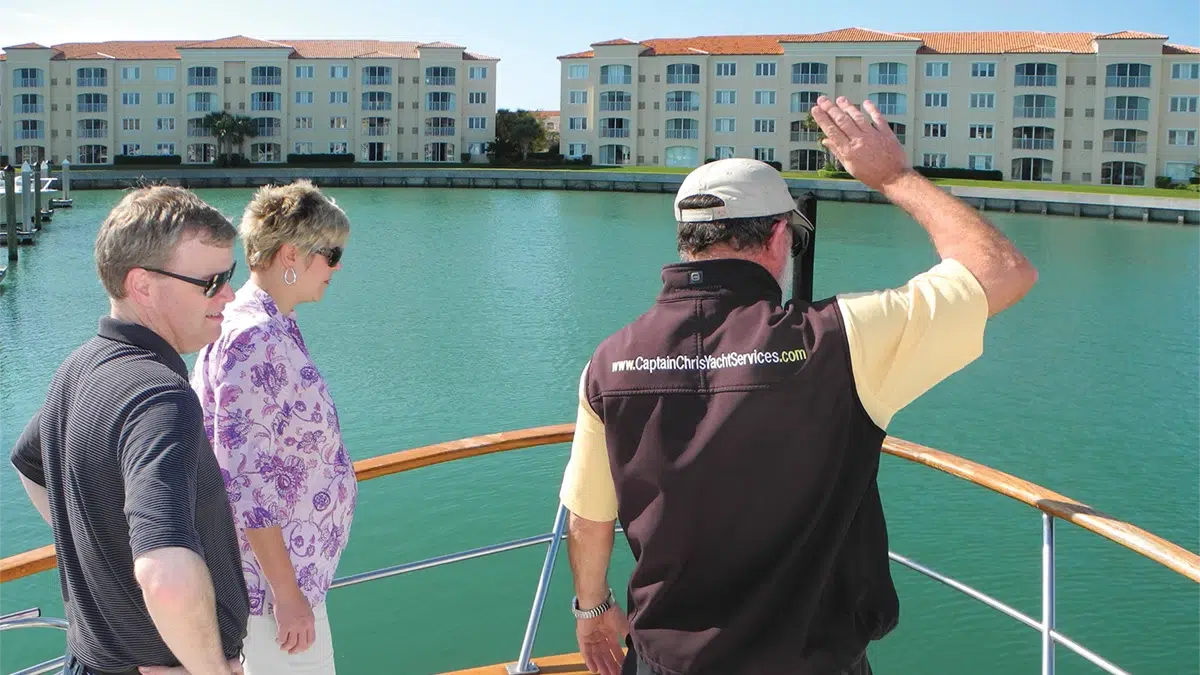
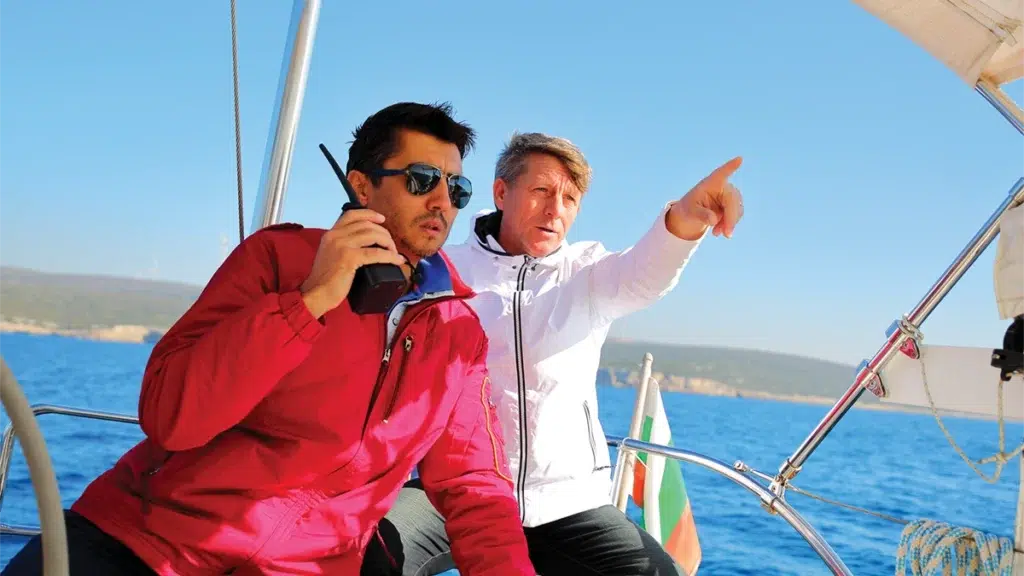
How do you talk when the wind is howling? Arm signals are great when you can see each other. An outstretched arm points in the direction you want the helmsman to look or cruise. Big and bold arm signals can direct the helmsman into neutral, reverse, port or starboard. When you don’t have each other in sight, technology is a wonderful thing. A two-way hailer connected to your VHF radio is one option to amplify voices. But everyone in the marina or anchorage will also hear what the helmsman has to say.
Headsets are a terrific tool to enhance communication aboard a boat of any size. Be sure the batteries are charged in between use and both units are powered ON. Do not remove the headset until both crew members agree to do so. A deckhand talking to a helmsman that isn’t listening is a big oops that is easily avoided. They don’t call them marriage savers for nothing!
After you become competent with each other’s roles then short, key words can help describe a multitude of situations. There’s no need for long explanations to get the job done.
Subscribe Here For More Boating Content
The Importance of Acknowledgment Onboard
It is great when you can hear each other. But does your crew know that you heard their comment or change of directions? Acknowledgment of what’s been spoken is as important as the original comment. And if you do not receive confirmation, say it again. Wind, engine noise and even the squawk of the VHF radio can muddle what we hear on the receiving end.
If you’ve never been the deckhand or the helmsman aboard your boat then you likely don’t understand all the sight lines, responsibilities, difficulties or pleasures of that role. A helmsman who never works as a deckhand can’t truly appreciate the time and motion needed to prepare lines or set an anchor.
Conversely, the deckhand may not fully recognize the moment-by-moment adjustments that current, wind and tide require in close quarters maneuvering. Words can easily be misinterpreted when they are said at the exact same moment that the VHF radio squawks or when a brisk wind carries the words in the opposite direction.
Also Read:
Aspen C128 Review: A 46-Foot Power Cat Built for Tropical Adventure
The Aspen C128’s Mission as a Long-Range Power Catamaran Aspen power catamarans new flagship 46’ C128 is meant...
Crew Communication Is the Foundation of Boating Safety
When all else fails, clear communication will get you on the right path. Face the person who you intend to hear your words. Remember, the wind will carry your voice wherever you send it. And be certain that your words are not only heard but understood. Listen for acknowledgement to confirm your directions will be acted upon. This is pleasure boating. Safety first—and the fun follows.
By Chris Caldwell