Understanding Boat Navigation Markers
Understanding the numbers, shapes and colors of markers is key to safe boat navigation.
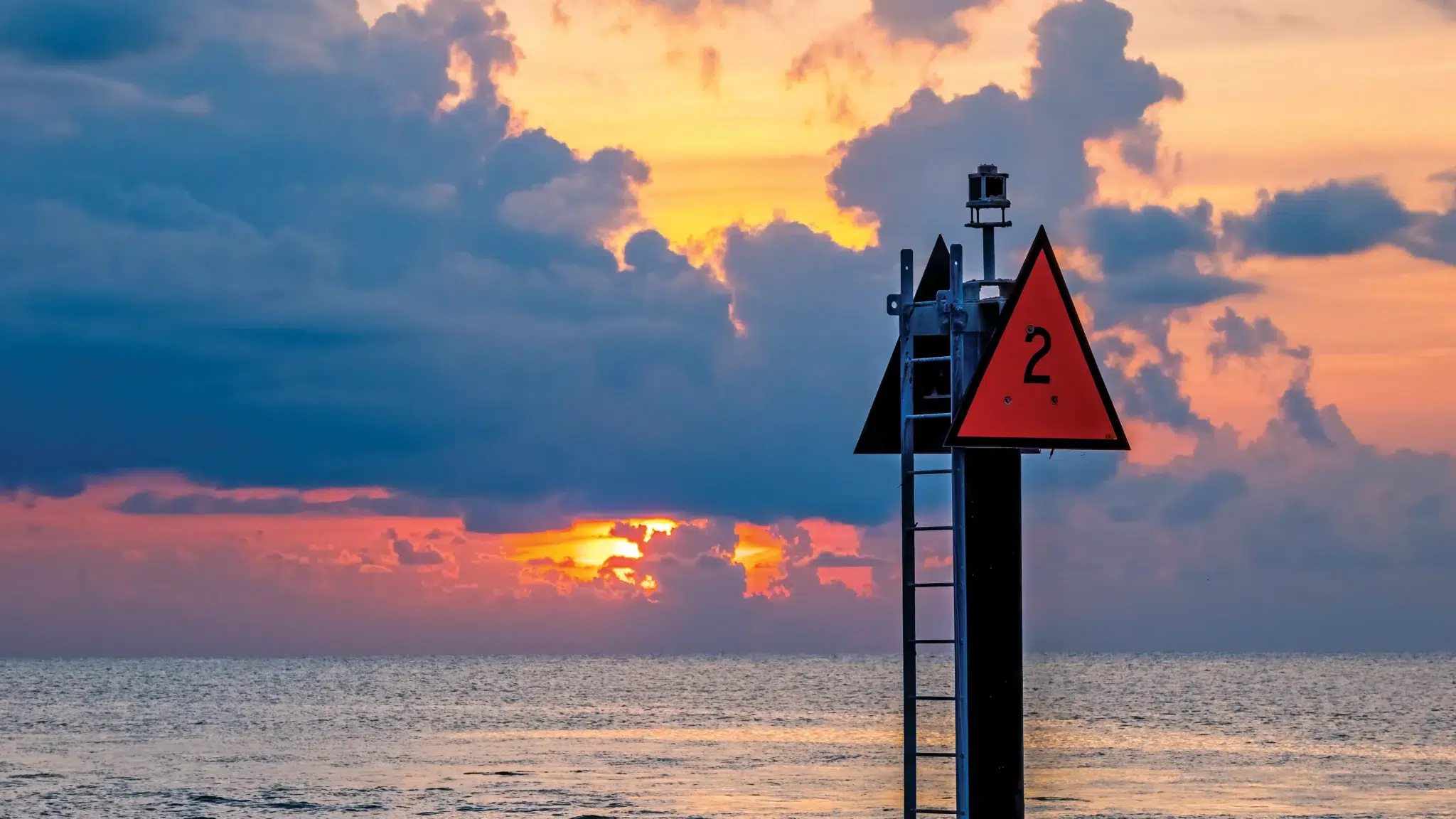
Navigation is easy to learn once you speak the language. Red triangles and green squares are basic shapes that tell us where to cruise. Add numbers to your colors and shapes and you can create a successful cruise.
But what does it all mean?
While you may be quite skilled at trip planning, cruising is more fun when your crew knows navigation too.
Shapes and Numbers Start the Story
Buoys, daymarkers, day beacons and other aids to navigation (ATONs) are the key tools used to guide you along the waterways. These red triangles and green squares show you the path through the water to keep you from running aground. The colors and shapes help you to see them when you do not have sunshine and clear skies.
Also Read:
A Rare Bay-to-Gulf Opportunity Makes Its Debut in Naples
In Naples, Florida, true waterfront scarcity is no longer a future concern—it is a present reality. The combination...
RENT and SONG: Remembering Red and Green Markers
RENT: Red is an Even-Numbered Triangle
SONG: Square is an Odd-Numbered Green
The channels are marked with a lateral numbering system. A new channel usually starts with a green square numbered 1 or a red triangle numbered 2. The consecutive reds and greens will be 3, 4, 5, etc. You must keep the red or green on the proper side of your boat. So, which side is the correct side.
Colors Are Key to Safe Navigation
Red Right Returning vs. Red Right Rising
You may have heard “Red Right Returning.” This means keep the red triangle or buoy on your right when returning from sea. But what if you are just cruising along the Intracoastal Waterway (ICW)? We prefer to remember “Red Right Rising,” which means keep red on your right when the numbers are rising, like 1,2,3. This works no matter which way you are traveling.
Identifying ICW Markers and Yellow Decals
And be sure to spot the yellow decals usually found just above the ATON number. If you see a yellow decal then you know you are on the ICW, as compared to a side or inlet channel.
Many other ATONs mark shoals, sandbars and objects to avoid, so get to know the symbols of each ATON on your chart or GPS. A good source for how to read these symbols is the Maptech ChartKit or a seamanship reference book like Chapman Piloting.
Subscribe Here For More Boating Content
Types of Aids to Navigation (ATONs)
Buoys vs. Daymarkers vs. Day Beacons
ATONS come in different shapes and sizes. Daymarkers are red or green shapes attached to a fixed piling and are visible during the day. Day beacons look similar, with reds or greens attached to a piling but also illuminated to be spotted during night travel. Because these ATONs are secured to a nonmoving piling, they are also facing you. The daymarkers are perpendicular to the channel or course line, just like a stop sign on the road.
Wreck Markers and Hazard Warnings
Buoys are floating and usually secured to the deeper sea floor by an anchor and chain. They may or may not be illuminated. WR means stay away from the WRECK below. That may mean a boat wreck or that an ATON on a piling was knocked over, and the piling may be broken off below the water level.
As they float or spin with the current or wind, you may not see the number or letters immediately. A good pair of binoculars will help identify what’s ahead.
Also Read
Born to Roam: Inside the Outer Reef 780 Adventure Explorer Yacht
By Kevin KoenigTruth be told, I’ve long had a soft spot for Outer Reef. Ever since a sojourn Down Under...
Channel Size, Depth, and What It Means
Have you noticed the different sizes of ATONs when you leave the main channel and turn into a secondary channel toward a fuel dock or marina? Larger ATONs are the main route or channel. Smaller ATONs sometimes signify secondary routes or channels.
What do you expect to see as the next ATON comes into view? Head to the Ask Captain Chris channel on YouTube to learn more.
It is easy—when you speak the language.
By Capt. Chris Caldwell
Captains Chris and Alyse Caldwell are USCG 100-ton Masters and Cruising Coaches who offer personal boat training online or onboard your boat anywhere. Questions? Ask Captain Chris: chris@captainchrisyachtservices.com.