
Marine generator maintenance is essential for offshore cruising, especially in remote destinations like the Bahamas and Caribbean where repairs and replacement parts may be difficult to find. From fuel quality and cooling systems to spare parts and proper load management, keeping a boat generator running reliably can mean the difference between a smooth anchorage and a major disruption at sea.
By Doug Thompson
Why Marine Generator Maintenance Matters Offshore
Idyllic boating belies a harsh truth: It’s not easy to make it look easy.
Air conditioners, watermakers, microwaves—gadgets that make you comfy—must have electricity. Marine generators supply that power while at anchor and can toil for years with little trouble.
But consider Murphy’s Law: What can go wrong, will go wrong, especially when cruising in faraway places like the Bahamas or the Caribbean. A generator that doesn’t work is a sad situation indeed.
Subscribe Here For More Boating Content
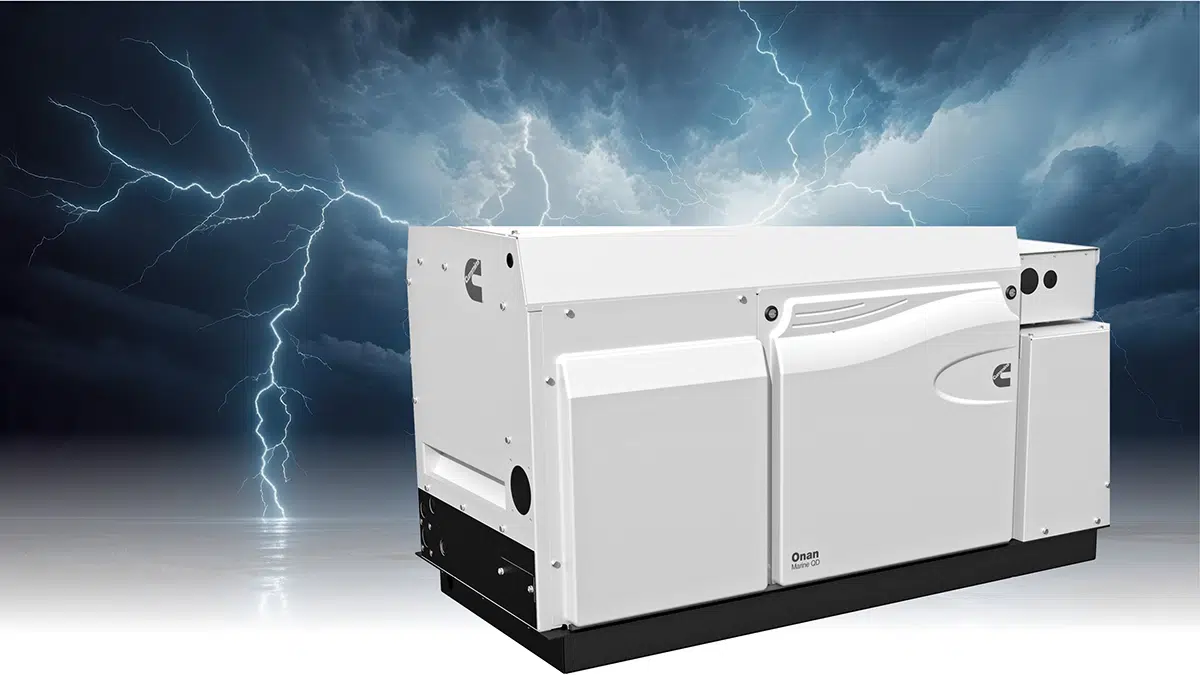
“Generators are designed to run regularly, and operating your generator under load is one of the best ways to keep it healthy,” says Melinda Koski, director of global public relations and external communications for Cummins, a leading manufacturer of Onan marine generators. “Routine exercising ensures that all components stay properly lubricated, prevents corrosion, and reduces the risk of dry rot. Think of it like your own daily exercise routine: Consistent use keeps everything functioning properly.”
In remote areas where technical help and spare parts may be scarce, proactive maintenance and smart troubleshooting can make the difference between a smooth adventure and a frustrating drift.
What causes marine generators to fail?
Common causes include:
- contaminated fuel
- clogged filters
- cooling system failures
- low electrical loads
- neglected impellers
- corroded exhaust components
Also Read:

Cruising Nova Scotia: The Ultimate Boater’s Guide to Harbors, Marinas and Coastal Towns
From Halifax and Peggy's Cove to Lunenburg and the Bay of Fundy, discover the best Nova Scotia boating...
Essential Spare Parts to Carry on Your Boat
“Always carry spares for your generator,” says Bob Senter, a service trainer at Northern Lights/Lugger, a leading generator manufacturer. “At minimum, carry two spare fuel filters, one spare belt, one spare oil filter, spare oil, and spare coolant.”
Carrying spare parts is actually No. 7 on Senter’s list of Top 10 Marine Generator Tips and Tricks (keep reading).
How often should a marine generator be serviced?
Most marine generators require:
- oil changes every 100-150 hours
- annual impeller replacement
- fuel filter replacement yearly
- coolant replacement every two years
Best Fuel Practices for Marine Generators
In addition, there’s a good tip to follow that’s not on Senter’s list: Install a generator that runs on the same fuel type as your main engines. For example, if you have a gasoline-powered boat, buy a gasoline-powered generator. For a diesel-powered boat, use a diesel-powered generator. If you don’t match these up, it’s inevitable that someday the wrong fuel will be used, and that can ruin the generator at the very least and cause an explosion at the worst.
Also, regarding fuel, whether diesel or gasoline, if you buy fuel in foreign ports, find out as much as you can about the quality of the fuel. Use a simple fuel test kit; it’s cheap and can save you hours of headaches. Poor fuel leads to hard starting, rough running, and clogged injectors. In isolated places, repairs and parts might be days away.
Also Read
Ferretti 940 Review: A Pocket Megayacht With Italian Luxury and Practical Comfort
The Ferretti 940 represents a pleasing mix of Italian style and onboard comfort. By Kevin Koenig Whenever I go to...
It’s crucial to use a good water separator because water in fuel is a killer for diesel generators. You’ll want to top off fuel tanks before long stays to avoid condensation buildup inside tanks. Adding a biocide is a good idea, especially in warm, tropical waters where microbial growth thrives. And drain the tank sumps weekly, as even a small bit of water settles at the bottom.
“Generators are highly sensitive to fuel quality,” Koski says. “Always use high-quality diesel, regularly drain water from the fuel tank, and inspect fuel lines for leaks or damage. Clean fuel prevents injector clogging, power loss, smoke, and ensures smooth operation.”
Top 10 Generator Maintenance Tips and Tricks
- Perform a daily quick check for oil level, coolant level, alternator/water-pump belt, and leaks under the generator.
- Change the seawater pump impeller annually before you start your cruising season. Throw away the old one or keep it for a spare if it looks good, but don’t reuse it. It is not necessary to replace the entire pump, since it will last much longer. When cruising far from home port, it is prudent to carry a complete spare pump.
- If you don’t put a lot of hours on your generator, change the oil and filter twice a year (spring and fall), change the fuel filter annually, and service or replace the air filter annually.
- Be sure the AC load breaker or switch is turned OFF when starting the generator, warm it up for a minute, then connect the load. When you shut down the generator, turn the breaker or switch OFF, let the generator cool down for a minute, and then shut it off.
- Turn OFF the shore power breaker at the dock before switching the generator on if you start at the dock. If the shore-power switch is wearing out, the generator could momentarily or permanently connect to the shore power with catastrophic results.
- You can prevent dirty exhaust. Try to maintain 40% to 50% or more of the generator’s rated kilowatt load at all times. Light loads are perfect for your inverter; heavy loads are perfect for the generator, and it will run more efficiently.
- Always carry spares for your generator. At minimum, carry two spare fuel filters, one spare belt, one spare oil filter, spare oil, and spare coolant. Also carry spare impellers for pumps; they wear out fast in humid conditions.
- Inspect the exhaust wet elbow visually once a year. If you see any visible signs of distress, like rusty spots, leaks, or cracks, replace it immediately before it causes seawater failures of electrical parts on your generator.
- Inspect zincs every 90 days until you know how often they need to be changed.
- Service the heat exchanger and replace coolant every two years.
Bonus tip: If you’ve changed a fuel filter and are having trouble starting the generator, DON’T crank the starter for more than 60 combined seconds or you could accidentally fill the muffler and flood the engine with seawater. Just drain the muffler and repeat the fuel-system priming procedure for your generator.
Long stays anchored off remote islands are a dream, but with that comes responsibility for your vessel’s systems. Your marine generator is central to your onboard lifestyle, and giving it the attention it deserves means fewer surprises and more tropical sunsets.
Related Posts