
adBanner


Freeport, Texas


A Lone-Star boating hide-a-way on the Gulf.

Story and Photos By Capt. Mike Holmes

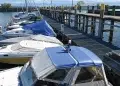
A line of sportfishing boats at a concrete dock at Bridge Harbor.

Freeport  Texas has been my homeport for over 30 years. It hasn’t changed all that much in awhile, but for those who call it home or count themselves as frequent visitors, it doesn’t have to. As the largest port city on the Texas coast between Galveston and Corpus Christi, Freeport has more of an industrial base than most of its sister cities. From the petro-chemical plants to the offshore oil industry, the Bryan Mound Strategic Petroleum Reserve salt dome storage site to the shrimping industry, Freeport has long enjoyed a bustling economy.
Since Freeport is one of the few major port cities on the Texas coast not located on or near a major bay system, it is more closely linked to the open Gulf. The original point of Gulf access for shipping was the Brazos River outlet, and even before the War Between the States, cotton has been barged downstream from far inland to be loaded on ships at Velasco, as the area was known then. Since those early days, the original river outlet was cut off from the main stream because the port harbor⎯with a jettied channel leading into the Gulf and a new outlet canal⎯was cut through the beach to convey the river flow. Locals refer to these points as the “New” and “Old” Brazos river channels. The ICW crosses both streams and is protected from the current of the New River by a lock system maintained and operated by the Army Corps of Engineers.

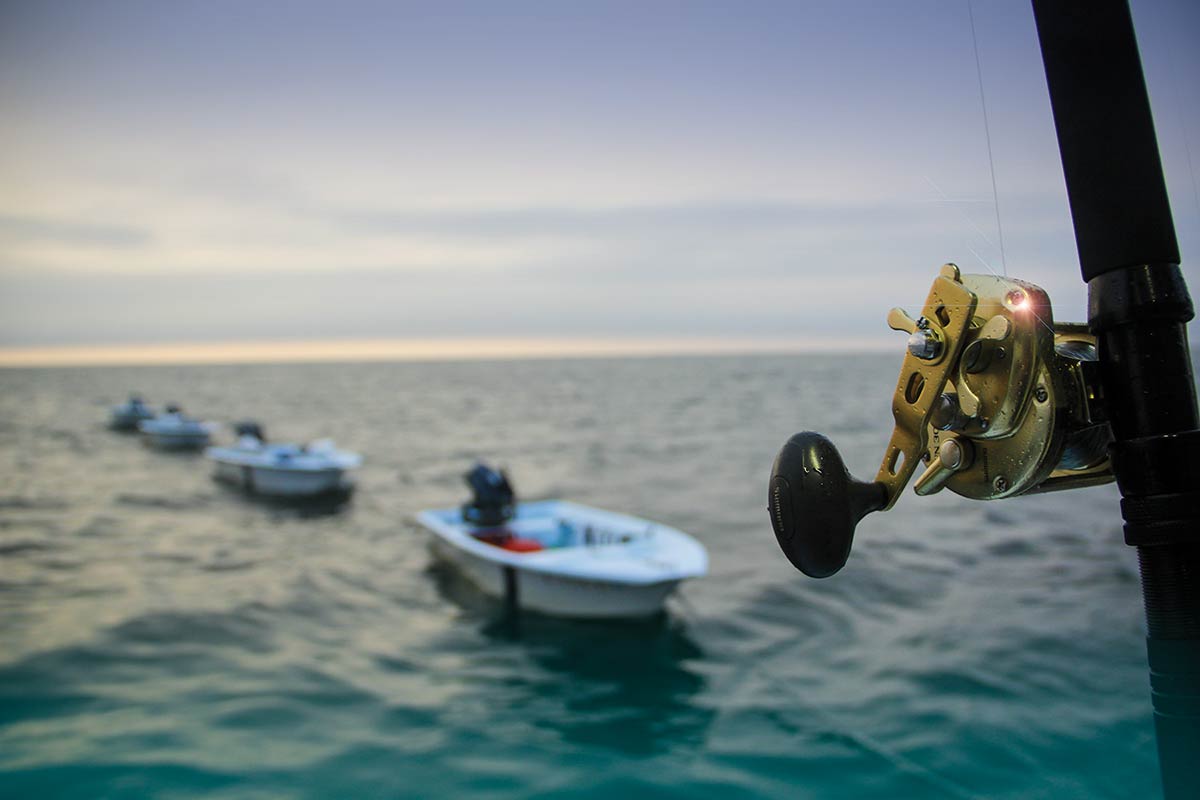
The proximity to deep water has always made Freeport one of the Gulf’s more prominent ports for fishermen seeking both red snapper and blue water gladiators like marlin and tuna. The run to the 100-fathom curve is approximately 65nm from the Freeport farewell buoy, as opposed to nearly 100nm out of Galveston. Natural “rock” bottom formations and vessels sunk over the decades provide habitat for red snapper and grouper, and the many offshore oil rigs scattered from just off the beach to 200 miles offshore attract both bottom and surface dwelling species. It is as close to the Flower Gardens reef system from Freeport as from Galveston, which has led to several large dive boat operations locating there. “Head-boats,” or “party-boats” carrying large groups of fishermen (mostly seeking red snapper) were a big part of Freeport’s economy until recent changes in Federal fishing regulations, coupled with rising fuel prices, badly hurt the industry. But area marinas still hold a large fleet of sportfishing yachts, both private and for-hire, equipped for both billfish and smaller game fish like dolphin and wahoo. Fishermen with trailerable boats come from all over Texas to launch here, many staying much closer to land to target king mackerel and cobia, as well as other pelagic species.
Cruising mariners who pass through Freeport—as well as those seeking a more permanent berth for their vessel—will find more marina options than they did in the past. Where once Bridge Harbor Yacht Club on the ICW was the home of upscale boat owners⎯with its condos, pool, tennis courts, ship’s store, club and restaurant (while the few other marinas were more of a place to just park boats)—several new marinas and additions to existing ones that came largely after Hurricane Ike roared through the area in 2008, add both capacity and variety to Freeport’s boating scene.
The all-new Surfside Marina (surfside-marina.com) has both wet and dry slips and a full ships store. The Gulf Coast Marina (gulfcoastmarina.com) just on the east side of the tall Surfside Bridge, is a dry storage facility with a large forklift capable of handling the largest of outboard boats, and sells fuel and bait as well. There is also a waterfront restaurant on the property. Both of these businesses are on the south side of the ICW and require crossing via the Surfside Bridge.
Bridge Harbor (bhycfreeport.com) is still the elite marina and a popular stop for transient boats due to its close proximity to “the ditch” and the jetties. A full service marina, it has a repair yard and fuel dock as well as the amenities listed above, although the restaurant may not be in operation at this time.
Kirby Marina (kirbymarina.com) is located well up Oyster Creek, and though it has fewer amenities and is a longer run from the Gulf, some prefer its added protection from storms, along with the slightly more laid back atmosphere. In recent years this marina has almost doubled in size due to the addition of docks dedicated solely to large outboard and stern-drive powered boats hanging in heavy-duty lifts. Dos Amigos Boat Works (979-239-2940) is just down the creek from Kirby, and is a full-service yard offering everything from routine maintenance to custom repowering, fiberglass repair and aluminum tower work. Jim’s Services (979-233-0270), next door to Kirby’s, does bottom jobs and haul-outs for do-it-yourselfers, as well as repairs and is even the local TowBoatUS base.
Another option for boats and their owners is the new Freeport Municipal Marina (freeport.tx.us), located in the main harbor and behind the floodgate that protects shrimpboats and crewboats. Although there is no repair yard or fuel at this time, the new floating docks accommodate boats up to 60 feet, and there is also a dry stack building. Opened just in the last year, plans are for a ship’s store and other facilities, and this location has perhaps the best storm protection potential in the area.
What Freeport is NOT, is a raucous resort town in the strictest sense. There are good eateries and some nightspots along the beach and many canal subdivisions, but most people who live here or frequent the area prefer the quieter atmosphere.This is a mellower sort of boat town, in other words, not a bustling tourist town.