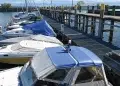

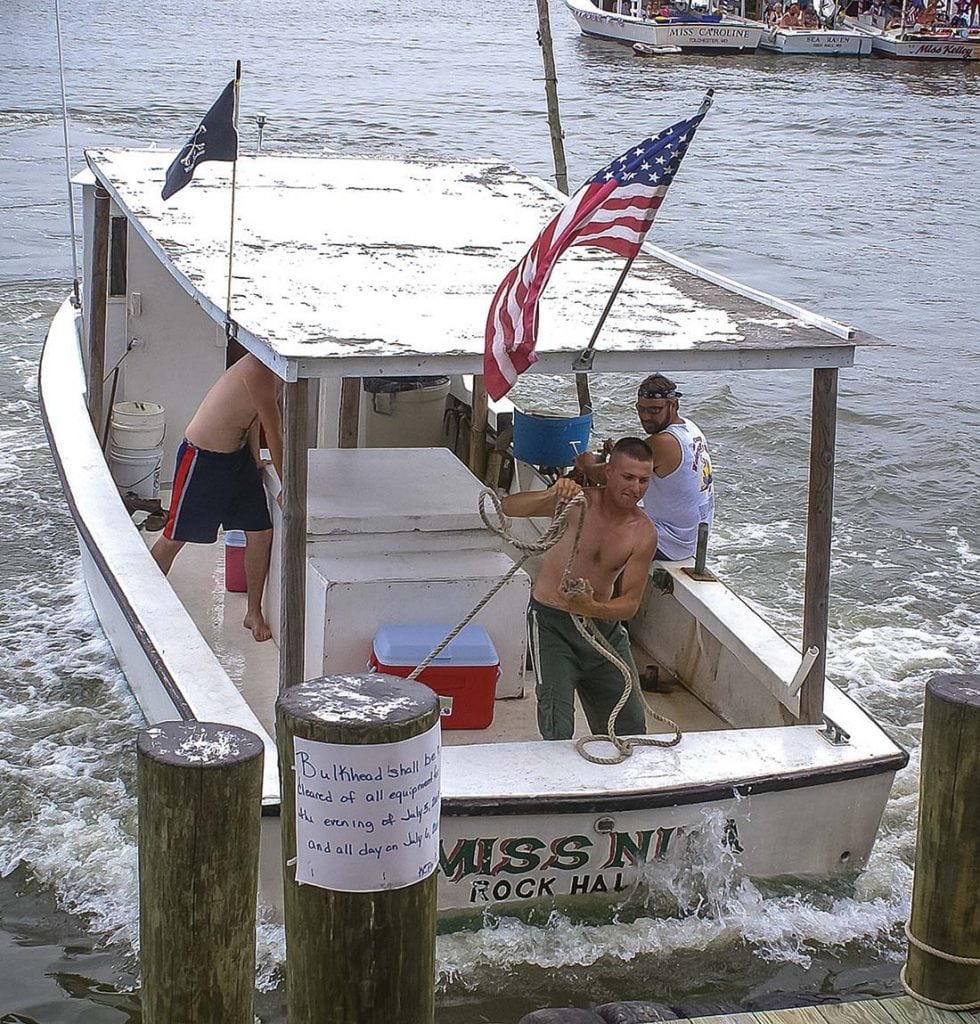
Extreme boat docking will make its debut this month on the western shore at Nick’s Fish House and the Baltimore Yacht Basin. The Chesapeake Cowboys are bringing their season finale boat docking competition to Nick’s and the yacht basin located on the middle branch of the Patapsco River in Port Covington. Boat docking competitions are a 50-year-old sport and family tradition on the eastern shore of the Chesapeake Bay, and this event will mark the first competitive docking event on the western shore. Workboats and charter boats compete within their divisions to motor from a designated point before a hard reverse into the dock where pilings are lassoed during a timed competition. The cowboys compete for cash, prizes, trophies, and bragging rights. The festivities kick off at Nick’s on Friday, September 23rd at 6PM, with an official Chesapeake Cowboys Captains’ party. The party will continue at the yacht basin on Saturday, September 24th at noon with live bands, local brews, crab picking, and oyster shucking contests. The docking competition will run through Saturday and concludes with a “Grand Finale Shootout,” where the best of four Captains will compete for the fastest time to be crowned “King of the Bay.” chesapeakecowboysboatdocking.com
More access at Hart-Miller
Maryland’s Department of Natural Resources has opened an additional 300 acres of Hart-Miller Island for recreational purposes such as biking, hiking, camping, and nature watching. Accessible only by boat, the island has more than a half-mile of beachfront open to the public. The south cell of the island will be open and staffed Thursdays through Mondays from 11AM-4PM. The cell contains over eight miles of trails that circle around a large pond and include picturesque views of the Chesapeake Bay. Bike rentals are also available on the island. Located at the mouth of Back River, the 1,100-acre artificial Hart-Miller Island used to be two islands called Hart and Miller. In 1981, Maryland began the creation of what is now Hart-Miller Island by construction of a dike that linked the two islands. The resulting impoundment was filled with material dredged from the Baltimore Harbor, its approach channels and the channels in the upper Chesapeake Bay. Along with the new hiking and biking trails, Hart-Miller Island currently features swimming, wading, sunbathing, picnicking areas, 22 campsites, and an observation tower that offers a bird’s eye view of the beachfront and the bay. dnr2.maryland.gov/publiclands/Pages/central/hartmiller.aspx
Trawlerfest take two
The threat of Hurricane Joaquin forced last year’s Chesapeake Bay Trawlerfest to be canceled as Maryland and Virginia declared a state of emergency. Event organizers will try again this year at the Bay Bridge Marina in Stevensville, Maryland, featuring what should be an impressive array of seminars and boat and trade displays offered in a rendezvous-style format with evening events and activities. This year’s Trawlerfest will run from September 27th through October 1st. Attendees can expect course offerings on such topics as diesel engines, the boat buying process, boat handling, coastal navigation, and cruising the Intracoastal Waterway. baybridgemarina.com/events
By Christopher Knauss, Southern Boating Magazine